
Last Updated on July 29, 2026 by Admin
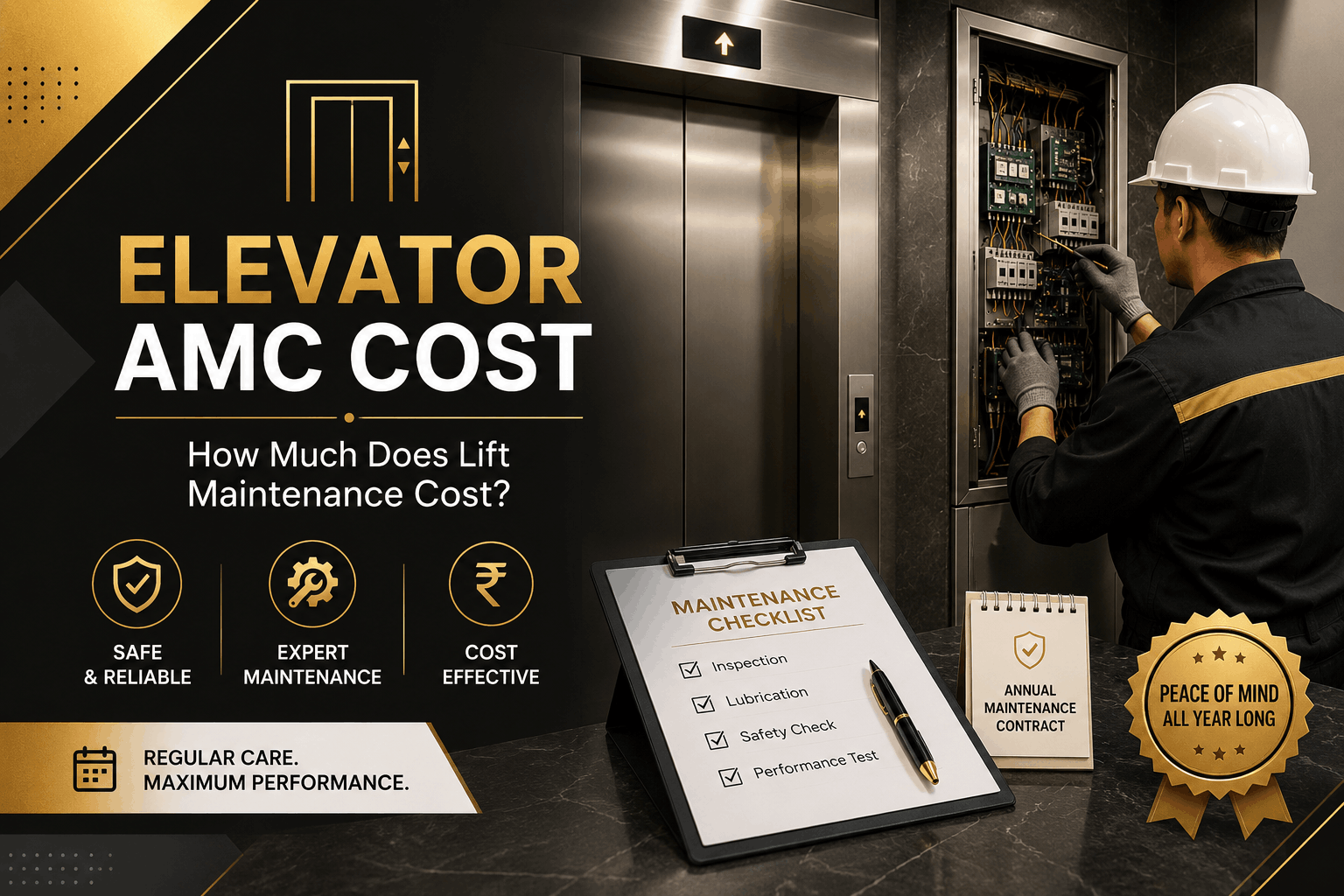
When you own or manage a multi-story residential building, commercial complex, or private villa, vertical mobility is a lifeline. However, the safety, longevity, and smooth operation of your vertical transportation system depend heavily on regular upkeep. Therefore, understanding the Elevator AMC Cost is essential for proper financial budgeting and building safety management. Without an active Annual Maintenance Contract, building owners often face severe safety hazards, unexpected downtime, and exorbitant emergency repair charges.
As vertical transit systems grow more sophisticated, managing routine care through a structured elevator maintenance contract ensures peace of mind. Whether you are managing a compact residential unit or a heavy-duty commercial cargo system, knowing the right lift AMC charges allows you to make informed decisions. This comprehensive guide explores everything you need to know about pricing structures, types of service models, hidden variables, and how professional elevator maintenance service providers can protect your investment.
What is an Elevator AMC and Why Is It Necessary?
An Annual Maintenance Contract (AMC) is a formal service agreement established between a property owner or facility manager and a certified elevator service provider. This agreement guarantees systematic routine checks, lubrication, safety device testing, and prompt breakdown assistance over a span of twelve months.
Investing in an annual maintenance contract for elevator systems is not merely a statutory compliance measure; it is a critical safety practice. Lifts consist of hundreds of moving mechanical and electronic parts, including high-tension steel ropes, traction motors, door sensors, and microprocessors. Over time, friction, dust, and electrical fluctuations cause normal wear and tear. Regular servicing prevents major catastrophic failures, protects passengers from entrapment or injury, and extends the operational lifespan of the equipment.
Comprehensive vs. Non-Comprehensive: Understanding Lift Servicing Cost Variations
When evaluating your overall lift servicing cost, the pricing structure largely depends on the category of contract you choose. Service providers typically offer two primary types of maintenance plans:
1. Comprehensive AMC Plans
A comprehensive contract acts as an all-inclusive insurance policy for your vertical transport system. Under this agreement, the service provider covers regular preventive maintenance visits, emergency breakdown labor, and the replacement or repair of major spare parts (such as door operators, controller cards, bearings, and ropes).
- Cost Factor: Though it carries a higher upfront cost, it eliminates the risk of sudden, expensive component failures.
- Best Suited For: High-traffic commercial buildings, busy residential complexes, and heavy-use industrial freight lifts.
2. Non-Comprehensive AMC Plans
A non-comprehensive contract covers only routine servicing labor, oiling, calibration, and minor adjustments. If a major part fails or needs replacement, the building management must purchase the spare component separately.
- Cost Factor: These plans have a lower initial price tag, but unexpected hardware failures can accumulate significant out-of-pocket expenses.
- Best Suited For: Low-usage residential setups or buildings with newer elevator installations where parts are still under manufacturer warranty.
Detailed Breakdown of Elevator AMC Price Structures
The final Elevator AMC price varies based on several core parameters, including geographical location, building height, elevator capacity, and the age of the machinery. To help property managers benchmark their budgets, industry averages across India outline the following typical cost brackets:
| Elevator Type | Capacity & Usage | Estimated Annual AMC Cost (INR) |
| Small Home Lifts | 2–3 Persons (250 kg) | ₹15,000 – ₹25,000 |
| Standard Residential Lifts | 4–6 Persons (320–450 kg) | ₹25,000 – ₹38,000 |
| Mid-Rise Passenger Lifts | 6–10 Persons (480–680 kg) | ₹35,000 – ₹55,000 |
| Commercial / High-Rise Lifts | 10–15 Persons (800–1000 kg) | ₹50,000 – ₹75,000 |
| Industrial Goods Lifts | 1000–5000 kg Cargo | ₹60,000 – ₹95,000+ |
(Note: Prices fluctuate depending on whether the system uses old-school geared traction machinery or modern Machine Room-Less [MRL] technology.)
Key Factors That Influence Lift Maintenance Cost
Several underlying conditions dictate the exact pricing proposed by a maintenance vendor. Evaluating these factors helps prevent unexpected cost escalations:
- Age of the Equipment: Older lifts require more frequent tuning, hard-to-find legacy parts, and intensive labor, which increases the overall lift maintenance cost.
- Type of Drive Technology: Hydraulic systems, traditional traction setups, and modern gearless MRL systems require specialized technical expertise, influencing service pricing.
- Number of Floors and Landings: Buildings with higher travel distances and multiple stops require additional inspection time for shaft wiring, guide rails, and door interlocks.
- Frequency of Usage: High-density commercial properties experience heavy daily duty cycles, demanding more frequent monthly or bi-monthly servicing visits than low-rise residential units.
What Services Are Included in a Standard Elevator Maintenance Contract?
A professional service agreement goes beyond a simple visual check. Standard protocols executed during scheduled visits include:
- Lubrication and Cleaning: Greasing guide rails, bearings, and moving joints to reduce friction and noise.
- Safety and Brake Testing: Inspecting overspeed governors, emergency brakes, and Automatic Rescue Devices (ARD) to ensure passenger safety during power outages.
- Electrical and Control Panel Checks: Verifying circuit boards, voltage stability, wiring insulation, and relay switches.
- Door Mechanism Adjustments: Testing safety edges, light curtains, and automatic door operators to prevent closing mishaps.
To learn more about professional standards and infrastructural safety, you can explore detailed resources via the National Elevator Industry Inc. or check out comprehensive vertical transport guides on Elevator World. For tailored local solutions and structural assessments, visit Horizon Elevators.
Protect Your Building Infrastructure with Horizon Elevators
Maintaining a safe, reliable, and smooth-running vertical transit system requires trusted engineering expertise. At Horizon Elevators, we deliver top-tier installation, modernization, and maintenance solutions tailored to residential complexes, commercial towers, and industrial spaces. Our certified technicians provide prompt 24/7 emergency support, transparent pricing structures, and customized comprehensive service contracts designed to maximize your equipment’s lifespan and eliminate unexpected downtime.
Don’t wait for a sudden breakdown to prioritize your building’s safety. Partner with industry experts who put your peace of mind first. Contact Horizon Elevators today to get a customized, competitive quote for your property!
Frequently Asked Questions (Q&A)
1. What is typically covered under basic lift AMC charges?
Basic non-comprehensive lift AMC charges cover routine monthly or quarterly preventive maintenance visits, cleaning, lubrication of parts, minor adjustments, and breakdown labor support. Spare parts are billed separately.
2. Is a comprehensive maintenance contract worth the higher cost?
Yes, especially for high-traffic commercial buildings or heavy-duty installations. A comprehensive contract covers major electronic and mechanical components, safeguarding your budget against sudden, high-cost repair bills.
3. How often should an elevator be serviced under an AMC?
Standard regulatory guidelines and professional best practices dictate that elevators must undergo routine preventive servicing at least once a month to ensure optimal safety and performance.
4. Can the age of my building’s lift affect the AMC pricing?
Absolutely. Older elevator models often require specialized maintenance routines and harder-to-source replacement parts, which typically adds a 15% to 20% premium to the baseline contract price.