
Last Updated on October 13, 2026 by Admin
Modern residential complexes, commercial towers, and industrial facilities depend heavily on seamless vertical transportation. Ensuring smooth daily operations requires routine lift service to keep complex mechanical and electrical components functioning safely and efficiently. Elevators are intricate engineering systems comprised of high-tension traction ropes, electronic control units, safety gear assemblies, and precision door operator mechanisms. Without consistent technical oversight, minor component wear can rapidly escalate into severe operational hazards and costly downtime. Prioritizing structured care safeguards passengers, protects valuable real estate investments, guarantees regulatory compliance, and extends equipment longevity.
Understanding the Essentials of Elevator Upkeep
Ensuring long-term vertical transport performance requires a proactive and structured approach to facility asset management. Building managers and property owners frequently seek out a reputable lift elevator company to manage scheduled checkups, lubrication protocols, and precise mechanical calibrations.
When vertical systems operate continuously under heavy traffic loads, friction, heat, and electrical resistance take a heavy toll on moving parts. Routine, proactive care minimizes unexpected component failures and prevents premature system degradation.
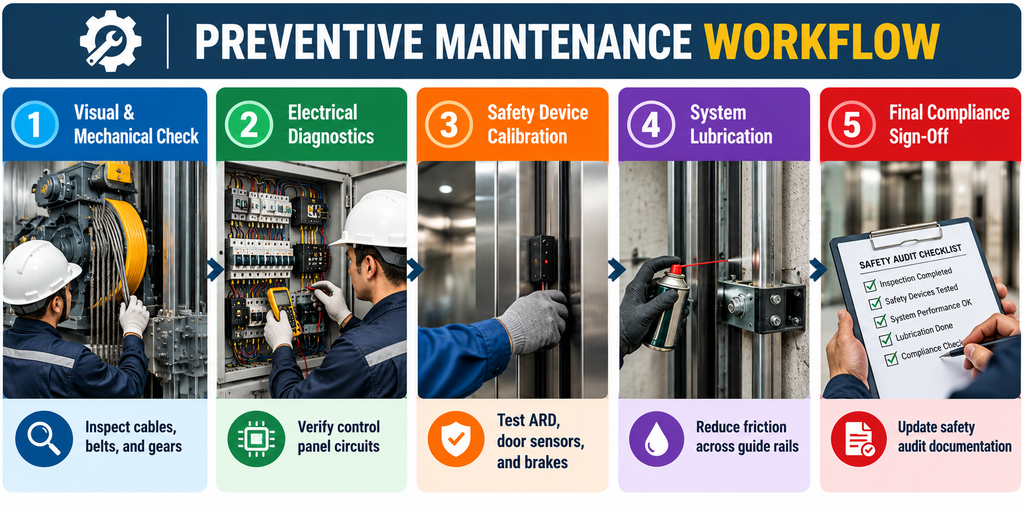
Adhering to professional upkeep frameworks protects occupants from sudden jolts, dangerous misleveling, or distressing cabin entrapments. Furthermore, proactive diagnostic checkups allow technical engineering teams to identify micro-cracks in hoisting cables, electrical arcing in control panels, or worn-out door interlock sensors long before they cause a complete system halt.
The Core Elements of an Elevator AMC (Annual Maintenance Contract)
Investing in a formal Elevator AMC (Annual Maintenance Contract) provides property managers with structured, year-round operational protection and predictable maintenance expenditure. An AMC bridges the critical gap between reactive emergency fixes and total asset reliability. Instead of scrambling for emergency assistance during a major mechanical failure, building owners secure scheduled, multi-point technical inspections that maintain continuous compliance and safety.
| Maintenance Parameter | Ad-Hoc Repair Approach | Comprehensive Elevator AMC |
| Response Time | Subject to technician availability | Guaranteed priority dispatch |
| Budgeting Predictability | Unpredictable and high emergency costs | Fixed annual maintenance fee |
| Safety Inspections | Occasional or reactive | Scheduled monthly/quarterly audits |
| Component Lifespan | Accelerated wear due to neglect | Extended due to routine care |
Key structural advantages of an active AMC include:
- Comprehensive Coverage: Scheduled inspections cover mechanical alignments, safety circuit tests, and control logic software diagnostics.
- Priority Emergency Response: Contract holders receive immediate priority dispatch when unexpected faults surface.
- Cost Efficiency: Long-term agreements significantly reduce expensive emergency component replacements by catching minor wear early.
For further insights into industrial vertical mobility standards and global engineering maintenance frameworks, review guidelines from The National Elevator Industry, Inc. (NEII) or explore structural safety standards published by The Bureau of Indian Standards (BIS).
Executing a Comprehensive Preventive Maintenance Checklist
A standardized, multi-tiered preventive maintenance checklist acts as the foundation for flawless vertical mobility. Professional technicians evaluate dozens of distinct mechanical and electrical checkpoints during every scheduled visit.
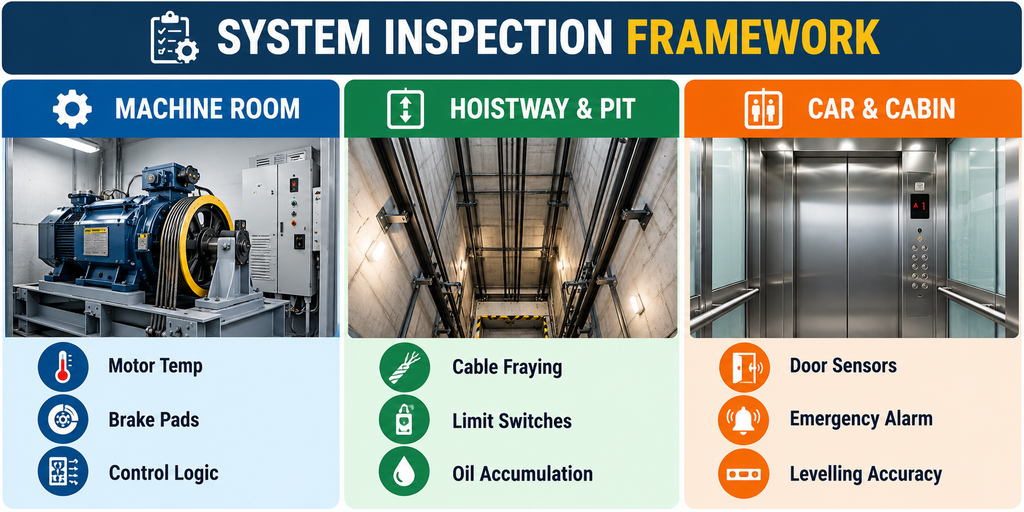
Key Inspection Domains:
- Drive and Motor Assembly Evaluation: Testing drive motor operating temperatures, gearbox alignment, drive belt tension, and electromagnetic brake pad wear.
- Suspension and Hoisting System Inspection: Thoroughly examining steel wire ropes or coated steel belts for corrosion, stretch, or internal strand breakage.
- Door Operation and Safety System Testing: Verifying door interlocks, infrared light curtains, sensitive door edges, and opening/closing speed governors to eliminate crushing risks.
- Pit Environment and Shaft Hygiene: Clearing accumulated debris, standing moisture, or excessive grease deposits that could impede limit switch actuation or create fire hazards.
Executing these steps systematically ensures that equipment remains fully compliant with regional code requirements and manufacturer performance benchmarks.
The Role of Certified Elevator Technicians in Safety
Complex electromechanical systems must never be serviced by general handymen or untrained personnel. Employing certified elevator technicians ensures that every diagnostic test, high-voltage calibration, and component installation follows strict safety and engineering protocols. Certified technicians undergo extensive training covering high-voltage distribution, emergency manual overrides, overspeed governor testing, and counterweight balance calculations.
When an unexpected electrical glitch or mechanical fault occurs, prompt intervention from a dedicated repair service prevents prolonged downtime and eliminates dangerous amateur tinkering. Expert technicians utilize specialized diagnostic tools and multimeters to pinpoint circuit anomalies rapidly. For additional technical resources on global elevator safety standards, visit The International Association of Elevator Engineers (IAEE).
Compliance and Lift Safety Inspection Guidelines
Adhering to strict lift safety inspection guidelines is both a legal requirement and an ethical responsibility for property administrators. Regular municipal and third-party safety audits evaluate vital emergency features, including:
- Automatic Rescue Devices (ARD): Battery-operated backup systems that safely bring the elevator car to the nearest landing during power outages.
- Overspeed Governors: Mechanical safety devices designed to clamp onto guide rails if the car exceeds rated speed limits.
- Emergency Alarms and Intercoms: Dedicated two-way communication channels connected directly to security desks or monitoring centers.
If an audit reveals neglected maintenance or non-compliant safety mechanisms, building managers face severe legal liabilities, steep regulatory fines, and potential order-to-cease operations. Routine servicing ensures your property remains audit-ready and fully code-compliant year-round.
Emergency Breakdown Support and Peace of Mind
Mechanical failures can happen at any hour, potentially trapping passengers and causing severe inconvenience. Having access to round-the-clock emergency breakdown support guarantees that trained response teams are deployed immediately when issues arise. Fast response times ensure safe passenger extraction and restore normal traffic flow across residential and commercial buildings without unnecessary delay.
Partnering with Horizon Elevators for Superior Care
Maintaining flawless vertical mobility across your real estate portfolio requires a trusted industry partner dedicated to engineering precision and operational transparency. At Horizon Elevators, we deliver full-lifecycle vertical transport solutions, from bespoke residential lifts to heavy-duty industrial installations.
Our specialized engineering teams offer comprehensive Maintenance & AMC Services, thorough Professional Elevator Inspections, and dependable 24/7 Emergency Response Solutions. We ensure your vertical transport systems operate quietly, safely, and efficiently for decades. Explore our complete range of capabilities by visiting our Services Overview.
Secure Your Building Today – Call to Action
Do not wait for a sudden breakdown or a failed safety inspection to address your building’s vertical transport network. Protect your residents, lower your long-term operating costs, and ensure 24/7 peace of mind with expert technical care.
Take the first step toward complete elevator safety.
Contact Horizon Elevators today to schedule a site survey and customize your maintenance package.
- Phone: +91 9850004042
- Email: info@horizonelevators.in
- Address: 11D, Sai-Samarth Park, Near Navale Bridge, Vadgaon(bk), Pune 411051
Frequently Asked Questions (Q&A)
Q1: How often should a commercial or residential lift undergo professional servicing?
Standard passenger lifts require professional inspection and servicing at least once a month. High-traffic commercial towers or industrial goods lifts often require bi-monthly or weekly evaluations to prevent accelerated component wear.
Q2: What is covered under a standard Elevator AMC contract?
A standard Annual Maintenance Contract includes routine monthly lubrication visits, door sensor calibrations, brake and circuit checks, safety gear testing, and priority emergency dispatch services.
Q3: Why is scheduled lift service better than relying on on-demand repairs?
Scheduled servicing focuses on preventive care, identifying micro-wear in cables and drive systems before failure occurs. On-demand repairs only occur after a breakdown, leading to expensive component replacements, extended downtime, and safety risks.
Q4: How does an Automatic Rescue Device (ARD) operate during a power outage?
An ARD system automatically activates during a power loss, using emergency battery power to drive the elevator car to the nearest floor level and open the doors, allowing passengers to exit safely.