
Last Updated on March 10, 2026 by Admin
The landscape of Indian residential architecture is undergoing a radical transformation. As we move through 2026, the traditional multi-story bungalow is evolving into a tech-enabled, accessible sanctuary. No longer considered a luxury reserved for the elite, home elevators have become a practical necessity for multi-generational Indian families. Whether it is ensuring the mobility of elderly parents or adding significant valuation to a property, installing a residential lift is a strategic investment.
This comprehensive guide explores everything you need to know about navigating the home elevator market in India this year, from technology types to regulatory compliance.
The Evolution of Residential Lifts in India
In 2026, the focus has shifted from mere “transportation” to “integration.” Modern home elevators are designed to fit into existing homes with minimal structural changes. With the rise of smart cities and compact luxury housing, the demand for pitless and machine-room-less (MRL) technology has skyrocketed.
Why Install a Home Elevator in 2026?
- Future-Proofing for Seniors: With a growing emphasis on “aging in place,” elevators allow seniors to access all levels of their home without the risk of stair-related injuries.
- Increased Property Value: Real estate data shows that homes with premium vertical mobility solutions command a 15–20% higher resale value.
- Space Optimization: Modern elevators require a footprint as small as a standard closet, making them viable even for 2BHK and 3BHK penthouses.
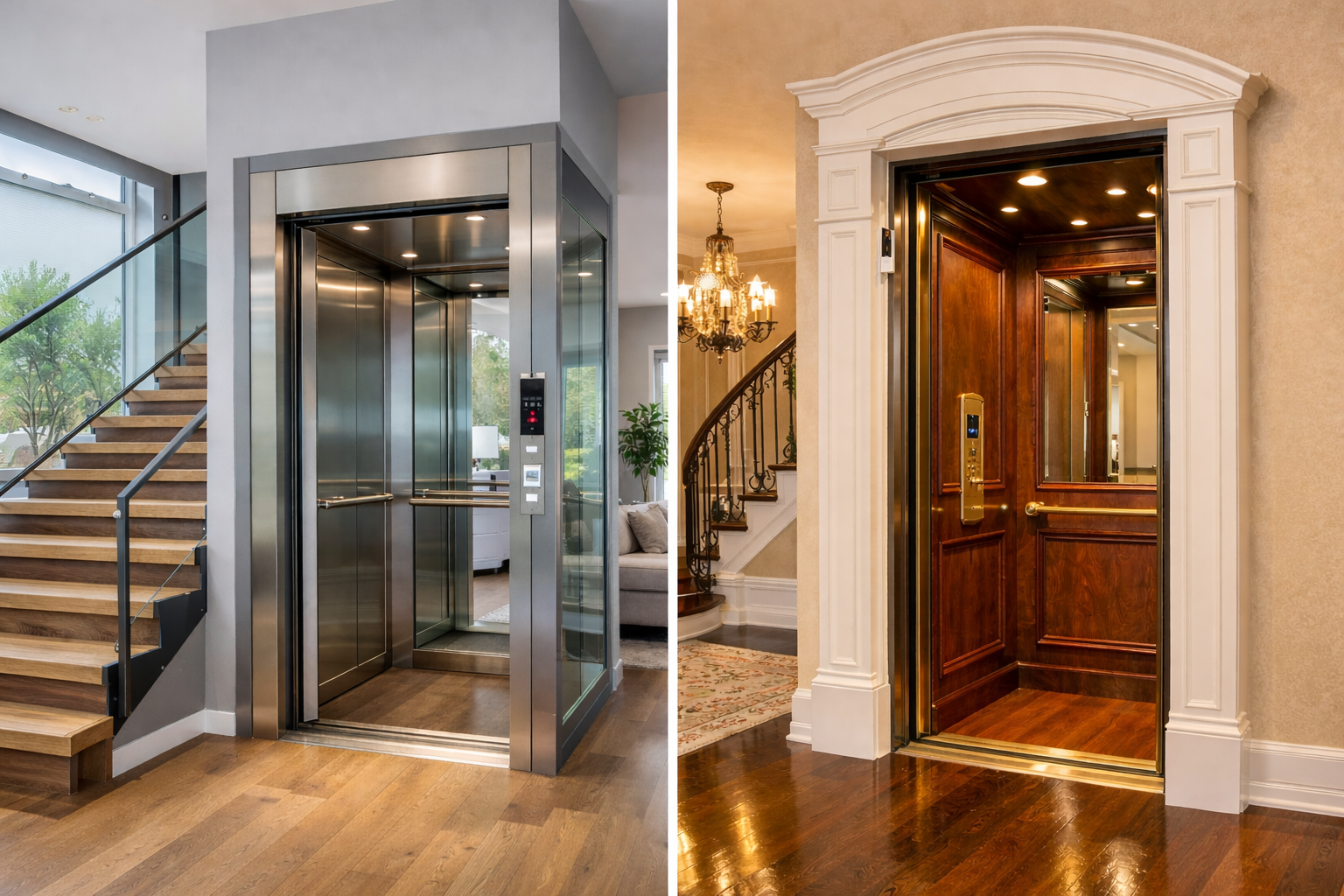
- Aesthetic Appeal: With glass capsules and customizable interiors, an elevator serves as a moving piece of art within your foyer.
Types of Home Elevators Available in India
Choosing the right drive system is the most critical decision in your installation journey. Each technology has its own set of requirements regarding space and maintenance.
1. Hydraulic Elevators
Hydraulic systems use a fluid-driven piston to move the cab. They are known for their smooth ride and high lifting capacity.
- Best for: Low-rise buildings (2–3 floors).
- Pros: Extremely quiet and requires less overhead space.
2. Traction (MRL) Elevators
Motor-room-less traction elevators use cables and counterweights. These are the most common in modern Indian apartments.
- Best for: Taller residential structures (4+ floors).
- Pros: Highly energy-efficient and fast.
3. Vacuum (Pneumatic) Elevators
Using air pressure to move the cab, these are the “plug-and-play” versions of the elevator world.
- Best for: Existing homes where digging a pit is impossible.
- Pros: 360-degree visibility and zero pit requirement.
Step-by-Step Installation Process
Installing an elevator isn’t just about the machinery; it’s about seamless integration into your living space.
Phase 1: Site Assessment and Feasibility
Before picking a model, a technical team must evaluate your home’s load-bearing capacity. At Horizon Elevators, we conduct rigorous site audits to determine if a masonry shaft is required or if a self-supporting steel structure is more suitable for your layout.
Phase 2: Design and Customization
In 2026, customization is king. You can choose from:
- Cabin Finishes: Stainless steel, wood veneers, or toughened glass.
- Lighting: Indirect LED mood lighting or star-print ceilings.
- Control Panels: Touchscreens with biometric access for enhanced security.
Phase 3: Civil Works and Shaft Construction
Depending on the model, this involves creating a pit (usually 300mm to 1000mm deep) and ensuring the overhead clearance is sufficient. If you choose a Vacuum Elevator, this phase is significantly shortened.
Phase 4: Mechanical and Electrical Installation
This is where the rails, motor, and cabin are installed. It is vital to ensure that your home’s electrical load can support the elevator, though most modern lifts now run on single-phase power.
Safety Standards and Regulations in India (2026)
Safety is non-negotiable. Ensure your provider adheres to the IS 14665 standards set by the Bureau of Indian Standards (BIS).
Key safety features to look for include:
- Automatic Rescue Device (ARD): Ensures the lift reaches the nearest floor during a power failure.
- Infrared Door Sensors: Prevents the door from closing if an obstruction is detected.
- Emergency Intercom: A direct line to a 24/7 monitoring station.
For a deeper look at national safety codes, you can refer to the National Building Code of India (NBC), which provides updated guidelines on residential vertical transportation.
Maintenance: Ensuring Longevity
A home elevator is a long-term asset. Regular Annual Maintenance Contracts (AMC) are essential to ensure the sensors, brakes, and oil levels (in hydraulics) are functioning perfectly. Check out our Maintenance Services to see how we keep our installations running smoothly for decades.
Cost Factors in 2026
The price of a home elevator in India typically ranges from ₹8 Lakhs to ₹25 Lakhs. Factors influencing this include:
- Number of stops (floors).
- The complexity of the shaft construction.
- Imported vs. indigenous components.
- Added luxury features like voice-activated controls.
For global context on how these prices compare to international markets, Elevator World offers comprehensive industry reports on global pricing trends.
Elevate Your Lifestyle with Horizon Elevators
Why settle for the ordinary when you can experience the pinnacle of comfort and safety? At Horizon Elevators, we specialize in bespoke mobility solutions tailored for Indian homes. From sleek glass capsules to robust hydraulic systems, our engineering ensures that every ride is smooth, silent, and secure. Whether you are building a new dream home or retrofitting an existing one, our team is ready to guide you through every technical and aesthetic choice.
Contact Horizon Elevators today for a free site consultation and personalized quote! Visit our Gallery to see our latest installations across India.
Frequently Asked Questions (QnA)
Q1: How much space is required for a small home elevator?
Most compact residential lifts require a clear space of about 4 feet by 4 feet, though vacuum elevators can be installed in even tighter spots.
Q2: Can I install an elevator in an old house?
Yes. Retrofitting is very common in 2026. We use self-supporting structures that don’t require load-bearing walls, making them perfect for older bungalows.
Q3: Do home elevators consume a lot of electricity?
No. Modern home elevators are designed to be energy-efficient. Many models use less power than a standard 1.5-ton air conditioner.
Q4: Is a pit always necessary?
Not anymore. While hydraulic and traction lifts usually need a small pit, pneumatic vacuum elevators are pitless and can be installed directly on the finished floor.
Q5: How long does the installation take?
Once the site is ready, the actual mechanical installation typically takes between 10 to 15 days.