
Last Updated on September 21, 2026 by Admin
Imagine rushing out of your flat for an important meeting, pressing the call button, and watching the digital display freeze. Or worse, feeling the cab judder violently before grinding to a sudden halt between floors. An unexpected lift failure disrupts your daily routine, compromises building safety, and creates immediate panic for residents or employees.
Whether you manage a residential complex in Kothrud, run a commercial tower in Kharadi, or live in an apartment in Wakad, knowing how to handle lift failures is essential. Every modern building depends heavily on vertical transportation, making quick and effective repair solutions indispensable. Understanding the primary elevator breakdown causes helps you identify minor glitches before they escalate into dangerous, high-cost mechanical overhauls.
When your lift malfunctions, knowing whether to perform a basic check or immediately contact a trusted elevator repair company in Pune can save you significant time, money, and hassle. In this comprehensive guide, we unpack the 10 most common lift problems and solutions, detail critical safety steps, and highlight exactly when you should call certified technicians to keep your elevator running smoothly.
The Critical Role of Elevator Maintenance in Pune
Pune’s urban landscape has transformed dramatically over the past two decades. Rapid urbanization, heavy rainfall during monsoon seasons, frequent power fluctuations, and soaring high-rises put intense physical stress on vertical transport systems. Lifts operating in Pune endure high daily usage, making regular preventive care vital for overall building infrastructure.
Neglecting routine service schedules accelerates internal component wear. Dust accumulation in hoistways, voltage spikes during summer months, and moisture ingress during monsoons lead directly to system failures. Partnering with a skilled provider for professional elevator repair services ensures your equipment complies with local safety standards while running efficiently year-round.
10 Common Lift Problems and When to Call a Repair Company in Pune
1. Lift Door Not Closing or Opening Properly
A lift door not closing or failing to open smoothly is among the most frequent complaints received by building facility managers. Elevator doors undergo thousands of cycles monthly, making their mechanical and optical sensors vulnerable to everyday wear and tear.
Primary Causes
- Sensor Obstructions: Dirt, dust, or physical objects blocking the infrared door curtains.
- Track Misalignment: Debris buildup in the bottom door grooves preventing smooth gliding.
- Door Operator Wear: Worn-out belts, aging motor brushes, or loose mechanical linkages.
Troubleshooting & Solutions
Clean the bottom tracks using a brush to remove small stones, dust, or trash. Ensure nothing physically blocks the photo-sensors. If the doors continue to stutter, jam halfway, or make high-pitched grinding noises, contact an experienced elevator repair company in Pune to realign the door operator mechanisms safely.
2. Elevator Making Noise During Operation
An elevator making noise—such as squeaking, grinding, scraping, or heavy thumping—indicates internal friction or worn-out components. A quiet, smooth ride reflects healthy machinery, whereas harsh mechanical sounds serve as early warnings of impending mechanical failure.
Primary Causes
- Dry Guide Rails: Insufficient lubrication on the vertical guide rails.
- Worn Counterweight Shoes: Degraded guide shoes or roller guides rubbing directly against steel.
- Gearbox Friction: Low gear oil levels or bearing failure in traction machine units.
Troubleshooting & Solutions
Never ignore unusual operational noises. Inspecting guide rail lubrication or measuring gear backlash requires specialized tools. Qualified technicians from a registered elevator maintenance company can inspect the hoistway, lubricate friction points, and replace worn roller guides before deeper structural damage occurs.
3. Lift Stuck Between Floors
Experiencing a lift stuck between floors is a nerve-wracking situation for passengers. This high-priority issue requires immediate emergency intervention to ensure trapped occupants are safely rescued.
Primary Causes
- Safety Gear Engagement: Sudden voltage drops triggering governor safety brakes.
- Door Interlock Circuit Breaks: A temporary break in the safety circuit while traveling.
- Drive Inverter Faults: Thermal overloads or drive faults halting the main traction motor.
Troubleshooting & Solutions
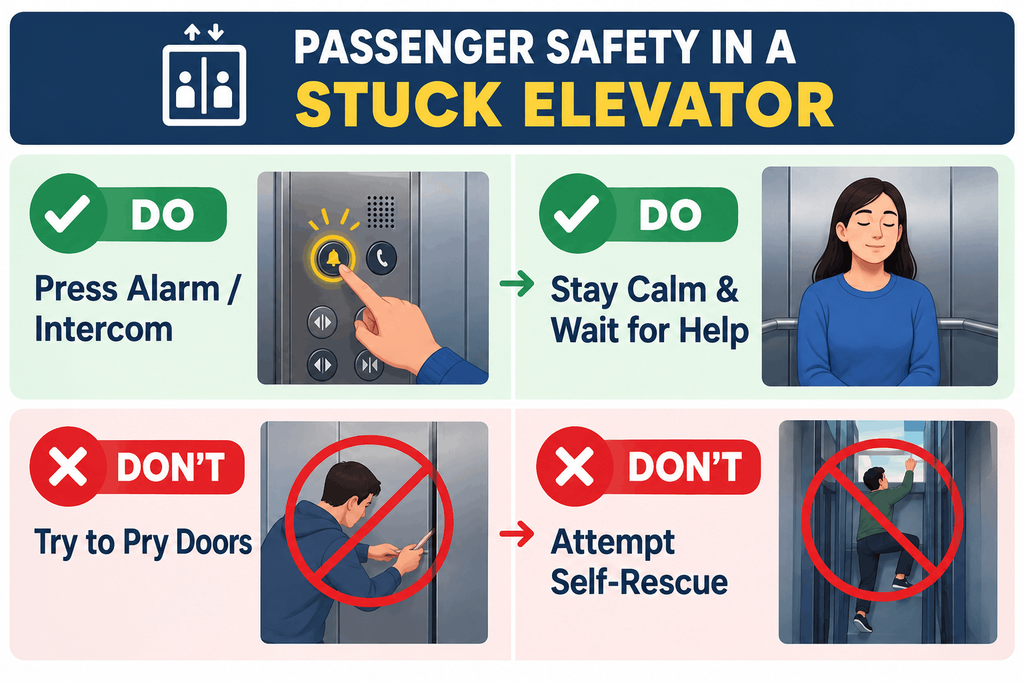
Passengers inside must press the alarm button, contact building administration via intercom, and remain calm. Never attempt to pry the doors open manually. Building managers must call an emergency lift repair Pune technician immediately to execute a safe manual lowering procedure.
4. Elevator Power Failure Backup Issues
Power outages remain a reality during heavy storms and grid transitions. An elevator power failure backup system—specifically an Automatic Rescue Device (ARD)—is designed to move the cab safely to the nearest floor and open the doors during an outage.
Primary Causes
- Depleted ARD Batteries: Aging battery banks failing to hold sufficient voltage under load.
- Phase Reversal or Failure: Incoming utility supply losing a single phase or swapping phase sequences.
- Tripped Main Breakers: Electrical surges blowing primary fuse lines.
Troubleshooting & Solutions
Facility staff should confirm that the main building generator is functioning correctly. However, testing, servicing, or replacing ARD battery banks requires expert electrical handling. Scheduling routine checks with a local elevator troubleshooting guide expert keeps your backup systems ready for sudden grid failures.
5. Sudden Jerks, Judder, or Unsmooth Stops
A uncomfortable ride characterized by sudden jerks, vibrations, or harsh leveling stops points directly to drive motor or levelling sensor inconsistencies.
Primary Causes
- Variable Voltage Variable Frequency (VVVF) Drive Faults: Improper acceleration or deceleration parameters.
- Worn Traction Cables: Unequal tension or physical wear across hoisting ropes.
- Leveling Sensor Misalignment: Dirty or misaligned magnetic proximity sensors in the hoistway.
Troubleshooting & Solutions
An unsmooth ride accelerates mechanical wear on structural components. Request an expert diagnostic check to recalibrate the VVVF drive profiles, balance rope tensions, and align floor proximity switches for seamless transitions.
6. Overheating Motors and Controller Drive Failures
Elevator machine rooms generate substantial internal heat during peak operational hours. Without proper ventilation, control panels and drive units overheat, leading to unexpected system shutdowns.
Primary Causes
- Poor Machine Room Ventilation: Inadequate cooling systems in rooftop machine rooms.
- High Ambient Temperatures: Extreme summer heat combined with continuous lift usage.
- Electrical Overloads: Overloading the lift cabin beyond its rated weight capacity.
Troubleshooting & Solutions
Ensure machine rooms are well-ventilated, clean, and equipped with functional cooling fans or air conditioning. If thermal overload switches continue tripping, seek assistance from a certified elevator repair company in Pune to audit control cabinet electronics and thermal safety switches.
7. Elevator Cab Misleveling
Misleveling occurs when the elevator car stops slightly above or below the building floor surface. This vertical gap creates a severe tripping hazard for passengers, elderly residents, and individuals with mobility challenges.
Primary Causes
- Brake Wear: Mechanical brake shoes slipping or wearing unevenly.
- Encoder Drift: Digital position encoders dropping pulse counts during travel.
- Hydraulic Fluid Temperature Fluctuation: Fluid expansion or contraction in hydraulic lift setups.
Troubleshooting & Solutions
If you notice vertical gaps exceeding half an inch at any landing, temporarily restrict elevator access. Call a technician to recalibrate floor position sensors, adjust mechanical brake holding torque, or service hydraulic valve manifolds.
8. Slow Travel Speeds and Long Wait Times
When an elevator takes noticeably longer to travel between floors or responds sluggishly to hall calls, overall building efficiency suffers.
Primary Causes
- Aging Traction Motors: Electrical winding deterioration reducing motor torque.
- Relay Control Delays: Outdated electromechanical relay panels processing inputs slowly.
- Hydraulic Pump Degradation: Worn pump impellers reducing fluid flow rates.
Troubleshooting & Solutions
Upgrading outdated control systems to modern micro-processor panels dramatically improves call dispatching and travel speeds. Consult a skilled professional to evaluate whether a full controller modernization or simple drive tuning is necessary.
9. High Energy Consumption and Rising Utility Bills
A sudden, unexplained spike in your building’s monthly electricity bill can often be traced directly back to inefficient, poorly maintained elevator machinery.
Primary Causes
- Degraded Motor Efficiency: Old motors consuming excess current due to mechanical drag.
- Continuous Lighting/Fan Draw: Inefficient cabin lighting systems running 24/7 without standby modes.
- Unbalanced Counterweights: Improperly calculated counterweights forcing motors to work harder.
Troubleshooting & Solutions
Modernizing older lift hardware with regenerative drives, LED lighting, and automated sleep modes significantly lowers power draw. Check out authority guidelines on energy performance standards through the Bureau of Energy Efficiency (BEE) to understand baseline industrial norms for energy savings.
10. Persistent False Error Codes and Electronic Glitches
Modern lifts rely on sensitive electronic control boards. Persistent electronic glitches, flickering floor indicators, or random error displays can paralyze vertical transport even when mechanical components remain intact.
Primary Causes
- Voltage Fluctuations: Unstable incoming power damaging delicate printed circuit boards (PCBs).
- Accumulated Dust and Moisture: Environmental contaminants creating short circuits on circuit boards.
- Software/Firmware Corruption: Outdated or corrupted software on main processor units.
Troubleshooting & Solutions
Avoid handling exposed circuit boards without proper electrostatic discharge protection. Professional technicians utilize specialized diagnostic tools to clear fault logs, isolate malfunctioning sensors, and stabilize incoming supply lines.
Quick Reference: Lift Problems, Root Causes & Actions
| Lift Problem | Likely Cause | Recommended Immediate Action |
| Lift door not closing | Blocked light curtain or dirty tracks | Clean door tracks; check photo-sensors |
| Elevator making noise | Dry guide rails or worn shoes | Call technician for lubrication and rail alignment |
| Lift stuck between floors | Safety gear trip or drive fault | Use emergency alarm; call emergency lift repair Pune |
| Power backup failure | Weak ARD battery bank | Schedule professional battery load testing |
| Misleveling at floors | Brake slippage or encoder error | Isolate lift and adjust brake/leveling sensors |
| Overheating drive unit | Inadequate ventilation / overload | Cool machine room; check system load limits |
When Should You Call an Elevator Repair Company in Pune?
While basic cleanliness—like keeping door sill grooves free of debris—can be handled by building housekeeping, mechanical, electrical, and electronic repairs strictly require certified expertise. Elevators are complex electro-mechanical safety systems governed by strict statutory guidelines, including those established under the National Building Code of India (NBC).
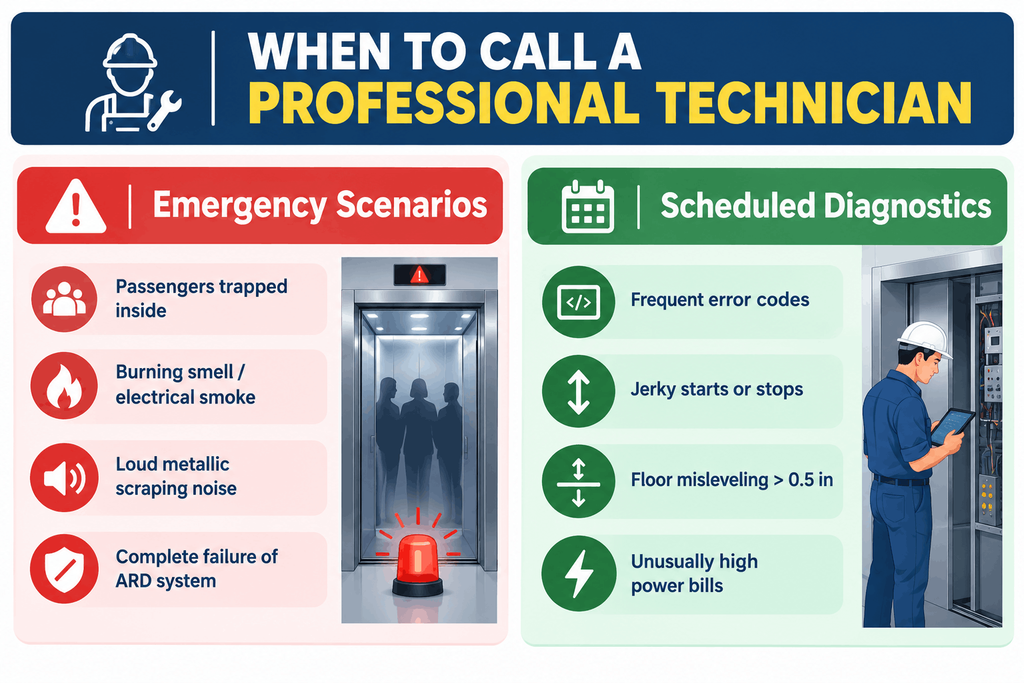
You must contact a qualified elevator repair company in Pune immediately if you encounter:
- Trapped Passengers: Any incident involving passengers contained within a stalled cab.
- Strange Burning Odors: Electrical burning smells emanating from the shaft or machine room.
- Severe Mechanical Scraping: Loud metal-on-metal grinding sounds indicating rail or rope failure.
- Repeated Safety Trips: Lifts shutting down multiple times throughout the week.
- Regulatory Inspections: Annual safety audits and mandatory load-testing certification requirements.
Attempting DIY repairs or hiring uncertified local electricians poses dangerous safety risks, voids equipment warranties, and exposes building owners to severe legal liability. Searching for a certified lift technician near me guarantees that trained professionals handle your equipment using authentic spare parts and industry-standard safety procedures.
How Horizon Elevators Delivers Unmatched Elevator Services in Pune
At Horizon Elevators, we understand that a broken elevator halts your daily life and impacts building safety. As a premier elevator repair company in Pune, we offer end-to-end vertical mobility solutions tailored specifically to the unique climate, infrastructure, and usage patterns of residential and commercial properties across Maharashtra.
Why Building Managers Choose Horizon Elevators
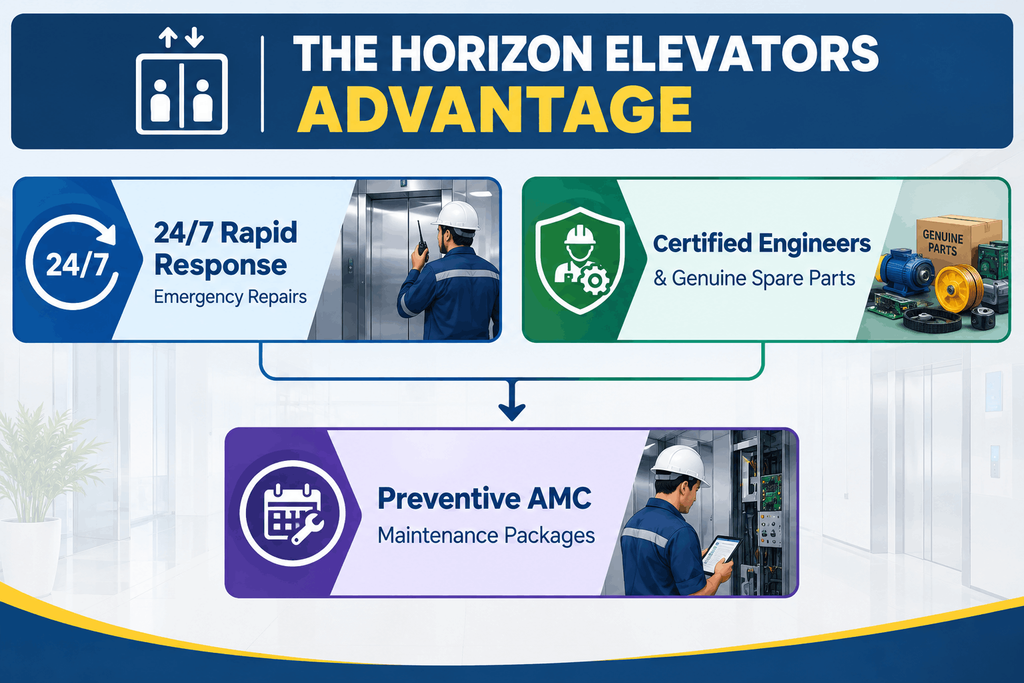
- 24/7 Rapid Emergency Response: Our dedicated teams operate round-the-clock, ensuring swift dispatch for any emergency lift repair in Pune callout.
- Certified Technical Experts: Our engineers undergo rigorous safety and technical training across traction, hydraulic, machine-room-less (MRL), and high-speed elevator configurations.
- Comprehensive AMC Plans: We provide proactive Annual Maintenance Contracts (AMC) designed to catch minor wear before it develops into costly repairs.
- Transparent Diagnostics: We utilize modern diagnostic tools to accurately pin point system faults, delivering clear technical reports and honest pricing with no hidden charges.
- Genuine OEM Spare Parts: We stock authentic components to ensure your vertical transport systems operate with maximum longevity and optimal performance.
Restore Smooth, Safe Vertical Mobility Today!
Don’t let unexpected elevator downtime compromise passenger safety or disrupt your daily activities. Whether you need immediate emergency repairs, routine preventive maintenance, or a total system overhaul, Horizon Elevators is ready to assist you.
Contact our expert team today to schedule an inspection or secure a customized Annual Maintenance Contract!
Frequently Asked Questions (FAQs)
Q1: What are the main elevator breakdown causes in Pune buildings?
The primary elevator breakdown causes include power surges and phase fluctuations, inadequate machine room ventilation, poor rail lubrication, worn door operators, and dust accumulation on optical sensors during dry or monsoon seasons.
Q2: How often should an elevator undergo professional servicing?
Elevators in residential and commercial buildings should undergo comprehensive routine maintenance at least once a month. Monthly servicing ensures safety circuits, brake systems, door sensors, and backup batteries are thoroughly tested.
Q3: What should I do if the lift gets stuck between floors?
Stay calm, press the emergency alarm button or use the cabin intercom to alert building security, and wait inside the cab. Never try to force the doors open yourself. Contact a 24/7 lift repair service immediately to perform a safe manual rescue.
Q4: How do I know if my elevator backup battery (ARD) is failing?
If the cabin lights immediately go dark during a power outage, or if the car fails to automatically travel to the nearest floor during grid failure, your ARD battery bank is likely depleted and requires professional testing or replacement.
Q5: Can I fix minor lift door problems myself?
You can gently sweep away loose dirt, dust, or small pebbles from the door tracks on floor landings. However, repairing mechanical door linkages, adjusting belt tension, or rewiring photo-sensors should strictly be handled by a certified lift technician near me.
Q6: How long does a typical elevator repair take?
Minor repairs—such as replacing door sensors, adjusting leveling switches, or swapping out relays—usually take between 1 to 3 hours. Major repairs involving motor rewinding, cable replacement, or controller upgrades can take anywhere from a full day to several days depending on component availability.