
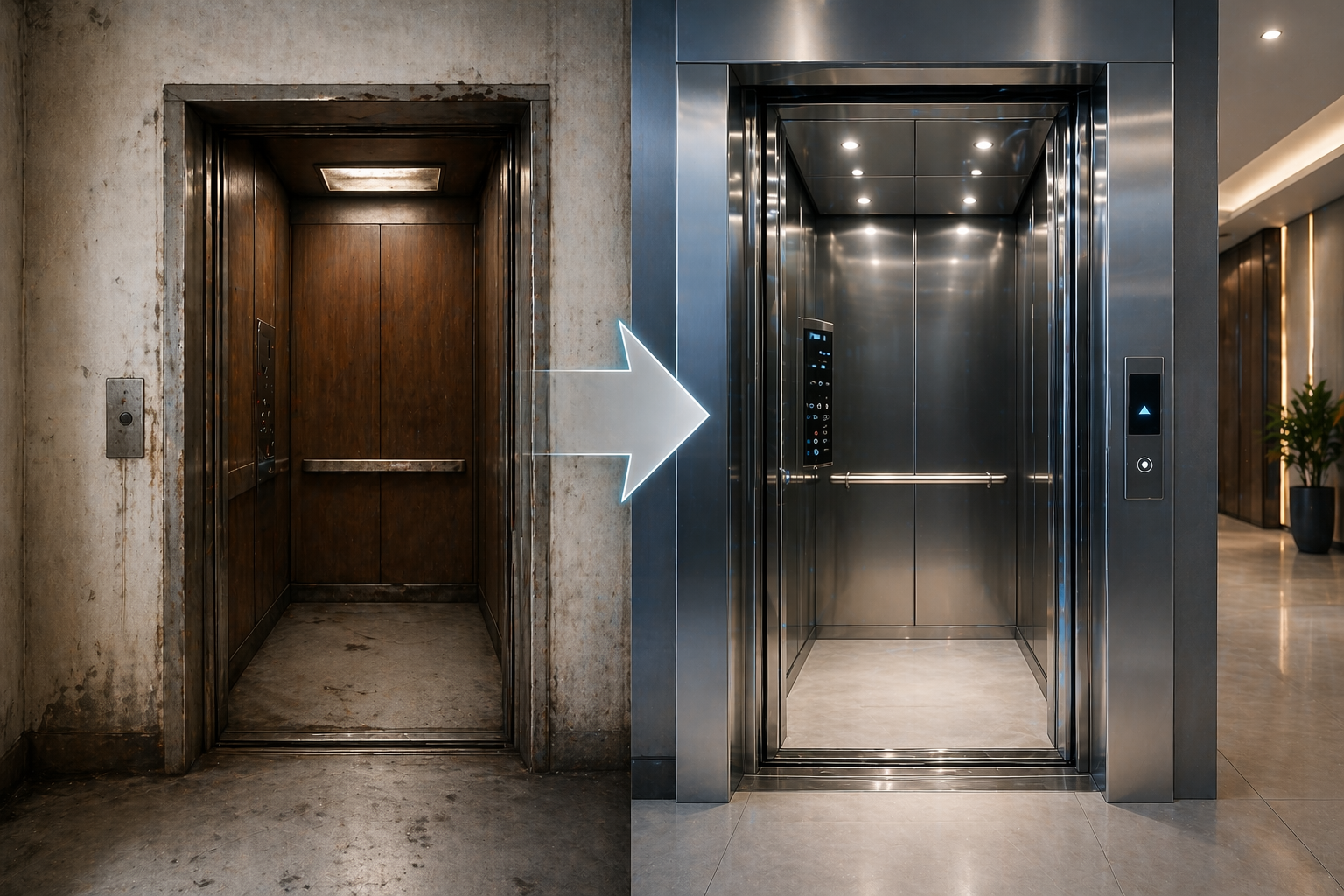
Is your building’s elevator starting to feel like a relic of the past? Maybe the doors hesitate, the ride is jerky, or it simply looks like it belongs in a black-and-white movie. If you find yourself asking, Elevator Modernization: When Should You Upgrade Your Old Lift?, you are already noticing the subtle red flags that signal a machine nearing its limit.
An elevator is the mechanical heartbeat of any multi-story building. Whether it is a luxury residential complex or a bustling commercial hub, the vertical transportation system must be seamless. However, technology evolves, and safety standards tighten. Continuing to patch up an aging system isn’t just expensive; it’s a liability. In this comprehensive guide, we will explore the critical signs of wear, the immense benefits of a modern system, and why Horizon Elevators is your trusted partner for premium lift upgrades.
What is Elevator Modernization?
Before diving into the “when,” it is essential to understand the “what.” Elevator modernization is not just a fresh coat of paint inside the cabin. It is a systematic upgrade of the lift’s “brain” and “muscle.” This process involves replacing or upgrading outdated components—such as the controller, the motor, the wiring, and the safety sensors—with state-of-the-art technology.
By focusing on elevator technology upgrades, property owners can transform a sluggish, power-hungry machine into a high-performance asset that complies with the latest safety codes.
Elevator Modernization: When Should You Upgrade Your Old Lift? (Key Indicators)
Determining the right time for an upgrade requires looking beyond the surface. Here are the most prominent signs that your lift is ready for a professional overhaul:
1. Frequent Breakdowns and Service Calls
If your elevator technician is visiting more often than your tenants, you have a problem. Frequent downtime is more than just an inconvenience; it suggests that the core components are failing. When the cost of monthly repairs starts to rival the investment in modernization, the choice becomes clear.
2. Slow Response Times and Sluggish Performance
Does the elevator take forever to arrive? Or perhaps it moves at a snail’s pace between floors? As systems age, the lifting mechanism and controllers lose efficiency. Modern systems use advanced algorithms to optimize travel paths, significantly reducing wait times.
3. Safety and Compliance Concerns
Building codes are constantly updated to ensure passenger safety. If your lift lacks modern features like infrared door sensors, emergency battery lowering systems, or up-to-date fire service controls, you might be at risk of non-compliance. Upgrading ensures you meet all Bureau of Indian Standards (BIS) requirements for vertical transportation.
4. High Energy Bills
Old elevators are notorious energy “vampires.” Modernization introduces energy-efficient elevator systems that utilize regenerative drives. These drives capture energy usually lost as heat and feed it back into the building’s electrical grid, potentially reducing lift energy consumption by up to 40%.
5. Noisy Operation and Jerky Movements
A smooth ride is the hallmark of a well-maintained elevator. If your passengers experience “bumping” when the car stops or hear grinding noises during travel, the guide rails or traction cables may be worn out.
The Benefits of Upgrading Your Vertical Transportation
When you commit to Elevator Modernization: When Should You Upgrade Your Old Lift?, you aren’t just spending money; you are investing in the longevity of your property.
- Enhanced Passenger Safety: Modernized lifts include improved leveling accuracy, which prevents tripping hazards at floor landings.
- Aesthetic Appeal: A sleek, modern interior with LED lighting and digital displays improves the overall “feel” of your building.
- Increased Property Value: For commercial and residential real estate, a modern elevator is a major selling point that attracts higher-quality tenants.
- Reduced Maintenance Costs: New parts come with warranties and require far less frequent attention than obsolete machinery.
Technical Components of Modernization
A full-scale upgrade usually targets three main areas:
- The Controller: Replacing the old relay-based logic with a microprocessor-based system allows for smoother acceleration and better traffic management.
- The Drive System: Upgrading the motor and drive ensures the lift operates quietly and uses less power.
- The Door Operators: Since most elevator issues involve the doors, installing modern, high-speed door operators can solve nearly 70% of common service issues.
For those looking for specific technical standards, the ASME A17.1 Safety Code provides a global benchmark for what a modernized lift should achieve in terms of safety and performance.
Why Choose Horizon Elevators for Your Modernization?
Navigating the complexities of lift upgrades requires an expert touch. At Horizon Elevators, we specialize in tailored solutions that breathe new life into aging infrastructure. Whether you need a simple aesthetic refresh or a complete mechanical overhaul, our team ensures minimal disruption to your daily operations.
We understand the local landscape and the specific challenges of maintaining lifts in diverse climates. From high-speed commercial elevators to reliable home lifts, we provide the technical excellence required to keep you moving upward.
Our Services Include:
- Comprehensive Site Audits
- Custom Modernization Packages
- Installation of Energy-Efficient Drives
- Luxury Cabin Interior Design
Transform Your Building Today
Don’t wait for a total system failure to take action. Proactive modernization saves money and ensures the safety of everyone who enters your building.
Contact Horizon Elevators today for a professional lift assessment and customized quote. Let’s make your elevators as modern as your vision.
Conclusion
Understanding Elevator Modernization: When Should You Upgrade Your Old Lift? is about recognizing the balance between maintenance costs and the benefits of new technology. By upgrading, you secure the future of your building, enhance the user experience, and ensure that your vertical transportation is both safe and sustainable.
Questions and Answers (Q&A)
Q1: How long does the elevator modernization process take?
Depending on the scope, a partial modernization can take 1–2 weeks, while a full system replacement might take 4–6 weeks per elevator bank.
Q2: Can I modernize only the interior of the lift?
Yes! This is called aesthetic modernization. It improves the look and feel but won’t affect the mechanical performance or speed of the lift.
Q3: How often should an elevator be modernized?
Generally, an elevator has a lifespan of 20–25 years. If your lift is older than 20 years, a professional evaluation for modernization is highly recommended.
Q4: Will modernization reduce my building’s electricity bill?
Absolutely. Modern controllers and regenerative drives are significantly more energy-efficient than older AC or DC motors.
Q5: Is modernization cheaper than a full replacement?
In most cases, yes. Modernization utilizes the existing guide rails and heavy structural components while replacing the parts that actually wear out, making it a cost-effective alternative to a total replacement.