
Lift Maintenance Contract: Everything You Need to Know Before Signing an AMC
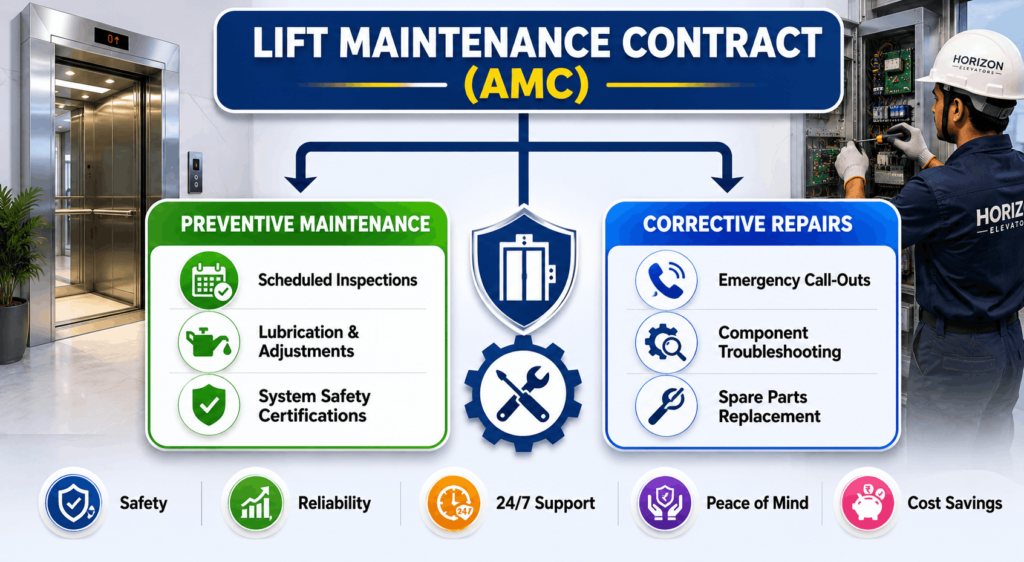
Last Updated on May 25, 2026 by Admin Every single day, vertical mobility systems silently power residential high-rises, commercial skyscrapers, and industrial hubs. Yet, we rarely think about the complex engineering keeping us safe between floors until a sudden jerk, a prolonged shutdown, or an emergency entrapment occurs. For building owners, residential welfare associations (RWAs), and facility managers, the continuous uptime of an elevator is not just a luxury—it is a matter of legal safety and financial predictability. This is where a Lift Maintenance Contract becomes the backbone of your building’s infrastructure. Signing an Annual Maintenance Contract (AMC) protects your capital investment, lowers long-term operational liabilities, and ensures absolute passenger safety. However, entering an agreement blindly can bind you to restrictive terms, hidden costs, or subpar service levels. Whether you are managing a single residential home lift or a large commercial fleet, this guide explains everything you need to know about a Lift Maintenance Contract before signing on the dotted line. 1. Understanding the Core Framework of a Lift Maintenance Contract A Lift Maintenance Contract is a legally binding service agreement between a building owner or administrative authority and an elevator engineering company. It establishes a schedule of preventive checkups, routine engineering audits, breakdown response guarantees, and part replacement protocols for a set annual fee. Rather than operating on a reactive “break-fix” model, an effective contract prioritizes proactive maintenance. Specialized elevator technicians identify minor component wear—such as frayed governor ropes, micro-pitting in gear teeth, or drifting electrical relays—before they develop into complete system failures. 2. Types of Elevator AMC Plans Elevator service agreements generally fall into two categories: Comprehensive AMC Plans and Non-Comprehensive AMC Plans. Choosing the wrong option can result in unexpected expenses. Comprehensive Elevator AMC Plans Often called an “all-inclusive” or “bumper-to-bumper” contract, a Comprehensive Lift Maintenance Contract gives you complete financial predictability. It covers routine inspections, emergency troubleshooting, labor fees, and the cost of replacing major components when they wear out due to normal operation. Non-Comprehensive Lift Maintenance Contract This is a baseline service model with a lower upfront cost. The service provider charges a flat annual fee to cover routine engineering visits, basic adjustments, lubrication, and emergency troubleshooting labor. 3. Critical Checklist: What Every Comprehensive Lift Maintenance Contract Must Include Do not accept a generic template. When reviewing an elevator service proposal, verify that the following core service elements are clearly documented: Scheduled Preventive Maintenance Visits The agreement should state exactly how many times a year a technician will inspect the system. For medium to high-traffic passenger elevators, standard industrial practice requires monthly preventive maintenance visits. Emergency Breakdown Support and Entrapment Rescue A reliable Lift Maintenance Contract must include 24/7/365 emergency call-back services. Pay close attention to the specified response times: Detailed Scope of Covered Parts If you choose a comprehensive plan, ensure the text explicitly lists major high-value components. Watch out for ambiguous phrasing like “all mechanical systems covered except specialized electronics,” which can leave you exposed to expensive controller repairs. Exclusion Clauses Even the most thorough comprehensive agreements exclude damages caused by external factors. Standard exclusions typically cover: 4. Navigating Regulatory Compliance and Safety Standards An elevator is a specialized industrial transport vehicle operating within a public space. A compliant Lift Maintenance Contract keeps your property aligned with national safety frameworks like the Bureau of Indian Standards (BIS) Lift Guidelines and regional State Lift Acts. Key Safety Audits and Testing Protocols Your contract should include regular technical evaluations to keep your system safe and compliant: 5. Hidden Clauses and Pitfalls to Avoid Before Signing Before signing an agreement, check for hidden terms that could complicate your relationship with the service provider. Automatic Renewal Terms Many standard contracts include rolling automatic renewal clauses. These state that unless you provide written cancellation notice via registered mail exactly 60 or 90 days before the contract expires, the agreement automatically extends for another full year. Ensure you retain manual renewal control. Uncapped Price Escalation Rates It is standard for an multi-year AMC fee to adjust upward over time to account for inflation and wage growth. However, make sure this escalation is capped at a fixed percentage (e.g., a maximum 5% increase per annum) to prevent sudden, arbitrary rate hikes. Proprietary Software Lock-Ins Modern elevators rely heavily on software-driven Microprocessor Controllers. Some original equipment manufacturers (OEMs) use proprietary diagnostics that lock out third-party engineers. Confirm that your service provider has the necessary diagnostic tools, licensed software access, and matching spare parts stock to service your specific elevator model without causing prolonged technical lockouts. 6. Financial Analysis: Evaluating Value Over Upfront Price When reviewing a Lift Maintenance Contract, look beyond the initial price tag. Low-cost service bids often indicate that a provider is cutting corners on technical training, safety gear quality, or emergency response availability. How Service Pricing is Determined Choosing a comprehensive service plan functions much like an insurance policy. While the upfront investment is higher, it shields you from sudden, budget-disrupting repair bills. 7. Transitioning to Specialized Independent Maintenance Experts Many property managers believe they are permanently locked into the original equipment manufacturer (OEM) for maintenance. However, independent elevator engineering firms have modernized the industry by delivering high-quality service at competitive rates. The Independent Engineering Advantage Partner with Horizon Elevators for Reliable Vertical Mobility Keeping your building safe and accessible requires dedicated engineering expertise. At Horizon Elevators, we provide tailored maintenance solutions that prioritize passenger safety, lower your operational overhead, and ensure peak equipment performance. Our engineers specialize in maintaining residential, commercial, and industrial vertical transport systems. We offer transparent, comprehensive service plans with clear service-level agreements and no hidden fees. Contact our engineering support team today at Horizon Elevators Contact Us to request a detailed on-site inspection and a customized maintenance plan built for your property. Frequently Asked Questions (FAQ) Q1: How often should an elevator undergo a routine checkup under an AMC? For standard passenger configurations, elevators should be serviced once every month. High-traffic commercial systems may require more frequent technical reviews, while low-occupancy residential