Horizon Elevators

Elevators and Lifts

Elevators and Lifts

Demystifying Lift AMC: What’s Included in a Comprehensive Maintenance Contract?

Vertical mobility has transitioned from a structural luxury to a core utility in modern urban design. Whether you are managing a multi-story residential housing complex in Pune or overseeing a high-traffic industrial facility, the continuous operation of your elevator systems is critical. However, building owners and facility managers often face a common dilemma: how to properly manage operational liabilities while ensuring absolute passenger safety. This is where the core concept of a lift amc meaning comes into sharper focus. An Annual Maintenance Contract (AMC) functions as a long-term asset-protection mechanism, steering your building operations away from reactive, expensive “break-fix” emergencies and moving them toward structured, predictable engineering care. When evaluating maintenance agreements, decision-makers are generally presented with two distinct pathways: a baseline service model or a fully inclusive plan. Opting for a comprehensive lift maintenance contract is comparable to securing a premium insurance policy for your property’s vertical transportation grid. It offers complete financial predictability by absorbing the volatile costs of emergency technical call-outs, routine labor fees, and high-value mechanical component replacements. In this deep architectural dive, we will demystify the core components, regulatory mandates, and structural inclusions that define an institutional-grade elevator service contract, empowering you to maximize system uptime and safeguard your financial investments. Understanding the Legal and Operational Framework of a Lift AMC To truly grasp the operational scope of elevator upkeep, one must first look at the foundational lift amc meaning. At its core, an Annual Maintenance Contract is a legally binding service framework executed between a real estate administrative authority and a certified elevator engineering firm. Rather than allowing your machinery to operate continuously until a component fails, an AMC institutes a highly organized matrix of preventive engineering audits, deep-clean lubrication schedules, and proactive safety testing. In the vertical mobility landscape, mechanical components are subjected to unrelenting friction, variable weight loads, and electrical thermal stress. Without a proactive oversight protocol, minor operational anomalies—such as minor micro-pitting on main drive sheaves, slight calibration drifts in electrical control relays, or micro-fraying within high-tensile governor ropes—can quickly turn into systemic failures. A structured service agreement mitigates these risks by putting your building’s vertical transport network under the constant supervision of factory-trained technicians. This satisfies municipal safety compliance while extending the operational life cycle of your capital infrastructure by years. Comprehensive vs. Non-Comprehensive Agreements: The Critical Differences Property managers frequently ask why upfront contract prices vary so widely between different service providers. The answer lies in the structural blueprint of the contract itself. Understanding how a comprehensive agreement differs from a standard, non-comprehensive alternative is essential for preventing unexpected budgetary shocks mid-year. The Non-Comprehensive Lift Maintenance Contract This baseline arrangement serves primarily as a minimalist technical checkup framework. Under a non-comprehensive agreement, the service firm provides regular engineering checkups and basic lubrication tasks for a lower initial fee. However, the client remains fully exposed to financial risk. If a major component like a traction motor burns out or a variable-voltage, variable-frequency (VVVF) drive fails, the building management must pay the full list price for the replacement parts, along with variable emergency labor fees. This approach can lead to unpredictable cash flow fluctuations and lengthy delays while waiting for corporate fund approvals. The All-Inclusive Comprehensive Lift Maintenance Contract Often described in engineering circles as a bumper-to-bumper protection plan, this strategy completely eliminates financial uncertainty for property owners. A comprehensive lift maintenance contract wraps all routine monthly inspections, emergency diagnostic labor, component restorations, and high-cost mechanical replacements into one fixed, predictable annual fee. Whether your system requires a minor adjustment to a door door-interlock sensor or a complete replacement of its primary controller circuit boards, the entire financial and operational responsibility is borne by the service partner. This model is the industry standard for high-occupancy residential towers, busy commercial plazas, and mission-critical healthcare facilities where extended elevator downtime is not an option. What’s Included in a Comprehensive Lift Maintenance Contract? A truly comprehensive service agreement leaves no room for ambiguity. It clearly outlines the mechanical, electrical, and structural systems covered under its protective umbrella. When partnering with an industry leader like Horizon Elevators, a premium contract covers several critical operational pillars: 1. The Core Mechanical and Electrical Powertrain The heavy-machinery heart of your elevator infrastructure requires specialized engineering oversight. A comprehensive agreement explicitly covers the repair, reconditioning, and replacement of: 2. Hoisting Systems and Cabin Suspension Assets Passenger safety depends entirely on the structural integrity of the suspension framework. Comprehensive coverage includes: 3. Door Automation Systems and Structural Safeguards Statistically, more than 70% of modern elevator service disruptions originate within the door operator subsystems. A resilient contract directly targets these components by covering: Managing the Financial Side: Breaking Down the Lift AMC Charge When planning your property’s yearly operational budget, it is important to understand the variables that determine your overall lift amc charge. There is no single price tag that applies to every building; instead, elevator companies calculate the lift annual maintenance charge using a tailored set of building metrics: Generally, across the Indian vertical transportation sector, a standard residential elevator service contract can range anywhere from ₹15,000 to ₹60,000+ annually per unit, depending heavily on these operational realities. For example, a basic low-rise hydraulic lift in a private villa requires fewer engineering hours than an advanced, high-speed, Motor-Room-Less (MRL) traction configuration in a commercial high-rise. By locking in a comprehensive plan, you insulate your community from volatile market spikes in electronic components or sudden emergency service fees. This turns an unpredictable capital risk into a predictable, manageable operating expense. The Danger of Exclusions: Reading the Fine Print in an Elevator Service Contract While an all-inclusive contract offers excellent protection, the global elevator industry operates under specific engineering limits. To maintain transparent business relationships, property owners must understand what falls outside a standard elevator service contract. These boundaries are typically defined by external site factors, building infrastructure issues, or intentional damage rather than normal wear and tear: Reviewing these standard exclusions highlights the importance of keeping your building’s electrical

Industrial goods lift selection guide
Elevators and Lifts

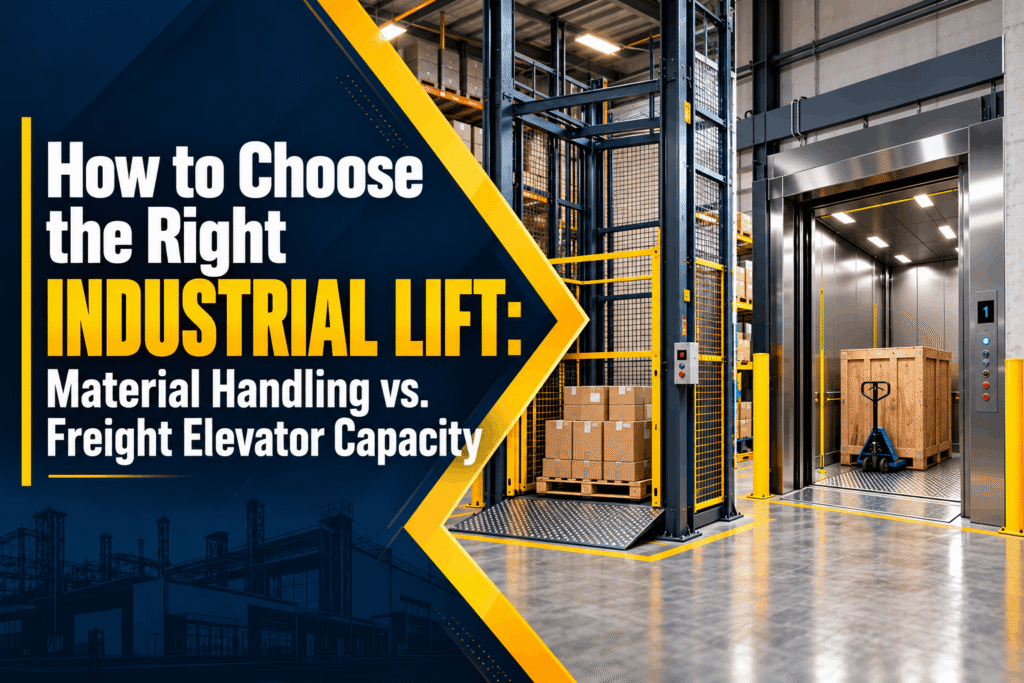
Optimizing Warehouses: How to Choose the Right Goods Lift or Industrial Material Lift

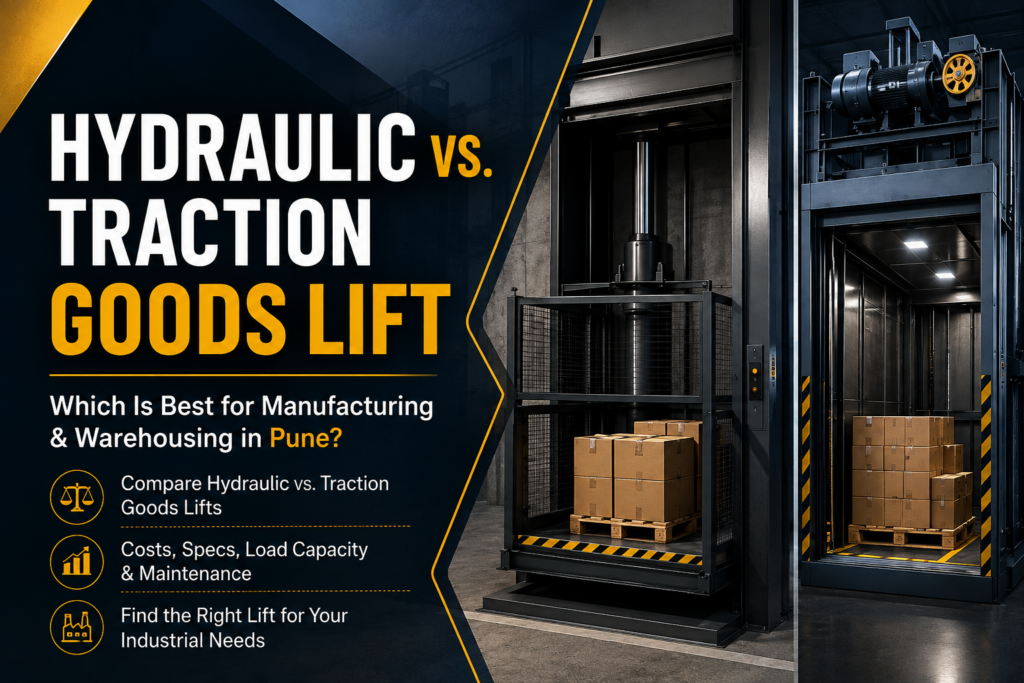
In the fast-paced world of modern logistics, supply chain efficiency is the ultimate competitive advantage. For factory owners, logistics managers, and industrial infrastructure contractors, maximizing vertical space and streamlining material handling are critical operational goals. At the heart of achieving these efficiencies is a single, pivotal piece of machinery: the goods lift. Moving heavy raw materials, palletized stock, or finished products across multiple floors requires a heavy-duty, reliable, and safe vertical transportation system. Integrating a robust goods lift into your facility does more than just transport materials; it eliminates bottlenecks, enhances worker safety, and directly reduces operational downtime. However, choosing the wrong system can lead to costly disruptions, frequent maintenance delays, and severe safety hazards. This comprehensive guide explores the strategic nuances of warehouse optimization, breaks down the technical differences between various lifting systems, and provides a clear roadmap to help you select the ideal vertical transport solution for your industrial application. The Strategic Importance of Vertical Logistics in Modern Warehouses As industrial land costs continue to climb, modern warehouse design has shifted from horizontal expansion to vertical utilization. Multi-tier mezzanine floors, high-bay storage racks, and multi-story factory layouts are now industry standards. While these configurations maximize square footage, they introduce a complex operational challenge: vertical logistics. Relying solely on traditional forklifts or manual labor to move heavy bulk loads between floors is inefficient, dangerous, and unsustainable. Industrial material handling demands specialized equipment engineered to sustain continuous vertical stress. Implementing an engineered material elevator ensures a seamless flow of goods from the receiving dock to high-level storage, and eventually to the shipping bay, creating a highly synchronized internal supply chain. Identifying Your Material Handling Needs Before exploring the technical specifications of different lifting mechanisms, it is essential to conduct a comprehensive audit of your facility’s specific operational demands. A one-size-fits-all approach does not apply to industrial vertical transport. Your selection process should begin with four primary criteria: 1. Load Capacity and Volume Determine the maximum weight your system will need to support in a single trip. Industrial operations generally classify lifting requirements into three tiers: Always factor in a safety margin beyond your daily average load weight to accommodate future business growth and peak operational demands. 2. Duty Cycle and Frequency of Operation How often will the lift operate during a shift? A system designed to run five times a day requires vastly different engineering, cooling, and wear-resistance than a system operating continuously across a 24-hour, three-shift production line. High-frequency environments demand heavy-duty components capable of rapid cycling without overheating or experiencing premature structural fatigue. 3. Spatial and Structural Constraints Examine the physical architecture of your building. Is there an existing masonry structural shaft, or will the system require a self-supporting steel structure? Check the available pit depth at the lowest level and the headroom clearance at the top floor. Certain lifting systems require extensive structural modifications, while others feature a low-profile design that minimizes civil work. 4. Environmental and Material Characteristics The operating environment significantly influences material selection and component ratings. For example, chemical processing plants or food manufacturing facilities may require stainless steel cabins and explosion-proof electrical components. Conversely, a standard dry-goods fulfillment center can utilize robust, powder-coated structural steel. Hydraulic Lift for Material Handling vs. Traction Systems Choosing the right drive mechanism is one of the most critical decisions in the procurement process. The two dominant technologies utilized in industrial material handling are hydraulic systems and traction (counterweighted) systems. The Power of a Hydraulic Lift for Material Handling A hydraulic lift for material handling utilizes a fluid-driven piston mechanism to elevate the lifting platform or cabin. This technology is widely favored for low-to-medium rise applications (typically up to 15 meters of travel) due to its exceptional structural advantages: Traction Systems for High-Rise Demands Traction systems utilize steel ropes or belts running over a sheave driven by an electric motor, balanced by a counterweight. These systems are best suited for high-rise industrial complexes, large-scale distribution centers, or multi-story commercial facilities. Traction lifts offer higher travel speeds and unlimited travel heights, making them highly efficient for deep vertical shafts where rapid cycle times are necessary. Exploring Specialized Industrial Material Lifts Depending on your facility’s layout and specific workflows, a traditional enclosed cabin elevator may not always be the most practical or cost-effective choice. Exploring alternative industrial material lift configurations can reveal highly efficient, tailored solutions. Warehouse Goods Lift Solutions A standard warehouse goods lift typically features an enclosed or semi-enclosed cage structure designed explicitly for transporting freight accompanied by trained operators. These systems are equipped with heavy-duty landing gates, reinforced flooring to withstand forklift loading impacts, and precise leveling controls to ensure smooth transitions when rolling heavy pallets into the cabin. Commercial Lift Integrations For businesses operating integrated facilities—such as a ground-floor retail showroom backed by a first-floor inventory warehouse—a versatile commercial lift offers an ideal balance. These systems combine the rugged structural durability of a freight lifter with the refined aesthetics, smooth ride quality, and stringent safety features required for mixed-use commercial and industrial environments. The Versatility of a Scissor Lift When vertical travel heights are relatively short (e.g., bridging a dock-to-truck level or moving goods to a single low-profile mezzanine), a heavy-duty scissor lift provides an excellent alternative. Scissor mechanisms operate via crossing structural supports that extend vertically. Because they do not require a built-in hoistway or a formal elevator shaft, they can be installed directly onto a concrete slab or within a shallow pit. This makes them highly adaptable for open-air loading bays, assembly line integration, and rapid-deployment material handling setups. Crucial Structural and Safety Considerations Industrial lifting environments are inherently demanding, making safety and compliance non-negotiable. To protect your workforce, safeguard your inventory, and ensure compliance with national safety codes like IS 14665, your equipment must incorporate robust structural and electronic safety layers. Structural Reinforcement for Forklift Loading One of the most common causes of structural damage to freight elevators is the immense impact force generated when a forklift enters the cabin. The lift

Modern home elevator installation in India
Elevators and Lifts

The Ultimate Guide to Home Elevator Installation in India (Cost, Types, & Requirements)

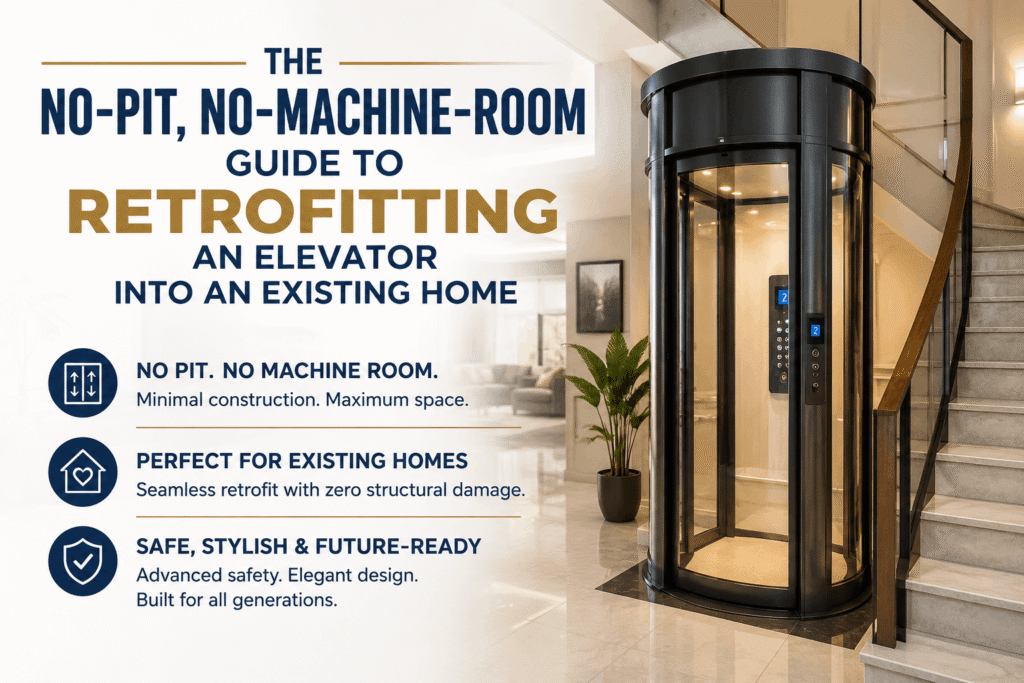
Modern residential architecture across India is shifting toward luxury, convenience, and long-term accessibility. For premium luxury homeowners, independent villa builders, elite architects, and interior designers, adding a private lift is no longer just an optional aesthetic upgrade. It has rapidly become a vital lifestyle necessity. Whether your goal is to future-proof a multi-story bungalow for aging family members or to elevate the market value of a high-end property, understanding the complexities of vertical transit is essential. Executing a flawless home elevator installation requires deep technical knowledge regarding structural footprints, spatial planning, Indian safety compliances, and localized civil works. Making the wrong choices early in the design phase can lead to major structural reworks and inflated future maintenance bills. This comprehensive, data-driven manual serves as your definitive strategic guide to choosing, budgeting, and installing the perfect architectural lift system anywhere in India. Why Modern Indian Luxury Homes Need Private Elevators The luxury residential landscape in rapidly growing metros—ranging from Delhi NCR and Mumbai to Bangalore and Pune—is defined by expansive independent multi-level bungalows, duplex villas, and premium triplex penthouses. Installing dedicated home elevators india systems introduces a seamless blend of sophisticated lifestyle value, barrier-free accessibility, and timeless architectural appeal. 1. Multi-Generational Longevity and Aging-in-Place Traditional Indian families are deeply rooted in multi-generational living. Designing a premium home means ensuring that elderly parents and grandparents can navigate every single level of the property with total dignity and absolute autonomy. A private residential lift completely eliminates the severe physical strain and safety hazards associated with steep, winding structural staircases. 2. Substantial Premium Property Valuation From a pure real estate investment perspective, custom residential lifts and elevators deliver exceptionally high returns. Premium properties equipped with whisper-quiet, architecturally integrated vertical transit systems command premium pricing in the secondary luxury housing market. It immediately differentiates an independent villa from standard local properties. 3. High-End Architectural Integration Modern private lifts are no longer bulky, eyesore steel cages hidden away in dark corners. Instead, today’s elite interior designers utilize custom glass panorama cabins, bespoke ambient LED illumination, leather-accented wall panels, and sleek brushed-gold metal trims. These systems act as a striking structural centerpiece that flows beautifully within a grand grand foyer or a central spiral staircase. Primary Types of Residential Elevators in India Selecting the correct mechanical driving mechanism heavily influences your property’s overall structural spatial planning, structural headroom allowances, required civil pit depths, and ongoing monthly electrical consumption. The Indian domestic market features three core structural drive mechanisms for a premium lift in india for home. 1. Hydraulic Home Elevators A hydraulic home lift operates via a heavy-duty piston assembly positioned beneath or alongside the lift shaft, driven by oil pumped from an external compact machinery tank. 2. Traction / Machine Room-Less (MRL) Elevators An mrl elevator utilizes highly advanced counterweights and a gearless synchronous motor mounted entirely within the top interior parameters of the lift shaft itself. This completely eliminates the traditional bulky rooftop machine room. 3. Pneumatic / Vacuum Home Elevators Pneumatic home lifts india utilize controlled air pressure differentials inside a sealed, clear cylindrical polycarbonate tube structure to pull or lower the lightweight cabin smoothly between floors. Cost Breakdown of Home Elevator Installation in India Determining the exact cost of a custom home lift price in India involves assessing several distinct variables, from engineering choices to local civil construction requirements. Generally, premium turn-key installations across India range from ₹12,00,000 to ₹35,00,000+ INR, based on the specific brand tier, drive mechanism, and finish levels you choose. Structural Price Categorization Matrix Elevator Type Matrix Average Price Range (INR) Best Architecture Applications Primary Structural Advantage Hydraulic Home Lifts ₹14 Lakhs – ₹22 Lakhs Retrofits, Duplexes, Terraced Villas Shallow pit needs, premium smooth ride Machine Room-Less (MRL) ₹16 Lakhs – ₹26 Lakhs Multi-story luxury bungalows (4+ Floors) Top-tier energy savings, fast speeds Pneumatic Vacuum Lifts ₹18 Lakhs – ₹32 Lakhs Modern open-foyer duplexes, penthouses Zero pit needed, panoramic glass walls Bespoke Imported Luxury Lifts ₹28 Lakhs – ₹45 Lakhs+ Ultra-luxury high-end custom residences Tailored European design, premium finishes Key Core Elements Driving Your Financial Budget Key Civil & Technical Requirements To ensure a seamless home elevator installation that satisfies both local building safety parameters and engineering codes, architects and builders must carefully track three technical areas. 1. Structural Shaft Core Dimensions and Clear Overhead Space 2. High-Voltage Electrical Infrastructure and Power Backups Most high-capacity residential traction and standard MRL systems run on a Three-Phase 415V, 50Hz electrical power line. It is critical to secure these power lines with dedicated circuit breakers and steady voltage stabilizers to shield sensitive microprocessor control boards from voltage drops. Additionally, ensure your home’s main power backup system (like an online inverter or a diesel generator set) can handle the starting current spike that occurs when the lift cabin begins moving upward. 3. Integrated Emergency Safety Features Bureau of Indian Standards (BIS) Codes and Compliance Safety should never be a secondary concern when dealing with vertical transit systems within your private home. In India, residential lift engineering, installation processes, and ongoing operations must carefully align with the strict standards set by the Bureau of Indian Standards (BIS). Key compliance benchmarks include: Furthermore, several Indian states—including Maharashtra, Tamil Nadu, Karnataka, and Delhi—strictly enforce local State Lift Acts. Homeowners in these jurisdictions must secure an official “Permit to Erect” before starting construction, followed by a formal “License to Operate” issued after a safety inspector approves the finalized physical installation. Working with an experienced, certified manufacturer helps streamline this legal inspection and regulatory approval process. Step-by-Step Installation Timeline Phase 1: In-Depth Engineering Evaluation and Site Assessment (Weeks 1-2) Experienced technical engineers perform a thorough structural analysis of your property layout. They verify shaft plumbness, confirm structural support beams, determine loading points, and finalize the exact mechanical blueprints. Phase 2: Structural Preparation and Civil Works (Weeks 3-5) Local construction crews pour the concrete foundation pit, construct the masonry or structural steel shaft enclosure, and prepare the necessary rough cutouts for future floor landing doors and wall-mounted call

Elevator Modernization
Elevators and Lifts

Elevator Modernization vs. Repair: When is it Time to Upgrade Your Building’s Lift?

Imagine stepping into your building’s elevator, pressing the button for the top floor, and hearing an unsettling grinding noise followed by a sudden, jarring shudder. For property managers, building owners, and facility directors, this scenario is a regular source of anxiety. Managing vertical transportation comes with a critical, ongoing dilemma: Elevator Modernization vs. Repair. When your building’s lift starts acting up, how do you know if a quick fix is enough, or if it is time to invest in comprehensive elevator upgrade services? Every mechanical system has a finite lifespan. While routine maintenance keeps a system running day-to-day, there comes a point where simple repairs merely mask deeper, systemic issues. Opting for strategic elevator modernization rather than continuous, costly patches is essential to protecting your property value, ensuring tenant safety, and cutting long-term operational costs. Choosing between a localized fix and a system-wide upgrade requires analyzing equipment age, breakdown frequency, compliance standards, and passenger expectations. This comprehensive guide breaks down the core differences between repair and modernization. It highlights the signs that indicate your system is failing, details the financial benefits of an upgrade, and explains how partnering with a trusted partner like Horizon Elevators can transform your building’s infrastructure. Understanding the Basics: Elevator Repair vs. Replacement Before diving into performance metrics and financial ROI, it is important to establish exactly what differentiates a repair from a modernization project. Property owners often confuse these terms, leading to misaligned budgets and unexpected operational downtime. What is Elevator Repair? An elevator repair is a reactive or routine maintenance action designed to fix a specific, isolated issue. Think of it as replacing a worn brake pad on a car or swapping out a faulty door sensor. Repairs are ideal for relatively new systems experiencing minor, occasional glitches. They are quick, targeted, and keep immediate upfront costs low. However, repairs do not alter the core technology, efficiency, or overall capabilities of the lift. What is Elevator Modernization? In contrast, lift modernization services are a comprehensive, proactive overhaul of the elevator’s vital internal organs. Instead of tearing out the entire structural hoistway and guide rails—which is a full old elevator replacement—modernization replaces obsolete components with state-of-the-art technology. This process typically targets the brains, muscles, and safety systems of the lift, including: When evaluating elevator repair vs replacement, modernization sits perfectly in the middle. It delivers the performance, safety, and efficiency of a brand-new system at a fraction of the cost and structural disruption of a total replacement. 5 Warning Signs Your Building Needs Elevator Modernization How do you know when you have crossed the line from a simple repair into modernization territory? If your facility exhibits any of the following five warning signs, it is time to stop patching the problem and explore professional lift upgrade solutions. 1. Frequent Breakdowns and Trapped Passengers If your maintenance log shows the elevator mechanic visits your building more than twice a month, you are dealing with systemic unreliability. Frequent shut-downs frustrate tenants, damage your building’s reputation, and create serious liabilities if passengers are repeatedly trapped. 2. Excessive Noise, Shaking, and Poor Leveling An elevator ride should be smooth, quiet, and predictable. If the cab jerks when starting or stopping, emits grinding noises, or fails to level flush with the building floor, the mechanical components are heavily worn. Misleveling is a significant tripping hazard and a direct violation of accessibility codes like the Americans with Disabilities Act (ADA) Accessibility Guidelines. 3. Rising Energy Bills and High Operational Costs Older, geared traction or hydraulic elevators draw an immense amount of electricity. If your building’s energy consumption is spiking, an outdated power system is likely the culprit. Modern systems use advanced technology to drastically cut power consumption. 4. Difficulty Finding Replacement Parts Is your service technician taking weeks to fix a simple issue because they have to hunt down a refurbished part on eBay? If your elevator is over twenty years old, the original manufacturer likely no longer produces its components. Relying on obsolete hardware keeps your system vulnerable to prolonged downtime. 5. Growing Tenant Complaints and Long Wait Times In commercial offices and residential high-rises, time is money. Outdated dispatching systems struggle to handle peak morning and evening traffic efficiently. If tenants are constantly complaining about long hallway wait times, your building’s vertical transportation is holding your property back. The Core Components of an Elevator Upgrade When you invest in building lift modernization, you are not just getting a cosmetic makeover. You are completely updating the core infrastructure. A standard modernization project targets several critical areas to bring the lift into the modern era. Elevator Control System Upgrade The controller is the brain of the elevator. Older systems rely on mechanical relays and heavy wiring infrastructure that slow down response times. A modern elevator control system upgrade introduces solid-state microprocessors. These computers collect real-time traffic data, calculate the fastest routes, and organize car dispatching to reduce wait times across the building. Lift Controller Replacement As part of the control overhaul, a complete lift controller replacement ensures that the electrical signals sent to the motor, doors, and floor indicators travel securely and instantaneously. This eliminates the random glitches and programming bugs common in aging hardware. Elevator Motor Upgrade The muscles of your lift live in the machine room. Older, inefficient motors draw massive current surges every time the cab moves. Transitioning to an elevator motor upgrade—often utilizing permanent magnet synchronous motors and Variable Voltage Variable Frequency (VVVF) drives—delivers exceptionally smooth acceleration and deceleration while consuming far less power. The Tangible Benefits of Building Lift Modernization Modernizing your elevator infrastructure requires an initial capital investment, but the long-term returns consistently outweigh the upfront expenditure. Upgrading your system delivers clear, measurable advantages across your entire property footprint. Drastic Energy Savings Older elevators waste significant energy by dissipating excess power as raw heat into the machine room. Transitioning to energy efficient elevators lowers your building’s carbon footprint and slashes monthly utility expenses. Modern regenerative drives capture energy created during braking and feed it

industrial hydraulic lift manufacturer
Elevators and Lifts

How to Choose the Right Industrial Hydraulic Lift for Your Business

In today’s fast-paced commercial and industrial landscape, operational efficiency is everything. Whether you run a massive distribution center, a multi-story manufacturing facility, or an automotive workshop, moving heavy materials vertically can quickly become a bottleneck. This is where an industrial hydraulic lift system becomes indispensable. However, investing in vertical material handling equipment is a major capital expenditure. You cannot simply pick a model out of a catalog and hope it fits your facility’s needs. Making the wrong choice can lead to workflow inefficiencies, high maintenance costs, and severe safety hazards. To help you make an informed decision, this comprehensive guide covers everything you need to know. We will break down the core components, explore the different types of equipment, and explain exactly what to look for when partnering with an experienced industrial hydraulic lift manufacturer. The Critical Role of Material Handling Equipment in Modern Industry Before diving into the selection criteria, let us first examine why vertical mobility matters. Warehouses, distribution centers, and manufacturing plants operate on strict timelines. Every minute wasted moving inventory, raw materials, or finished goods between floors reduces overall throughput. Furthermore, manual material handling—such as using stairways, ramps, or inefficient manual hoists—poses significant risks to worker safety. Musculoskeletal injuries, dropped loads, and collisions are common in facilities lacking proper lifting equipment. By implementing a robust heavy-duty industrial lift, businesses can: Understanding the Different Types of Hydraulic Lifts When you begin researching vertical transport solutions, you will encounter a wide variety of terminology. Not all lifts are designed for the same application. Knowing the differences between various models will steer you toward the right hydraulic lift platform for your specific operations. 1. Vertical Reciprocating Conveyors (VRCs) A Vertical Reciprocating Conveyor (VRC) is an automated system designed specifically to move materials between two or more levels. Unlike passenger elevators, VRCs are strictly for freight—no riders allowed. 2. Hydraulic Scissor Lift Tables Hydraulic scissor lift tables feature a crisscross mechanism that extends upwards when hydraulic fluid is pumped into the cylinder. They provide a stable, flat platform for raising and lowering heavy loads. 3. Custom Hydraulic Freight Elevators For facilities requiring heavy loads (often exceeding several tons) to travel across multiple stories with high frequency, a hydraulic freight elevator is often the ideal choice. These systems are enclosed in a shaft and are engineered for rigorous, continuous daily use. Key Factors to Consider When Selecting an Industrial Lift Choosing the right system requires a meticulous assessment of your facility, your inventory, and your daily workflow. Let us break down the primary variables you must evaluate. 1. Weight Capacity and Load Characteristics First and foremost, you must determine the maximum weight the lift will carry at any given time. It is always wise to add a safety buffer of 20-30% to your maximum expected load to prevent motor strain and extend the lifespan of the industrial material lift. Understanding the nature of your load dictates whether you need a standard hydraulic scissor lift table or a heavily reinforced freight platform. 2. Lift Height and Travel Distance Measure the exact vertical distance between the lower level (or pit) and the upper landing(s). Travel distance impacts the length of the hydraulic cylinders, pump specifications, and installation time. If you are serving a multi-tier mezzanine, the lift will require intermediate stopping capabilities, which must be factored into the control system. 3. Platform Size and Customizations The physical dimensions of the platform must comfortably accommodate your largest loads with room to spare. If the lift is too small, you risk unstable loads; if it is too large, it may consume valuable floor space. Additionally, consider custom accessories such as: Safety Features and Compliance Standards Industrial lifting involves massive amounts of weight and force. Therefore, safety should never be compromised to cut costs. Before purchasing from any industrial lift system provider, verify that their equipment integrates advanced safety mechanisms. Essential Safety Mechanisms Industry Compliance Always ensure the machinery complies with relevant safety regulations. In the United States, organizations like OSHA provide strict guidelines for material handling and powered industrial trucks. Similarly, design standards from ANSI ensure that vertical reciprocating conveyors and lift tables are manufactured to rigorous structural integrity levels. A reputable custom vertical lift provider will explicitly state their compliance with these standards. Power, Speed, and Duty Cycle Considerations The mechanical efficiency of your lift is heavily determined by its power unit and how frequently it will be used. Understanding Duty Cycles The duty cycle refers to how often the lift operates within a given hour. High-duty-cycle operations require more robust hydraulic pumps, advanced cooling systems to prevent hydraulic fluid overheating, and premium-grade cylinders. Power Supply and Motor Specifications Most industrial lifts run on standard three-phase industrial power (e.g., 415V or 480V depending on your region). Ensure your facility’s electrical infrastructure can support the power requirements of the motor. You should also consider the descent speed; hydraulic lifts rely on gravity for descent (powered down or gravity down), which can be adjusted via flow control valves for smooth, controlled operations. Why Partnering with a Specialized Industrial Hydraulic Lift Manufacturer Matters When sourcing this crucial piece of infrastructure, bypassing third-party middlemen and buying directly from a dedicated industrial hydraulic lift manufacturer offers immense advantages. 1. Tailored Engineering Capabilities Every factory or warehouse has unique spatial constraints. A direct manufacturer can inspect your site, take precise measurements, and design a hydraulic lift platform or industrial lift system that fits perfectly into your existing architecture without requiring expensive structural renovations. 2. Comprehensive After-Sales Support and Maintenance Industrial equipment requires periodic inspection, fluid changes, and part replacements. Manufacturers offer superior after-sales care, ensuring that genuine spare parts are always available. Furthermore, their certified technicians understand the intricacies of your specific build, minimizing troubleshooting time. 3. Long-Term Return on Investment (ROI) While cheaper, off-the-shelf imports might save money upfront, they often break down under rigorous industrial use. Investing in a premium-built heavy-duty industrial lift minimizes downtime, reduces workplace accidents, and accelerates your operational ROI. To learn more about

Warehouse goods lift
Elevators and Lifts

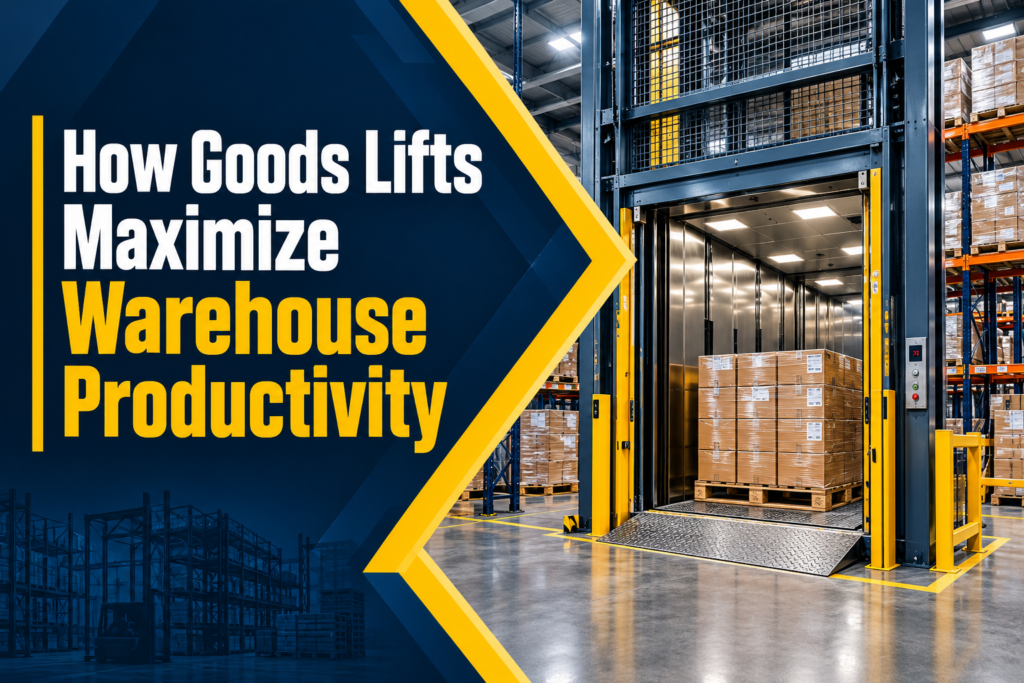
How Goods Lifts Improve Warehouse Productivity and Material Handling

In the fast-paced world of modern logistics, supply chain management, and industrial manufacturing, operational efficiency is the thin line between profitability and loss. As commercial properties expand vertically to combat rising real estate costs, multi-level storage facilities have become the industry standard. However, moving high-volume, heavy-duty cargo across multiple floors presents a massive operational bottleneck if managed poorly. Manual material handling and outdated vertical transit systems stall workflows, spike labor expenses, and expose workers to severe occupational hazards. To thrive in this competitive landscape, smart enterprise owners are transitioning to specialized industrial automation. Integrating a robust warehouse goods lift into your facility structure is one of the most transformative updates you can implement to achieve continuous, high-speed logistical throughput. By replacing manual intervention with modern vertical mobility, an industrial elevator fundamentally revamps how raw goods, heavy components, and completed packages stream through your workplace. This detailed guide explores how specialized freight elevators unlock unprecedented organizational output, improve safety compliance, and provide a massive return on investment for your storage or production site. The Core Challenges in Traditional Vertical Material Handling Traditional multi-tiered storage facilities frequently experience massive bottlenecks because their architectural layout relies on outdated handling practices. When stock needs to move between different floor plates, relying on a forklift network or manual labor introduces major systemic vulnerabilities. 1. Excessive Labor Dependency and Fatigue Relying heavily on manual teams to transition freight up or down building levels leads to rapid employee fatigue, lowering overall processing speeds. Human constraints naturally limit the weight and volume that can be transported in a single shift, creating persistent operational backlogs. 2. Escalated Risk of Accidents and Stock Damage Navigating stairs, steep internal ramps, or pushing forklift trucks past their recommended vertical extension limits dramatically increases workplace safety hazards. According to standard industrial safety reports compiled by organizations like the Occupational Safety and Health Administration (OSHA), material handling issues remain a top cause of workplace injuries. Dropped inventory, structural collisions, and structural asset deterioration degrade your bottom line. 3. Vertical Space Underutilization Without an automated, dependable method to transfer thousands of kilograms straight up, facility operators tend to overcrowd the ground floor while upper mezzanine levels stay underutilized. This structural limitation cuts down your total storage volume and drives up overhead rental costs. 8 Critical Ways a Warehouse Goods Lift Amplifies Operational Productivity Implementing a tailor-made vertical freight platform transforms these structural vulnerabilities into distinct operational advantages. Let’s break down exactly how these heavy-duty installations optimize warehouse logistics. 1. Accelerating Cycle Times and Throughput Time is the foundational currency of modern logistics. A specialized industrial elevator slashes the time required to move inventory between storage levels. Instead of relying on ground crews to load, navigate ramps, and unload items sequentially, material handling teams can position full pallet volumes into a high-capacity lift enclosure. With rapid ascent speeds ranging from 0.3 to 0.5 meters per second, multiple floors are traversed within seconds, ensuring downstream packing and dispatch tracks stay completely full. 2. Maximizing Vertical Storage Efficiency Implementing heavy-duty vertical transit allows engineering teams to embrace high-density, multi-tiered shelving and deep mezzanine architecture. A warehouse goods lift allows you to leverage high vertical clear heights easily, meaning you can double or triple your usable square footage without moving to a larger facility. Material handling items can be systematically distributed across your facility based on product rotation speed rather than being restricted by weight limitations. 3. Minimizing Human Errors and Workforce Strain Automated lifting systems remove complex manual handling workflows where errors frequently occur. Misplaced pallets, drops, and transit-related sorting delays drop significantly when items follow direct vertical pathways. Workers are saved from exhausting lifting and moving tasks, keeping your team energetic, focused, and precise throughout their daily shifts. 4. Enhancing Workplace Safety Compliance Heavy-duty lifting platforms are manufactured with specialized industrial safety frameworks designed to protect both the operator and the cargo. Standard modern freight elevators incorporate: 5. Effortless Integration with Heavy Material Handling Equipment Industrial goods lifts are built to work seamlessly with your existing material handling equipment. Whether your operation relies on manual hand pallet trucks, heavy-duty electric stackers, or automated guided vehicles (AGVs), the lift cabin floor can be engineered to sit completely flush with your building floor. This seamless transition allows forklifts and operators to roll directly into the cabin, drop off cargo, and exit without encountering frustrating elevation shifts or bumps. 6. Robust Adaptation to Heavy Industrial Loads Unlike consumer-facing passenger elevators, specialized industrial goods elevators are built using heavy-duty steel cabins and structural reinforcements. This sturdy construction easily handles heavy industrial loads ranging from 500 kg up to 5,000 kg (5 Tons). Whether your facility handles bulky automotive assemblies, heavy paper rolls, raw chemical barrels, or high-density electronics, these systems handle heavy lifting profiles without structural stress or mechanical failure. 7. Drastic Reduction in Product Damages Fragile or sensitive stock can easily be damaged by the jerky starts, stops, and bumpy turns of traditional forklift transport. Modern goods lifts leverage specialized hydraulic setups or stable counterweighted traction systems to ensure smooth vertical transit. This controlled motion protects fragile materials, delicate components, and retail packages from shifting or sustaining internal damage during transit. 8. Long-Term Reduction in Operational Overheads While installing a high-capacity industrial lift requires an upfront capital investment, the long-term operational savings are substantial. You will drastically lower your reliance on specialized high-reach forklift fleets—which require frequent battery swaps, expensive tire replacements, and routine mechanical maintenance. Furthermore, lower product damage claims and fewer worker compensation issues directly improve your company’s bottom line. Technical Breakdown: Traction vs. Hydraulic Goods Lifts Choosing the right drive setup for your commercial facility depends on your specific building layout, total weight targets, and expected usage rates. Technical Parameter Hydraulic Drive Goods Lift Traction Drive Goods Lift Optimal Load Capacity Up to 5,000 kg (Highly efficient for massive weights) Up to 3,000 kg (Best for medium to heavy loads) Speed Range 0.3 to 0.4 m/s (Deliberate, highly controlled) 0.5 m/s or faster (High-speed performance) Travel

Lift Maintenance Contract
Elevators and Lifts

Lift Maintenance Contract: Everything You Need to Know Before Signing an AMC

Every single day, vertical mobility systems silently power residential high-rises, commercial skyscrapers, and industrial hubs. Yet, we rarely think about the complex engineering keeping us safe between floors until a sudden jerk, a prolonged shutdown, or an emergency entrapment occurs. For building owners, residential welfare associations (RWAs), and facility managers, the continuous uptime of an elevator is not just a luxury—it is a matter of legal safety and financial predictability. This is where a Lift Maintenance Contract becomes the backbone of your building’s infrastructure. Signing an Annual Maintenance Contract (AMC) protects your capital investment, lowers long-term operational liabilities, and ensures absolute passenger safety. However, entering an agreement blindly can bind you to restrictive terms, hidden costs, or subpar service levels. Whether you are managing a single residential home lift or a large commercial fleet, this guide explains everything you need to know about a Lift Maintenance Contract before signing on the dotted line. 1. Understanding the Core Framework of a Lift Maintenance Contract A Lift Maintenance Contract is a legally binding service agreement between a building owner or administrative authority and an elevator engineering company. It establishes a schedule of preventive checkups, routine engineering audits, breakdown response guarantees, and part replacement protocols for a set annual fee. Rather than operating on a reactive “break-fix” model, an effective contract prioritizes proactive maintenance. Specialized elevator technicians identify minor component wear—such as frayed governor ropes, micro-pitting in gear teeth, or drifting electrical relays—before they develop into complete system failures. 2. Types of Elevator AMC Plans Elevator service agreements generally fall into two categories: Comprehensive AMC Plans and Non-Comprehensive AMC Plans. Choosing the wrong option can result in unexpected expenses. Comprehensive Elevator AMC Plans Often called an “all-inclusive” or “bumper-to-bumper” contract, a Comprehensive Lift Maintenance Contract gives you complete financial predictability. It covers routine inspections, emergency troubleshooting, labor fees, and the cost of replacing major components when they wear out due to normal operation. Non-Comprehensive Lift Maintenance Contract This is a baseline service model with a lower upfront cost. The service provider charges a flat annual fee to cover routine engineering visits, basic adjustments, lubrication, and emergency troubleshooting labor. 3. Critical Checklist: What Every Comprehensive Lift Maintenance Contract Must Include Do not accept a generic template. When reviewing an elevator service proposal, verify that the following core service elements are clearly documented: Scheduled Preventive Maintenance Visits The agreement should state exactly how many times a year a technician will inspect the system. For medium to high-traffic passenger elevators, standard industrial practice requires monthly preventive maintenance visits. Emergency Breakdown Support and Entrapment Rescue A reliable Lift Maintenance Contract must include 24/7/365 emergency call-back services. Pay close attention to the specified response times: Detailed Scope of Covered Parts If you choose a comprehensive plan, ensure the text explicitly lists major high-value components. Watch out for ambiguous phrasing like “all mechanical systems covered except specialized electronics,” which can leave you exposed to expensive controller repairs. Exclusion Clauses Even the most thorough comprehensive agreements exclude damages caused by external factors. Standard exclusions typically cover: 4. Navigating Regulatory Compliance and Safety Standards An elevator is a specialized industrial transport vehicle operating within a public space. A compliant Lift Maintenance Contract keeps your property aligned with national safety frameworks like the Bureau of Indian Standards (BIS) Lift Guidelines and regional State Lift Acts. Key Safety Audits and Testing Protocols Your contract should include regular technical evaluations to keep your system safe and compliant: 5. Hidden Clauses and Pitfalls to Avoid Before Signing Before signing an agreement, check for hidden terms that could complicate your relationship with the service provider. Automatic Renewal Terms Many standard contracts include rolling automatic renewal clauses. These state that unless you provide written cancellation notice via registered mail exactly 60 or 90 days before the contract expires, the agreement automatically extends for another full year. Ensure you retain manual renewal control. Uncapped Price Escalation Rates It is standard for an multi-year AMC fee to adjust upward over time to account for inflation and wage growth. However, make sure this escalation is capped at a fixed percentage (e.g., a maximum 5% increase per annum) to prevent sudden, arbitrary rate hikes. Proprietary Software Lock-Ins Modern elevators rely heavily on software-driven Microprocessor Controllers. Some original equipment manufacturers (OEMs) use proprietary diagnostics that lock out third-party engineers. Confirm that your service provider has the necessary diagnostic tools, licensed software access, and matching spare parts stock to service your specific elevator model without causing prolonged technical lockouts. 6. Financial Analysis: Evaluating Value Over Upfront Price When reviewing a Lift Maintenance Contract, look beyond the initial price tag. Low-cost service bids often indicate that a provider is cutting corners on technical training, safety gear quality, or emergency response availability. How Service Pricing is Determined Choosing a comprehensive service plan functions much like an insurance policy. While the upfront investment is higher, it shields you from sudden, budget-disrupting repair bills. 7. Transitioning to Specialized Independent Maintenance Experts Many property managers believe they are permanently locked into the original equipment manufacturer (OEM) for maintenance. However, independent elevator engineering firms have modernized the industry by delivering high-quality service at competitive rates. The Independent Engineering Advantage Partner with Horizon Elevators for Reliable Vertical Mobility Keeping your building safe and accessible requires dedicated engineering expertise. At Horizon Elevators, we provide tailored maintenance solutions that prioritize passenger safety, lower your operational overhead, and ensure peak equipment performance. Our engineers specialize in maintaining residential, commercial, and industrial vertical transport systems. We offer transparent, comprehensive service plans with clear service-level agreements and no hidden fees. Contact our engineering support team today at Horizon Elevators Contact Us to request a detailed on-site inspection and a customized maintenance plan built for your property. Frequently Asked Questions (FAQ) Q1: How often should an elevator undergo a routine checkup under an AMC? For standard passenger configurations, elevators should be serviced once every month. High-traffic commercial systems may require more frequent technical reviews, while low-occupancy residential home setups can operate on a bi-monthly schedule.

Lift company in pune
Elevators and Lifts

How to Choose the Best Lift Company in Pune for Residential and Commercial Projects

Pune’s urban landscape is transforming at an unprecedented pace. From high-rise residential complexes in Hinjewadi and sprawling luxury bungalows in Koregaon Park to cutting-edge commercial hubs in Kalyani Nagar, modern architecture demands smart, safe, and efficient vertical transportation. Whether you are a homeowner building your dream duplex or a developer executing a mega-commercial complex, installing an elevator is a critical, long-term capital investment. However, navigating the crowded marketplace to find the ideal partner can be overwhelming. Making the wrong choice can lead to frequent breakdowns, high maintenance costs, and legal compliance hurdles. To safeguard your investment, you must know how to choose the best lift company in Pune for residential and commercial projects. Selecting a top-tier lift company in Pune involves analyzing safety certifications, understanding technical configurations, evaluating custom design capabilities, and vetting local after-sales support. 1. Demystifying the Choice: How to Choose the Best Lift Company in Pune for Residential and Commercial Projects Selecting an elevator provider is not as simple as comparing quotes. It requires evaluating a company’s past performance, technical prowess, adherence to local infrastructure laws, and post-installation service network. According to national safety standards updated in recent years—such as the transition to the modernized IS 17900 BIS standards (which closely mirror European EN 81-20/50 regulations)—the engineering backend of an elevator is highly complex. The right partner ensures that your project avoids common pitfalls by delivering an end-to-end seamless execution, from structural consultation to final handover. Why Your Choice Impacts Your Property Value and Safety An elevator is the beating heart of a multi-story building. For residential spaces, it ensures accessibility for elderly family members and infants. For commercial spaces, it regulates the daily flow of employees, clients, and heavy goods. Partnering with an unverified contractor to cut costs can result in sub-par equipment, frequent trapping incidents, and failure to secure the mandatory operational license from the Maharashtra State Lift Inspectorate. 2. Key Criteria to Evaluate an Elevator Company in Pune When narrowing down your list of potential elevator manufacturers and engineering firms, you should score each candidate against five core pillars: A. Strict Adherence to Safety Standards and Regulatory Compliance Safety should never be compromised. The best lift company in Pune must strictly build systems that comply with the latest Bureau of Indian Standards (BIS) directives. B. Engineering Capabilities and Modern Technological Integrations The elevator industry has advanced beyond mechanical pulleys and basic relays. Today, premium providers leverage technology to improve efficiency and reduce the building’s carbon footprint. C. Prompt Local Service Network and AMC Reliability An elevator is only as good as the service team backing it up. Before signing a contract, check if the provider has a fully equipped service center and a dedicated field team operating directly within Pune. Ask about their Annual Maintenance Contract (AMC) structures and verify their guaranteed turnaround time for emergency breakdowns. A reliable company must offer 24/7 rapid-response emergency services. 3. Understanding Your Needs: Residential vs. Commercial Projects The parameters for choosing an elevator change drastically based on the building’s intent, expected traffic, and target demographic. Feature / Requirement Residential Elevators Commercial Elevators Primary Focus Acoustic Comfort, Compact Footprint, Elegant Aesthetics High Traffic Capacity, Speed, Heavy Durability Average Speed 0.3 m/s to 1.0 m/s 1.0 m/s to 2.5+ m/s Key Technologies Pitless / Small Footprint, Single Phase Options Destination Control Systems, Building Management System (BMS) Integration Structural Options Hydraulic or Traction MRL High-Speed Traction Gearless Bespoke Lift Design High customization (Veneer, Marble, Glass, Mirror) Industrial Stainless Steel, Durable Flooring, Touchless Controls Residential Lifeline: Comfort and Spatial Efficiency For private villas or small residential apartments, space optimization is key. Traditional elevators require deep structural pits and heavy machine rooms constructed above the terrace floor. Modern pitless elevator technology allows modern setups to be installed with minimal structural changes—sometimes requiring less than 1 square meter of floor space. Additionally, noise reduction is critical; residential lifts should operate silently without sending vibrations through bedroom walls. Commercial Competence: Speed and Traffic Management Commercial high-rises require swift floor transitions to maximize workplace productivity. The right partner must perform traffic analysis calculations to determine how many lifts your building requires to prevent long queues in the lobby during peak morning and evening hours. 4. Crucial Elevator Technologies to Consider Understanding basic technical options will help you make an informed decision when reviewing proposals from an expert lift company in Pune: Machine Room-Less (MRL) Elevators Machine Room Less Elevator technology is a popular modern standard for medium-rise buildings. By utilizing compact, gearless synchronous motors placed directly inside the lift shaft, it eliminates the need for an overhead concrete machine room. This structural shift frees up rooftop terrace space for landscaping, penthouses, or solar panel installations, while drastically cutting down on civil construction costs. Hydraulic Elevators For luxury low-rise bungalows, private duplexes, and specialized industrial settings requiring heavy lifting over fewer floors, a hydraulic elevator configuration is highly reliable. These systems operate via fluid compression pistons, offer smooth acceleration and deceleration curves, and don’t require load-bearing walls at the top of the structure, making them ideal for structural retrofitting in existing homes. Material Handling and Industrial Applications If your project is an industrial unit, warehouse, or commercial facility in industrial belts like Chakan, Bhosari, or Talegaon, your needs shift toward heavy material transport. You will require specialized heavy-duty material handling lifts in Pune engineered to handle weight capacities ranging from 500 kg to over 5,000 kg. These systems feature reinforced mechanical and electrical door interlocks, high-endurance cabin walls, and shock absorbers to manage forklift loading impacts. 5. Architectural Aesthetics: Bespoke Lift Design Options An elevator should not look like an afterthought; it should complement the architectural language of your building. When analyzing a lift company in Pune, examine their past portfolio for custom styling options. The top-rated providers offer comprehensive bespoke lift design selections, including: 6. Navigating the Selection Process: Step-by-Step To streamline your procurement process, follow this structured roadmap: Step 1: Initial Technical Site Assessment Invite technical engineers to your site before finalizing architectural

Modern elevator lobby with sleek metallic lift doors, glass panoramic elevator, marble flooring, and city skyline view in a contemporary high-rise building.
Elevators and Lifts

Elevating Excellence: The Ultimate Guide to Choosing the Best Lift Manufacturers in Pune

The architectural landscape of Pune is evolving at an unprecedented rate. From the sprawling IT hubs in Hinjewadi to the luxurious high-rises of Koregaon Park, the demand for seamless vertical mobility has never been higher. Whether you are a homeowner looking to add luxury and accessibility to your bungalow or a developer managing a massive commercial complex, finding the right lift manufacturers in Pune is the cornerstone of your building’s functionality. A lift is no longer just a luxury; it is a critical piece of infrastructure that ensures safety, efficiency, and value. Choosing a partner like Horizon Elevators means investing in engineering excellence that understands the specific urban challenges of the city. In this comprehensive guide, we will explore the nuances of the elevator industry, from cost considerations to the latest safety standards. Why Pune’s Infrastructure Demands Specialized Lift Manufacturers Pune is a unique blend of heritage structures and modern skyscrapers. This diversity requires a versatile approach to elevator engineering. Leading lift manufacturers in Pune must provide solutions that are compact enough for old building retrofits yet robust enough for high-traffic commercial zones. When searching for passenger lift manufacturers India, it is vital to look for companies that prioritize local serviceability. A lift is only as good as the support behind it. High-quality manufacturers focus on precision engineering, ensuring that every ride is smooth, silent, and, most importantly, safe. Understanding the Landscape of Passenger Lift Manufacturers India The Indian elevator market has seen a paradigm shift. While international brands have a presence, domestic passenger lift manufacturers India have gained a massive edge by offering customized solutions tailored to Indian power conditions and usage patterns. Local manufacturers in Pune offer several advantages: Breaking Down the Lift Cost Per Floor India One of the most frequent queries from developers and homeowners is regarding the lift cost per floor India. It is important to understand that pricing is not just about the number of stops; it involves several variables: On average, for a standard residential building, the lift cost per floor India fluctuates based on the technology used—whether it is hydraulic or traction-based. Investing in quality early on reduces the long-term “total cost of ownership.” Commercial Lift Solutions Pune: Boosting Business Efficiency For businesses, downtime is not an option. Commercial lift solutions Pune require a different level of rigor compared to residential units. Shopping malls, hospitals, and corporate offices need high-speed elevators with intelligent group control systems to manage peak-hour traffic. Horizon Elevators specializes in heavy-duty industrial construction support, ensuring that freight and passenger movement in commercial hubs remains uninterrupted. From high-duty cycles to fire-rated doors, commercial elevators must adhere to strict industrial benchmarks to ensure public safety. Residential Lifts: Enhancing Home Accessibility In the residential sector, the focus is on comfort and aesthetics. Modern residential lifts in Pune are designed to fit into narrow stairwells or even be attached to the exterior of a building. For senior citizens and people with mobility issues, a home elevator is a life-changing addition. Today’s residential models are energy-efficient, often running on single-phase power, making them as easy to maintain as a standard household appliance. The Role of an Elevator Maintenance Company Pune Installation is just the beginning. The longevity of an elevator depends entirely on the quality of service it receives. Partnering with a dedicated elevator maintenance company Pune ensures that potential issues are identified before they lead to a breakdown. Regular maintenance includes: At Horizon Elevators, our elevator maintenance services are designed to provide peace of mind, ensuring that your equipment complies with all local regulations and safety norms. Elevator Modernization Services: Upgrading the Old to New Many older buildings in areas like Peth or Erandwane house elevators that are decades old. These units are often noisy, slow, and lack modern safety features. This is where elevator modernization services come into play. Modernization doesn’t always mean replacing the entire lift. It can involve: By choosing elevator modernization services, building owners can increase property value and reduce energy consumption by up to 40%. Adhering to Elevator Safety Standards India Safety is non-negotiable. The elevator safety standards India (specifically IS 14665 and the National Building Code) dictate the technical requirements for every installation. These standards cover everything from the strength of the guide rails to the lighting levels in the car. When evaluating lift manufacturers in Pune, always verify their compliance with: The Future of Vertical Transportation in Pune The future is “Smart.” We are seeing the rise of Internet of Things (IoT) integrated elevators in Pune. These systems allow for predictive maintenance, where the elevator “calls” the technician itself when it detects a slight anomaly in its motor vibration or door timing. Furthermore, eco-friendly “Green Elevators” are becoming the standard. These use gearless motors and LED lighting to minimize the carbon footprint of the building, aligning with India’s broader sustainability goals. Why Horizon Elevators is Your Trusted Partner As one of the premier lift manufacturers in Pune, Horizon Elevators combines local expertise with global technology standards. We understand that every project is unique. Our team works closely with architects and consultants from the blueprint stage to the final handover, ensuring that the vertical transportation system is perfectly synchronized with the building’s design. Our commitment to safety, coupled with our robust elevator maintenance company Pune infrastructure, makes us the preferred choice for hundreds of satisfied clients across the city. Taking the Next Step in Vertical Mobility Choosing an elevator is a 20-year decision. Don’t settle for subpar equipment that leads to frequent breakdowns and safety risks. Whether you need a new installation, a maintenance contract, or modernization of an existing unit, we are here to help. Ready to elevate your property? Contact Us today for a free site survey and a customized quote tailored to your specific needs. Let’s build a safer, faster, and more efficient Pune together. Frequently Asked Questions (Q&A) Q1: How do I choose the right lift manufacturers in Pune for my bungalow? Look for manufacturers who specialize in residential units, offer

Elevator Modernization: When Should You Upgrade Your Old Lift?
Elevators and Lifts

Elevator Modernization: When Should You Upgrade Your Old Lift?

Is your building’s elevator starting to feel like a relic of the past? Maybe the doors hesitate, the ride is jerky, or it simply looks like it belongs in a black-and-white movie. If you find yourself asking, Elevator Modernization: When Should You Upgrade Your Old Lift?, you are already noticing the subtle red flags that signal a machine nearing its limit. An elevator is the mechanical heartbeat of any multi-story building. Whether it is a luxury residential complex or a bustling commercial hub, the vertical transportation system must be seamless. However, technology evolves, and safety standards tighten. Continuing to patch up an aging system isn’t just expensive; it’s a liability. In this comprehensive guide, we will explore the critical signs of wear, the immense benefits of a modern system, and why Horizon Elevators is your trusted partner for premium lift upgrades. What is Elevator Modernization? Before diving into the “when,” it is essential to understand the “what.” Elevator modernization is not just a fresh coat of paint inside the cabin. It is a systematic upgrade of the lift’s “brain” and “muscle.” This process involves replacing or upgrading outdated components—such as the controller, the motor, the wiring, and the safety sensors—with state-of-the-art technology. By focusing on elevator technology upgrades, property owners can transform a sluggish, power-hungry machine into a high-performance asset that complies with the latest safety codes. Elevator Modernization: When Should You Upgrade Your Old Lift? (Key Indicators) Determining the right time for an upgrade requires looking beyond the surface. Here are the most prominent signs that your lift is ready for a professional overhaul: 1. Frequent Breakdowns and Service Calls If your elevator technician is visiting more often than your tenants, you have a problem. Frequent downtime is more than just an inconvenience; it suggests that the core components are failing. When the cost of monthly repairs starts to rival the investment in modernization, the choice becomes clear. 2. Slow Response Times and Sluggish Performance Does the elevator take forever to arrive? Or perhaps it moves at a snail’s pace between floors? As systems age, the lifting mechanism and controllers lose efficiency. Modern systems use advanced algorithms to optimize travel paths, significantly reducing wait times. 3. Safety and Compliance Concerns Building codes are constantly updated to ensure passenger safety. If your lift lacks modern features like infrared door sensors, emergency battery lowering systems, or up-to-date fire service controls, you might be at risk of non-compliance. Upgrading ensures you meet all Bureau of Indian Standards (BIS) requirements for vertical transportation. 4. High Energy Bills Old elevators are notorious energy “vampires.” Modernization introduces energy-efficient elevator systems that utilize regenerative drives. These drives capture energy usually lost as heat and feed it back into the building’s electrical grid, potentially reducing lift energy consumption by up to 40%. 5. Noisy Operation and Jerky Movements A smooth ride is the hallmark of a well-maintained elevator. If your passengers experience “bumping” when the car stops or hear grinding noises during travel, the guide rails or traction cables may be worn out. The Benefits of Upgrading Your Vertical Transportation When you commit to Elevator Modernization: When Should You Upgrade Your Old Lift?, you aren’t just spending money; you are investing in the longevity of your property. Technical Components of Modernization A full-scale upgrade usually targets three main areas: For those looking for specific technical standards, the ASME A17.1 Safety Code provides a global benchmark for what a modernized lift should achieve in terms of safety and performance. Why Choose Horizon Elevators for Your Modernization? Navigating the complexities of lift upgrades requires an expert touch. At Horizon Elevators, we specialize in tailored solutions that breathe new life into aging infrastructure. Whether you need a simple aesthetic refresh or a complete mechanical overhaul, our team ensures minimal disruption to your daily operations. We understand the local landscape and the specific challenges of maintaining lifts in diverse climates. From high-speed commercial elevators to reliable home lifts, we provide the technical excellence required to keep you moving upward. Our Services Include: Transform Your Building Today Don’t wait for a total system failure to take action. Proactive modernization saves money and ensures the safety of everyone who enters your building. Contact Horizon Elevators today for a professional lift assessment and customized quote. Let’s make your elevators as modern as your vision. Conclusion Understanding Elevator Modernization: When Should You Upgrade Your Old Lift? is about recognizing the balance between maintenance costs and the benefits of new technology. By upgrading, you secure the future of your building, enhance the user experience, and ensure that your vertical transportation is both safe and sustainable. Questions and Answers (Q&A) Q1: How long does the elevator modernization process take? Depending on the scope, a partial modernization can take 1–2 weeks, while a full system replacement might take 4–6 weeks per elevator bank. Q2: Can I modernize only the interior of the lift? Yes! This is called aesthetic modernization. It improves the look and feel but won’t affect the mechanical performance or speed of the lift. Q3: How often should an elevator be modernized? Generally, an elevator has a lifespan of 20–25 years. If your lift is older than 20 years, a professional evaluation for modernization is highly recommended. Q4: Will modernization reduce my building’s electricity bill? Absolutely. Modern controllers and regenerative drives are significantly more energy-efficient than older AC or DC motors. Q5: Is modernization cheaper than a full replacement? In most cases, yes. Modernization utilizes the existing guide rails and heavy structural components while replacing the parts that actually wear out, making it a cost-effective alternative to a total replacement.

Scroll to Top