Horizon Elevators

Elevators and Lifts

machine room less elevator
Elevators and Lifts

Machine Room vs Machine Room Less Elevator: Which Elevator System is Best for Your Building?

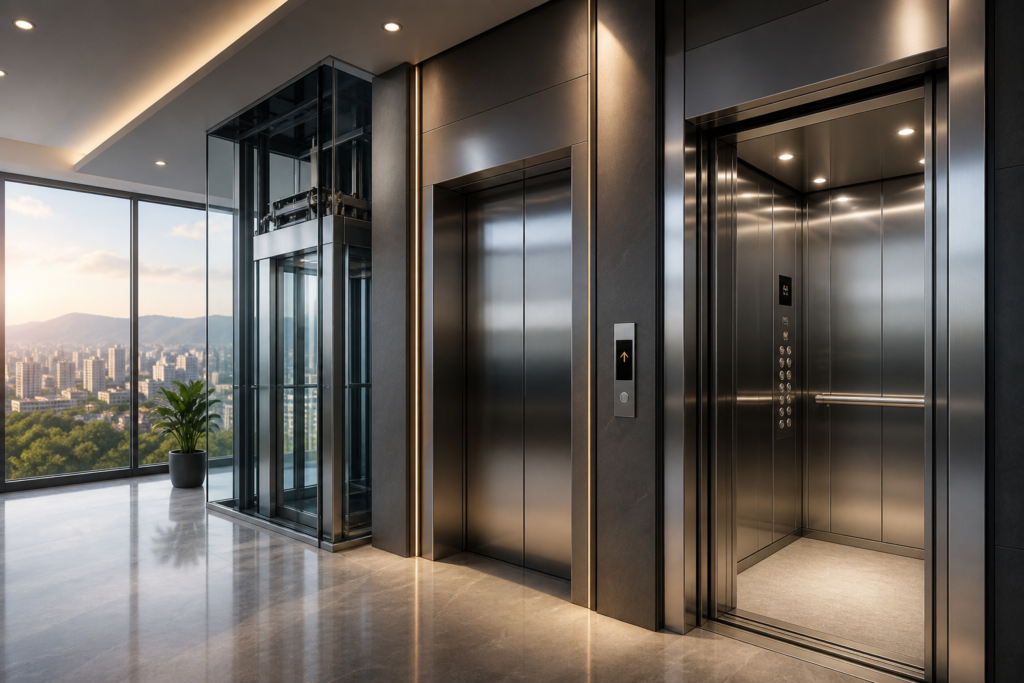
Choosing the right elevator system is a critical decision for any building owner. Whether you are planning a residential project or a commercial space, the type of lift you install directly affects performance, cost, and long-term value. Today, the biggest comparison is between a traditional elevator and a machine room less elevator (also known as an MRL elevator). With modern architecture focusing on space-saving and smart technology, many builders now prefer a room less elevator for its compact design and efficiency. In this guide, we will compare both systems and help you choose the best option. What is a Machine Room Elevator? A machine room elevator is a traditional elevator system that uses a separate room to house key components. This includes the motor, controller, and other equipment. These elevators usually use a traction elevator mechanism, which can be geared or gearless depending on the building requirement. Key Features: This type of elevator system has been used for decades and is known for reliability. What is a Machine Room Less Elevator (MRL Elevator)? A machine room less elevator removes the need for a separate machine room. All the equipment is installed inside the shaft, making it a compact design solution. An MRL elevator is also a type of traction elevator, but it uses advanced gearless motors. This makes it more energy efficient and modern. A room less elevator is ideal for buildings where space is limited. Key Features: The growing demand for machine room less MRL elevators shows how popular this technology has become. Machine Room vs Machine Room Less Elevator Comparison Let’s compare both types based on important factors: 1. Space Requirement A traditional system needs a separate room. This increases construction space. A machine room less elevator eliminates this need. Its compact design fits inside the shaft, making it perfect for modern projects. This is why machine room less MRL elevators are preferred in cities. 2. Installation Cost A traditional traction elevator may have lower equipment cost. However, building a machine room increases overall expense. A room less elevator may cost slightly more initially, but it saves space and construction cost. 3. Maintenance Machine room systems are easier to service because parts are easily accessible. In a machine room less MRL setup, maintenance requires skilled technicians. The compact space can make servicing slightly complex. 4. Energy Efficiency Traditional systems consume more power. A machine room less elevator is highly energy efficient. It uses gearless motors and regenerative drives. This makes machine room less MRL elevators a better long-term investment. 5. Performance and Speed A traditional traction elevator works better in high-rise buildings with heavy traffic. A room less elevator is suitable for low to mid rise buildings. It offers smooth and quiet operation. 6. Design and Aesthetics Modern buildings need smart solutions. A machine room less elevator offers a sleek look. Its compact design allows better architectural flexibility. Best Use Cases for Machine Room Elevators A traditional elevator system is still the best choice for: These buildings require high load capacity and fast movement. A traction elevator with a machine room handles heavy traffic efficiently. For large rise buildings, this system is reliable and durable. Why Choose a Machine Room Less Elevator? A machine room less elevator is a smart choice for modern projects. It is especially useful in: A room less elevator works best in low to mid rise buildings where space is limited. The machine room less MRL technology allows installation without major structural changes. Technology Behind MRL Elevators A modern MRL elevator uses advanced features such as: These features make the machine room less MRL elevators more efficient and user-friendly. Energy Efficiency and Savings One of the biggest advantages of a machine room less elevator is that it is highly energy efficient. It consumes up to 30–40% less power compared to a traditional elevator system. This is possible due to: For long-term savings, a machine room less MRL system is a better option. Maintenance and Service A traditional traction elevator offers easy servicing. However, a machine room less MRL elevator requires trained professionals. The parts are compact, and access is limited. Still, with proper maintenance, machine room less MRL elevators perform efficiently for years. Which Elevator System is Best for You? Choosing the right elevator system depends on your needs. Ask yourself: If your building is among high rise buildings, a traditional traction elevator is better. If you want a space-saving and energy efficient option, choose a machine room less elevator. A room less elevator is ideal for modern construction and smart buildings. Final Thoughts Both systems have their advantages. A traditional elevator system is powerful and suitable for heavy-duty use. But a machine room less elevator stands out with its compact design, lower energy consumption, and modern technology. Today, many builders prefer machine room less MRL elevators because they fit perfectly into urban spaces. Need Expert Guidance? Choosing the right elevator system can be confusing. But you don’t have to decide alone. Our experts can help you select the best machine room less elevator or traction elevator based on your building type. 👉 Visit: https://horizonelevators.in/📞 Call now for a free consultation and site inspection!

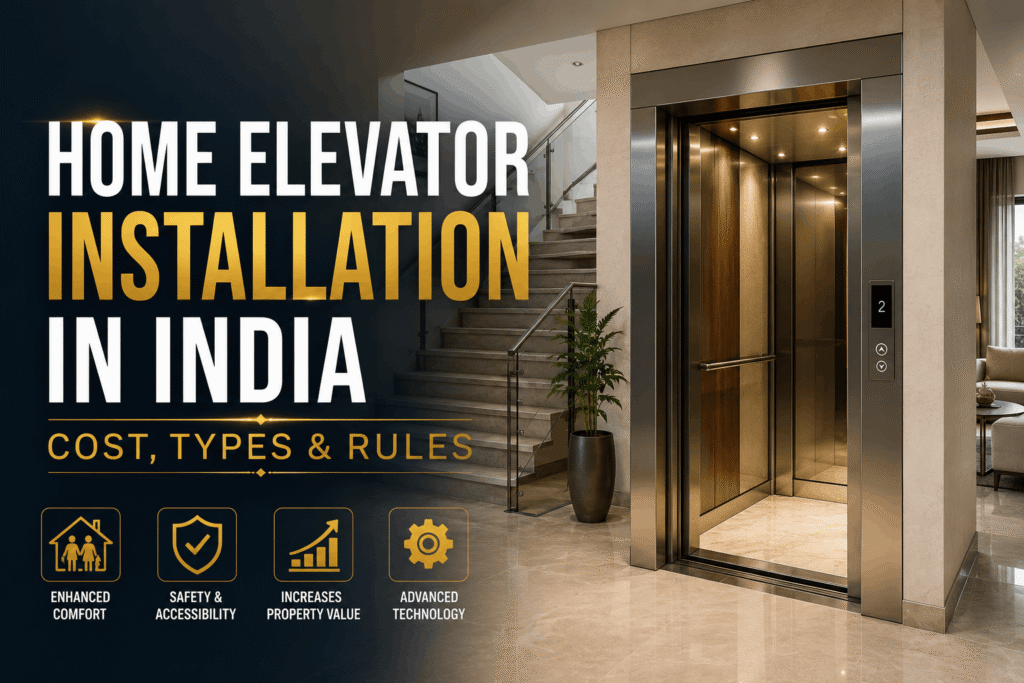
A compact glass home elevator installed in a small residential space next to a staircase, designed for Indian homes with limited space
Elevators and Lifts

Home Elevators & Personal Lifts: Luxury, Convenience & Long-Term Value for Villas & Duplexes

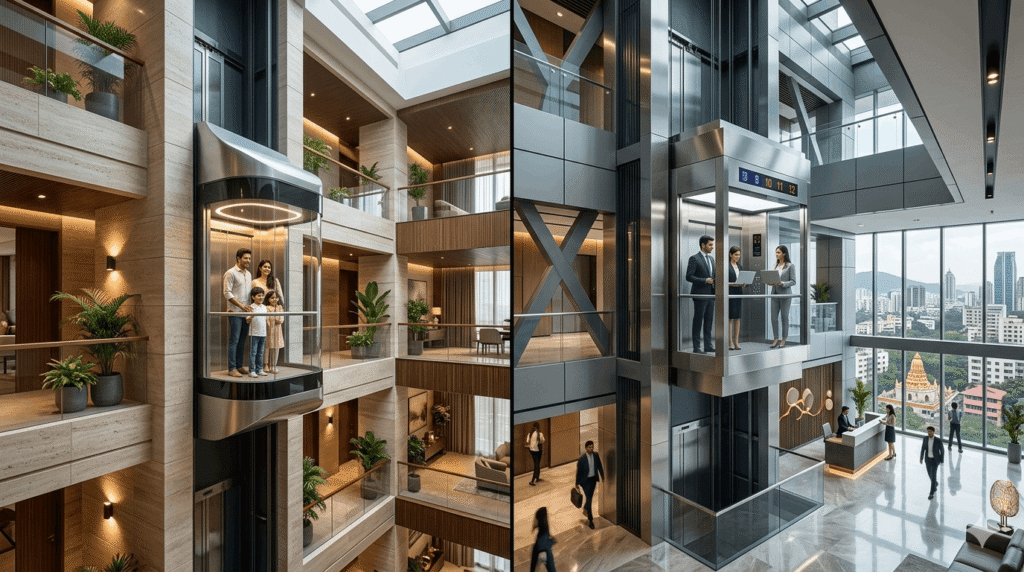
Introduction The concept of luxury living has evolved rapidly in India—especially in metro and semi-metro cities where villas, duplexes, and premium residential spaces have become symbols of both comfort and convenience. One feature that has seen a tremendous surge in demand is the home elevator, also known as a personal lift or residential lift. Once considered a luxury reserved only for high-end mansions, home elevators in 2025 have become increasingly affordable, stylish, compact, and energy-efficient. For homeowners building villas or modern duplexes, installing a home elevator is no longer just a comfort upgrade—it is a long-term investment that enhances safety, lifestyle convenience, and real estate value. At Horizon Elevators, we design and install home elevators engineered for modern Indian homes—combining cutting-edge safety, elegant interiors, smooth ride quality, and long-lasting reliability. Why Home Elevators Are Becoming a Must-Have in Modern Villas & Duplexes 1. Growing Preference for Multi-Level Homes Indian families today prefer villas and duplex homes for their spacious layouts, privacy, and architectural freedom. With multiple floors comes the need for effortless mobility—especially for families with: A home elevator eliminates the physical strain of climbing stairs and ensures safe, smooth movement across all floors. Luxury Meets Practicality 2. Home Elevators as a Modern Luxury Statement A residential lift instantly elevates the aesthetic appeal of any villa or duplex. Modern home elevators come with: Whether you prefer a minimalist look or a luxury glass-paneled lift, personal elevators add a sophisticated visual impact to your home’s interior. A home elevator is no longer just a functional feature—it’s a symbol of smart, future-ready living. Unmatched Convenience for Daily Living 3. Mobility Made Effortless for All Age Groups One of the biggest advantages of a personal lift is the convenience it offers for day-to-day activities: In the fast-paced lifestyle of today, convenience is luxury—and home elevators deliver both. Safety Features Designed for Families 4. Advanced Safety Systems for Worry-Free Use At Horizon Elevators, safety is engineered into every system. Our home elevators are equipped with: ✔ Automatic Rescue Device (ARD) Ensures the cabin reaches the nearest floor during power failure. ✔ Overload Sensors Alerts and prevents movement if weight exceeds safe limits. ✔ Emergency Alarm & Intercom Immediate assistance can be requested in case of emergency. ✔ Advanced Door Sensors Prevents closing if an obstacle is detected—crucial for kids & seniors. ✔ Slip-Free Flooring Options Better safety for elderly passengers. ✔ Soft Start & Stop Technology Prevents jerks or sudden movements. Home elevators have evolved significantly over the years—they now offer unmatched stability, reliability, and peace of mind for families. Increasing Property Value & Market Appeal 5. A High-ROI Upgrade for Real Estate Investing in a home elevator offers long-term financial benefits: ✔ Higher resale value Buyers are willing to pay a premium for homes with residential lifts. ✔ Future-proofing for aging family members More buyers look for homes that support aging-in-place. ✔ Appeal to NRI buyers & luxury home investors Home elevators enhance the listing value and attract premium clientele. ✔ Architectural enhancement A lift becomes a strong selling point in brochures & property listings. A personal lift is one of the few home additions that offer emotional, functional, and financial value—making it a smart investment for any homeowner. Energy-Efficient & Space-Saving Designs 6. Modern Home Elevators Save Space, Money & Energy Today’s home elevators are not bulky like commercial lifts. Instead, they are engineered to fit compact shafts—even in existing homes. Space-Saving Features Include: Energy-Saving Technology: Home elevators from Horizon Elevators run at extremely low power consumption—comparable to a small home appliance. Perfect for New Homes & Retrofits 7. Installable in Under-Construction & Existing Properties Whether you’re building a new villa or planning to add a lift to an already constructed home, modern elevator systems allow both options: New Constructions Existing Properties (Retrofits) This flexibility is why personal lifts are becoming more popular across Indian households. Quiet & Smooth Ride Comfort 8. Enjoy a Peaceful, Vibration-Free Ride Home elevators today are designed to be: This comfort is one of the biggest reasons families prefer trusted brands like Horizon Elevators. Customization Options for Every Home 9. Tailored to Your Style, Space & Budget Personal lifts can be fully customized: Interior Features Technical Options Door Types No matter your home’s design style—modern, classic, or contemporary—there is a home elevator that fits perfectly. Low Maintenance & Long-Term Reliability 10. Built for Daily Use With Minimal Upkeep A home elevator designed with high-quality components ensures: Horizon Elevators ensures high durability with premium materials, advanced control panels, and efficient service support. Why Choose Horizon Elevators for Home Lifts? At Horizon Elevators, we specialize in designing safe, elegant, and high-performance home elevators tailored for Indian villas, farmhouses, duplex homes, and private residences. What Sets Us Apart? ✔ Custom-made solutions for every architectural layout✔ Premium-grade materials and superior engineering✔ Dedicated installation & maintenance team✔ Low noise, low energy consumption systems✔ Safety-first design as per industry standards✔ Stylish interiors and modern finish options✔ Trusted by homeowners, builders, and architects across India Your home deserves an elevator that blends luxury, convenience, and reliability—and Horizon Elevators is committed to delivering exactly that. Conclusion A home elevator is more than a lifestyle upgrade—it’s a future-ready investment that enhances: For villas and duplex homes, a personal lift offers long-term benefits that far outweigh the cost of installation. As India moves toward smarter, senior-friendly, high-comfort living, residential elevators have become an essential feature rather than a luxury. If you’re planning to build or upgrade your home, now is the perfect time to invest in a high-quality home elevator from Horizon Elevators.

Elegant home elevator with glass doors integrated into a modern wall paneling in a luxury apartment.
Elevators and Lifts

Latest Elevator Safety Technologies Every Building Should Have (2025)

Elevator safety has evolved rapidly in the last few years. In 2025, buildings require smarter, more reliable, and more advanced systems that guarantee passenger protection at every level. At Horizon Elevators, safety is not an option — it is the foundation of every elevator we design, manufacture, install, and maintain. As the demand for modern lift systems grows, so does the need for adopting the latest Elevator Safety Technologies. Below, we share the essential safety innovations every residential, commercial, and industrial building should implement in 2025. 1. Automatic Rescue Device (ARD): Zero-Trap Protection One of the most important Elevator Safety Technologies today is the Automatic Rescue Device. Why it’s essential: All Horizon Elevators installations come equipped with ARD to ensure 100% passenger safety. 2. Advanced Overload Protection System Elevators often face mechanical stress due to overload.Modern digital load sensors now provide: This technology plays a vital role in extending elevator life and reducing breakdowns. 3. 3D Door Safety Sensors (Curtain Sensors) Passenger safety at elevator doors has been improved significantly with 3D infrared curtain sensors — a key upgrade in modern elevator safety. Benefits: At Horizon Elevators, we integrate industry-leading sensors in all lifts. 4. Regenerative Drive System (Energy + Safety) Beyond energy savings, regenerative drives offer powerful safety benefits. Key advantages: Ideal for high-rise and commercial buildings seeking reliability and green performance. 5. IoT-Based Smart Elevator Monitoring In 2025, connected elevators are becoming the new standard. Horizon Elevators integrates IoT monitoring systems that offer: These smart Elevator Safety Technologies dramatically reduce downtime and ensure quicker service response. 6. Emergency Auto-Dialer & Two-Way Communication Communication is crucial during emergencies. Our elevators include: This ensures that passengers are never isolated in an emergency situation. 7. Fire Emergency Rescue (FER) Mode Every modern building must have elevators equipped with FER mode. How it works: A must-have feature for hospitals, commercial complexes, and high-rise towers. 8. Anti-Rollback & Anti-Freefall Protection Horizon elevators are built with advanced safety gear systems including: These systems prevent sudden downward movement or overspeeding — ensuring maximum passenger security. 9. Vibration & Earthquake Sensors With increasing high-rise constructions in India, seismic safety is becoming essential. Smart sensors: Ideal for high-rise residential and commercial properties. 10. Biometric / RFID Access Control Systems Increasingly used in premium buildings. Provides: Perfect for apartments, corporate offices, and premium residences. 11. Non-Touch & Voice-Controlled Systems Contactless Elevator Safety Technologies are becoming the norm. 12. Smart AMC & Annual Safety Audits Safety is incomplete without maintenance. Horizon Elevators offers: Buildings with structured AMC experience 70% fewer breakdowns and better long-term elevator health. Conclusion: Horizon Elevators Sets the Benchmark for Elevator Safety Technologies 2025 is all about smarter, safer, and highly advanced elevators. By integrating the latest Elevator Safety Technologies, buildings can significantly enhance passenger safety, reduce breakdowns, and improve overall performance. At Horizon Elevators, we ensure every installation meets global safety standards, including IS, EN, and ISO norms, delivering unmatched reliability and peace of mind.

Elegant home elevator with glass doors integrated into a modern wooden wall paneling in a luxury apartment.
Elevators and Lifts

How to Choose the Right Elevator for Apartment Complexes: A Complete Guide

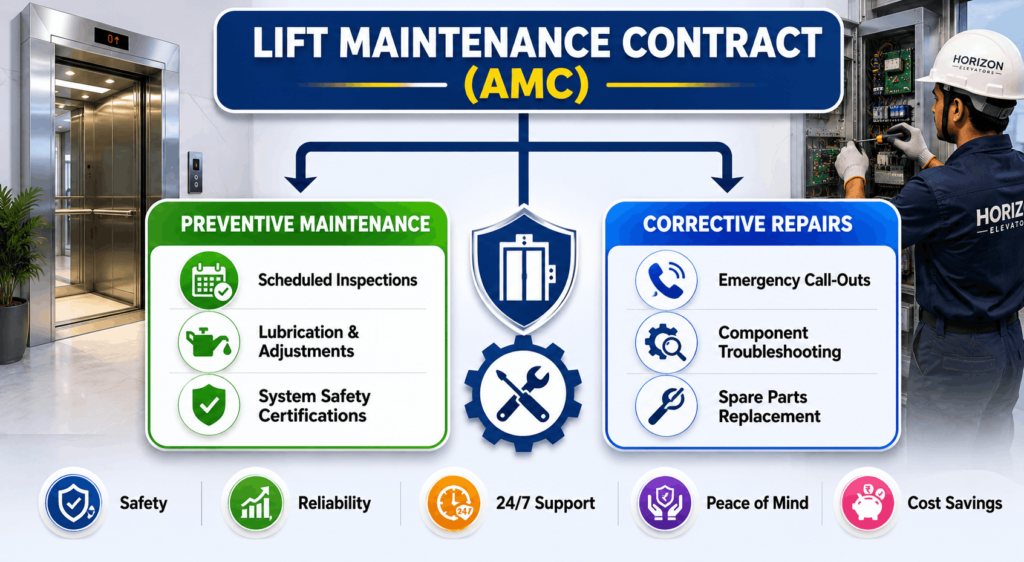
In today’s fast-paced urban environment, the demand for efficient vertical mobility solutions is more critical than ever. As cities grow vertically, the need for a well-planned and reliable elevator for apartment complex projects becomes a top priority for builders, architects, and homeowners alike. Choosing the right elevator system can impact not only daily convenience but also property value, long-term maintenance, and energy costs. In this comprehensive guide, we explore the essential aspects you need to consider before investing in an elevator for your apartment complex. 1. Understanding the Purpose and Scope Before diving into technical specifications, it’s vital to define the purpose of the elevator in your residential building. Will it be serving all floors in a high-rise or just a few stories in a mid-sized building? Understanding the scale of usage and the number of anticipated daily trips is essential to selecting the most suitable model. In a multi-story residential setting, elevators aren’t just a luxury—they’re a necessity. They accommodate residents of all ages, including children, the elderly, and individuals with mobility challenges. As such, your selection process should prioritize accessibility and reliability. 2. Types of Elevators Suitable for Apartments There are various elevator systems available on the market, and each one has its specific application, advantages, and limitations. Here’s a brief overview: a. Traction Elevators Traction systems operate using cables and counterweights. They’re commonly used in mid to high-rise buildings due to their speed and energy efficiency. These elevators are smooth, quiet, and space-saving. b. Hydraulic Elevators Best for low-rise buildings (up to 5-6 floors), hydraulic elevators use a piston mechanism to lift the cabin. They are often more affordable to install but may require a machine room and consume more energy. c. Machine-Room-Less (MRL) Elevators As the name suggests, these elevators do not require a separate machine room, making them ideal for buildings with limited space. They’re energy-efficient and suitable for medium-rise apartment complexes. d. Vacuum Elevators A relatively new technology, vacuum elevators are ideal for retrofitting existing buildings. They are sleek, compact, and don’t require a pit or machine room, although their capacity is limited. 3. Capacity and Speed Considerations Choosing the correct capacity and speed is critical when selecting an elevator for apartment complex applications. Capacity typically ranges from 4 to 20 passengers, depending on the building size and expected traffic. Here’s a general guide: Building Size Suggested Capacity Average Speed Low-rise (3-5 floors) 4-6 persons 0.5 – 1.0 m/s Mid-rise (6-12 floors) 8-12 persons 1.0 – 1.75 m/s High-rise (13+ floors) 12-20 persons 1.75 – 3.0 m/s   Avoid underestimating your elevator’s capacity—overloaded or overused systems are prone to quicker wear and tear, increased maintenance, and resident dissatisfaction. 4. Safety Features: A Top Priority Safety is non-negotiable when it comes to elevators in residential buildings. Modern systems are equipped with multiple safety features to ensure secure operation, such as: Emergency stop buttons and alarms Automatic rescue devices (ARD) for power failure Fire-rated doors and smoke detectors Anti-slip flooring and handrails CCTV monitoring systems Additionally, elevators must comply with local and international safety codes such as ISO 25745 and EN 81 standards. 5. Energy Efficiency and Sustainability With rising energy costs and increasing environmental consciousness, energy-efficient elevator systems are in high demand. Today’s elevators incorporate smart systems like regenerative drives, LED lighting, and sleep modes that reduce power consumption during inactivity. Not only do these systems help save on electricity bills, but they also contribute to building sustainability certifications such as LEED and IGBC. 6. Aesthetics and Design Customization Elevator interiors are no longer an afterthought—they’re now considered an extension of the building’s architectural personality. When selecting an elevator for apartment complex integration, aesthetics matter. Common customization options include: Cabin walls (glass, stainless steel, wood finish) Ambient lighting and ceiling designs User interface panels with touch or braille controls Door styling and finish A well-designed elevator can enhance the overall luxury and feel of your property, particularly in premium residential projects. 7. Installation Process and Site Planning Installing an elevator in a residential building—whether new or existing—requires thorough planning. Key considerations include: Shaft dimensions and pit depth Load-bearing capacity of the building Availability of space for machine rooms (if required) Electrical requirements and backup systems Retrofit installations may involve structural modifications, so working with experienced elevator consultants or OEM-certified contractors is essential. The installation typically spans 4 to 12 weeks depending on the project scope. 8. Maintenance Requirements Routine maintenance is essential for ensuring smooth and safe elevator operation. Most manufacturers recommend monthly inspections, lubrication of moving parts, system diagnostics, and cleaning. Maintenance contracts often include: 24/7 emergency support Preventive maintenance scheduling Spare parts and consumables Annual certification and safety audits Failing to maintain your elevator system can lead to costly repairs, downtime, and potential legal liabilities. Partnering with a reliable service provider ensures your system remains in optimal condition. 9. Costing and Budget-Friendly Options The total cost of installing an elevator for apartment complex projects can vary based on several factors: Factor Estimated Impact Type of elevator High Number of stops Medium Custom features High Site complexity Medium Energy-saving tech Medium Brand reputation High   While high-end elevator systems come with a premium price tag, there are also budget-friendly options available that balance functionality and cost-effectiveness. Always assess the total cost of ownership, not just the upfront investment. 10. Choosing the Right Vendor Selecting the right vendor is as important as choosing the right elevator. Key factors include: Proven experience in residential projects Licensing and compliance with safety standards Local support and maintenance infrastructure Warranties and AMC (Annual Maintenance Contracts) Post-installation training and documentation Schedule consultations with at least 2–3 vendors to compare offers, read reviews, and visit existing installations to verify build quality and performance. Final Thoughts An elevator is not just a mechanical system—it’s an investment in convenience, safety, and future-proofing your property. Whether you’re constructing a new apartment complex or retrofitting an existing one, understanding the critical factors such as capacity, safety, maintenance, and energy efficiency will help you make

Elegant home elevator with glass doors integrated into a modern wooden wall paneling in a luxury apartment.
Elevators and Lifts

How Elevator Technology in Smart Cities Is Transforming Urban Life

Introduction As cities grow upward and outward, the need for intelligent, sustainable, and integrated infrastructure becomes paramount. Among the most overlooked yet crucial components of this infrastructure is the elevator. In the 21st century, elevator technology in smart cities is no longer limited to moving people vertically—it plays a pivotal role in shaping how citizens interact with modern urban environments. From enhancing mobility to improving energy efficiency and safety, elevators are at the forefront of next-generation smart city development. The Evolution of Elevator Technology The history of elevators dates back centuries, but the modern elevator—powered by electricity and controlled with computerized systems—has evolved rapidly over the past few decades. Today, elevators are more than just vertical transport devices; they are intelligent, responsive systems embedded with sensors, data analytics, and automation capabilities. The integration of digital technologies into elevators signifies a broader shift toward smart, interconnected urban infrastructure. These advancements allow elevators to adapt to user behavior, optimize performance, and align with broader sustainability and mobility goals set by city planners. Smart Cities and the Demand for Vertical Mobility Smart cities are urban areas that leverage digital technology to improve the quality of life for citizens, reduce resource consumption, and ensure more efficient city management. These cities demand a high level of coordination between various infrastructures—transportation, energy, communication, and construction. Within this context, vertical mobility becomes a critical challenge. As more people live and work in high-rise buildings, traditional elevator systems struggle to keep up with demand. This has led to the rise of elevator technology in smart cities, designed specifically to integrate seamlessly with other smart systems to optimize traffic flow, reduce energy consumption, and enhance safety. Key Innovations in Elevator Technology 1. AI-Driven Traffic Management Smart elevators today use AI and machine learning to analyze traffic patterns in real time. These systems can anticipate peak usage times and adjust their operations accordingly. For instance, during morning rush hours, certain elevators can be programmed to serve only specific floors to reduce congestion and wait times. Moreover, AI can also predict maintenance needs by monitoring elevator performance, reducing unexpected breakdowns, and enhancing the reliability of building transportation systems. 2. Touchless and Voice-Activated Controls The COVID-19 pandemic accelerated the demand for touchless solutions in public spaces, and elevators were no exception. Modern elevator systems in smart cities now feature voice recognition, smartphone apps, and gesture-based controls. This not only enhances user convenience but also helps maintain hygiene in high-traffic areas. These innovations also contribute to accessibility, enabling people with disabilities to interact more easily with building infrastructure. 3. Integration with Building Management Systems (BMS) Elevators in smart cities are now being connected to centralized BMS platforms. This integration allows for real-time monitoring of elevator status, performance metrics, energy consumption, and even emergency response coordination. In high-rise complexes, BMS integration ensures that elevator usage is synchronized with energy demand and building occupancy, creating a more responsive and efficient infrastructure. 4. Regenerative Drives and Energy Recovery Energy conservation is a cornerstone of smart city development. Next-gen elevators use regenerative drives that convert the excess energy produced during elevator descent or deceleration into electricity, which can be fed back into the building’s grid. This not only reduces the energy footprint of buildings but also cuts operational costs for building owners and supports overall environmental sustainability. 5. Modular and Flexible Designs Future-ready elevator technology emphasizes modular designs that allow for easy upgrades and adaptations. Whether integrating new IoT modules or replacing outdated components, modular elevators enable seamless transitions as technology advances. This adaptability ensures that the elevator systems can evolve in tandem with other smart city technologies, making them a long-term asset for urban infrastructure. Enhancing Safety and Emergency Response Smart elevator technology also improves building safety. In emergencies such as fires or earthquakes, elevators typically shut down. However, new systems can now communicate with emergency responders, provide real-time location tracking, and offer dedicated evacuation modes that aid in quicker, safer building clearance. Integrated communication systems allow trapped passengers to connect directly with security or emergency teams, further enhancing user confidence and safety protocols. Role in Sustainability and Green Urban Planning Elevators, often considered energy hogs, are now becoming contributors to eco-friendly design. Smart elevators consume significantly less energy than traditional systems and align well with green building certifications such as LEED and BREEAM. Their ability to optimize trip scheduling, reduce idle time, and recover energy makes them essential in meeting carbon neutrality goals of smart cities. Their role extends beyond energy conservation—smart elevators are part of a broader strategy for sustainable transportation and efficient land use. Improving User Experience in Smart Buildings As buildings become more intelligent, user expectations also rise. Smart elevators enhance occupant experience through: Personalized Service: Identifying regular users and automatically directing them to their destination floor. Mobile Integration: Allowing users to call elevators via mobile apps, reducing wait times and improving convenience. Real-Time Updates: Displaying estimated arrival times, crowd density, and elevator performance through digital interfaces. These features not only elevate the standard of living but also reflect the user-centric focus of smart city planning. Integration with Urban Mobility Ecosystems Elevator systems in smart cities are increasingly being integrated into wider transportation networks. In transit-oriented developments (TODs), elevators connect seamlessly with metro stations, underground walkways, and pedestrian bridges. Such integration supports the concept of “first-mile and last-mile” connectivity, ensuring smoother, faster movement across urban zones. By bridging vertical and horizontal transportation, elevators contribute to a more cohesive urban mobility strategy. Smart City Case Studies: Elevators in Action Singapore Singapore, a leader in smart urban development, has implemented intelligent elevator systems in several high-rise residential and commercial buildings. These elevators adjust speeds based on real-time traffic data and are integrated with citywide energy management platforms. Dubai Dubai’s smart city vision includes vertical mobility innovations like magnetic levitation elevators and multi-directional systems that move beyond up and down. These technologies are revolutionizing how buildings are designed and experienced. Tokyo Tokyo’s densely populated environment has led to the creation of high-capacity, high-speed elevators

Elegant home elevator with glass doors integrated into a modern wooden wall paneling in a luxury apartment.
Elevators and Lifts

Top 10 Things to Know Before Installing a Home Elevator in India

As Indian homeowners embrace modern living and multi-storey homes become more common, home elevator installation is gaining popularity for both convenience and accessibility. Whether it’s to assist elderly family members, improve mobility, or simply add a touch of luxury, installing a residential lift is a practical solution. But before you move ahead, it’s crucial to understand all the technical, financial, and structural aspects involved. In this comprehensive guide, we’ll walk you through the top 10 things to know before your home elevator installation in India. From pricing and space requirements to safety regulations and ongoing maintenance, we cover everything you need for an informed decision. 1. Understand the Purpose of Your Home Elevator Installation Before reaching out to a home lift company, define your purpose clearly. Are you installing the elevator for: Understanding your specific need will help you choose the right residential lift—whether it’s a compact hydraulic system or a sleek vacuum model. 2. Types of Residential Lifts Available in India India offers several technologies for home elevator installation, each with its advantages. a) Hydraulic Home Lifts b) Traction Elevators for Residences c) Pneumatic Lifts for Compact Homes Each type differs in terms of energy usage, aesthetics, installation time, and noise. Your choice depends on space, usage frequency, and design preference. 3. Space Planning Before Your Home Elevator Installation One of the first steps is determining whether your house can accommodate a residential lift. Typical space requirements include: Machine Room Less (MRL) lifts are available and great for villas and bungalows with tight space. A site inspection by structural and civil engineers is essential before confirming your elevator plan. 4. Residential Lift Cost in India: What to Expect One of the most frequently asked questions is: What is the cost of home elevator installation in India? 💰 Price Range: contact for details Factors affecting price: Choose a home lift company that gives a clear quote covering both initial setup and future maintenance. 5. Safety Standards for Home Elevator Installation in India Your home elevator installation must comply with Indian and international safety regulations, including: Essential safety features: Never compromise on safety—choose a provider that offers certified and tested residential lifts. 6. Power Requirements for Installing a Home Lift Home elevators usually run on single-phase (230V) or three-phase (415V) supply. Installation also includes: Modern home lifts consume around 2.5–3 kW per ride. Energy-efficient motors or regenerative drives may cost more initially but reduce electricity bills in the long run. 7. How Long Does a Home Elevator Installation Take? Timeline depends on the lift type, civil work, and site readiness. Lift Type Installation Time Hydraulic Lift 4–6 weeks Traction Lift 5–8 weeks Pneumatic Lift 2–3 weeks Add 2–3 weeks for pit construction, shaft enclosure, and electrical work. Work with a vendor who offers full turnkey solutions including civil and electrical works. 8. Customizing Your Residential Lift Design Today’s homeowners want lifts that not only function well but also match their interiors. Popular customization options include: A well-designed lift can become a centerpiece of your home. Discuss options with your home lift company before installation begins. 🔍 LSI Keywords: residential lift design, home lift interiors, modern lift for villas 9. Maintenance Tips for Your Home Lift Once your home elevator is installed, regular maintenance is vital. Here’s what to keep in mind: Good service support can increase your lift’s lifespan by 10–15 years. Choose a home lift company with an established service network in your city or state. 10. Choosing the Right Home Lift Company in India Your home elevator installation is only as good as the company you choose. Make sure they offer: Some of the top residential lift companies in India include: If you’re in metro cities like Mumbai, Bangalore, or Delhi, you can also find local brands with quicker support and better pricing. Final Thoughts: Plan Ahead for a Successful Home Elevator Installation Installing a residential elevator is a valuable long-term upgrade, especially if you plan to live in your home for years. With rising demand for accessibility, modern lifestyle comforts, and aesthetic integration, home elevator installation has become an essential consideration for multi-level properties in India. By planning the space, choosing the right technology, factoring in costs, and partnering with the right vendor, you ensure a smooth, safe, and smart installation that pays off for years to come. 🛠 Quick Recap Checklist: ✔ Confirm space and floor plan✔ Choose the right type of lift✔ Get a site inspection done✔ Compare costs and AMC terms✔ Verify certifications and safety compliance✔ Customize interiors if needed 📞 Need Help with Home Elevator Installation? Connect with Horizon Elevators, India’s trusted experts in home lift solutions. From site surveys to stylish, safe installation—we handle it all. 👉 Visit Website📞 Call Now for a Free Consultation!

Scroll to Top