
Last Updated on July 13, 2026 by Admin
In the fast-paced world of modern logistics, supply chain efficiency is the ultimate competitive advantage. For factory owners, logistics managers, and industrial infrastructure contractors, maximizing vertical space and streamlining material handling are critical operational goals. At the heart of achieving these efficiencies is a single, pivotal piece of machinery: the goods lift.
Moving heavy raw materials, palletized stock, or finished products across multiple floors requires a heavy-duty, reliable, and safe vertical transportation system. Integrating a robust goods lift into your facility does more than just transport materials; it eliminates bottlenecks, enhances worker safety, and directly reduces operational downtime. However, choosing the wrong system can lead to costly disruptions, frequent maintenance delays, and severe safety hazards.
This comprehensive guide explores the strategic nuances of warehouse optimization, breaks down the technical differences between various lifting systems, and provides a clear roadmap to help you select the ideal vertical transport solution for your industrial application.
The Strategic Importance of Vertical Logistics in Modern Warehouses
As industrial land costs continue to climb, modern warehouse design has shifted from horizontal expansion to vertical utilization. Multi-tier mezzanine floors, high-bay storage racks, and multi-story factory layouts are now industry standards. While these configurations maximize square footage, they introduce a complex operational challenge: vertical logistics.
Relying solely on traditional forklifts or manual labor to move heavy bulk loads between floors is inefficient, dangerous, and unsustainable. Industrial material handling demands specialized equipment engineered to sustain continuous vertical stress. Implementing an engineered material elevator ensures a seamless flow of goods from the receiving dock to high-level storage, and eventually to the shipping bay, creating a highly synchronized internal supply chain.
Identifying Your Material Handling Needs
Before exploring the technical specifications of different lifting mechanisms, it is essential to conduct a comprehensive audit of your facility’s specific operational demands. A one-size-fits-all approach does not apply to industrial vertical transport. Your selection process should begin with four primary criteria:
1. Load Capacity and Volume
Determine the maximum weight your system will need to support in a single trip. Industrial operations generally classify lifting requirements into three tiers:
- Light Duty (Up to 500 kg): Ideal for small boxes, spare parts, and loose components.
- Medium Duty (500 kg to 2,000 kg): Suitable for standard palletized goods, small machinery, and medium-scale warehouse inventory.
- Heavy Duty (2,000 kg to 10,000+ kg): Engineered for heavy industrial manufacturing, bulk raw materials, and vehicular transport.
Always factor in a safety margin beyond your daily average load weight to accommodate future business growth and peak operational demands.
2. Duty Cycle and Frequency of Operation
How often will the lift operate during a shift? A system designed to run five times a day requires vastly different engineering, cooling, and wear-resistance than a system operating continuously across a 24-hour, three-shift production line. High-frequency environments demand heavy-duty components capable of rapid cycling without overheating or experiencing premature structural fatigue.
3. Spatial and Structural Constraints
Examine the physical architecture of your building. Is there an existing masonry structural shaft, or will the system require a self-supporting steel structure? Check the available pit depth at the lowest level and the headroom clearance at the top floor. Certain lifting systems require extensive structural modifications, while others feature a low-profile design that minimizes civil work.
4. Environmental and Material Characteristics
The operating environment significantly influences material selection and component ratings. For example, chemical processing plants or food manufacturing facilities may require stainless steel cabins and explosion-proof electrical components. Conversely, a standard dry-goods fulfillment center can utilize robust, powder-coated structural steel.
Hydraulic Lift for Material Handling vs. Traction Systems
Choosing the right drive mechanism is one of the most critical decisions in the procurement process. The two dominant technologies utilized in industrial material handling are hydraulic systems and traction (counterweighted) systems.
The Power of a Hydraulic Lift for Material Handling
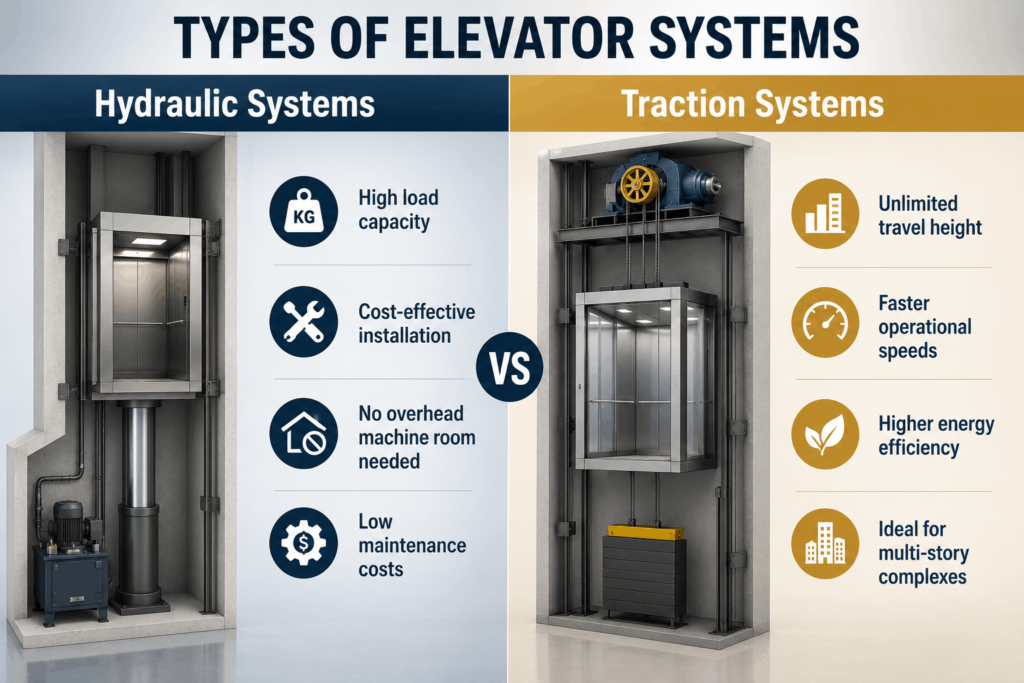
A hydraulic lift for material handling utilizes a fluid-driven piston mechanism to elevate the lifting platform or cabin. This technology is widely favored for low-to-medium rise applications (typically up to 15 meters of travel) due to its exceptional structural advantages:
- Superior Load Carrying Capacity: Hydraulic systems excel at moving exceptionally heavy loads. The weight of the cargo is transferred directly into the building’s foundation via the hydraulic ram and pit floor, minimizing stress on the surrounding building walls.
- Space Efficiency: These systems do not require a heavy overhead machine room directly above the shaft. The hydraulic pump unit and control panel can be placed in a compact machine room located at a distance from the lift shaft, providing architectural flexibility.
- Cost-Effectiveness: Hydraulic material elevators generally feature lower initial capital costs and simpler mechanical configurations, resulting in straightforward, cost-effective long-term maintenance.
Traction Systems for High-Rise Demands
Traction systems utilize steel ropes or belts running over a sheave driven by an electric motor, balanced by a counterweight. These systems are best suited for high-rise industrial complexes, large-scale distribution centers, or multi-story commercial facilities. Traction lifts offer higher travel speeds and unlimited travel heights, making them highly efficient for deep vertical shafts where rapid cycle times are necessary.
Exploring Specialized Industrial Material Lifts
Depending on your facility’s layout and specific workflows, a traditional enclosed cabin elevator may not always be the most practical or cost-effective choice. Exploring alternative industrial material lift configurations can reveal highly efficient, tailored solutions.
Warehouse Goods Lift Solutions
A standard warehouse goods lift typically features an enclosed or semi-enclosed cage structure designed explicitly for transporting freight accompanied by trained operators. These systems are equipped with heavy-duty landing gates, reinforced flooring to withstand forklift loading impacts, and precise leveling controls to ensure smooth transitions when rolling heavy pallets into the cabin.
Commercial Lift Integrations
For businesses operating integrated facilities—such as a ground-floor retail showroom backed by a first-floor inventory warehouse—a versatile commercial lift offers an ideal balance. These systems combine the rugged structural durability of a freight lifter with the refined aesthetics, smooth ride quality, and stringent safety features required for mixed-use commercial and industrial environments.
The Versatility of a Scissor Lift
When vertical travel heights are relatively short (e.g., bridging a dock-to-truck level or moving goods to a single low-profile mezzanine), a heavy-duty scissor lift provides an excellent alternative.
Scissor mechanisms operate via crossing structural supports that extend vertically. Because they do not require a built-in hoistway or a formal elevator shaft, they can be installed directly onto a concrete slab or within a shallow pit. This makes them highly adaptable for open-air loading bays, assembly line integration, and rapid-deployment material handling setups.
Crucial Structural and Safety Considerations
Industrial lifting environments are inherently demanding, making safety and compliance non-negotiable. To protect your workforce, safeguard your inventory, and ensure compliance with national safety codes like IS 14665, your equipment must incorporate robust structural and electronic safety layers.
Structural Reinforcement for Forklift Loading
One of the most common causes of structural damage to freight elevators is the immense impact force generated when a forklift enters the cabin. The lift platform must be engineered with reinforced steel undercarriages, anti-creep devices, and rigid guide rails to prevent the cabin from shifting or sagging during loading and unloading sequences.
Essential Safety Mechanisms
- Overload Protection Sensors: Automated systems that prevent the lift from operating if the total cargo weight exceeds the rated capacity, complete with audible and visual warning indicators.
- Rupture Valves (Hydraulic Systems): Specialized mechanical valves that instantly lock the hydraulic fluid flow if a sudden drop in pressure is detected, preventing an uncontrolled descent of the platform.
- Safety Gears and Governor (Traction Systems): Mechanical braking systems that clamp onto the guide rails to halt the cabin instantly in the improbable event of a suspension rope failure.
- Interlocked Landing Gates: Electro-mechanical locks ensuring that landing gates can never be opened unless the lift car is safely positioned at that specific floor, preventing accidental falls down the open shaft.
Streamlining Project Execution with Industrial Turnkey Lifts
Procuring and installing heavy-duty industrial equipment involves navigating complex structural engineering, electrical planning, local regulatory approvals, and precise mechanical installation. Managing multiple independent contractors for civil work, fabrication, electrical wiring, and final commissioning frequently results in project delays, finger-pointing, and budgeting overruns.
To eliminate these headaches, progressive industrial operations prefer partnering with single-source providers offering industrial turnkey lifts. A turnkey approach encompasses the entire lifecycle of the project:
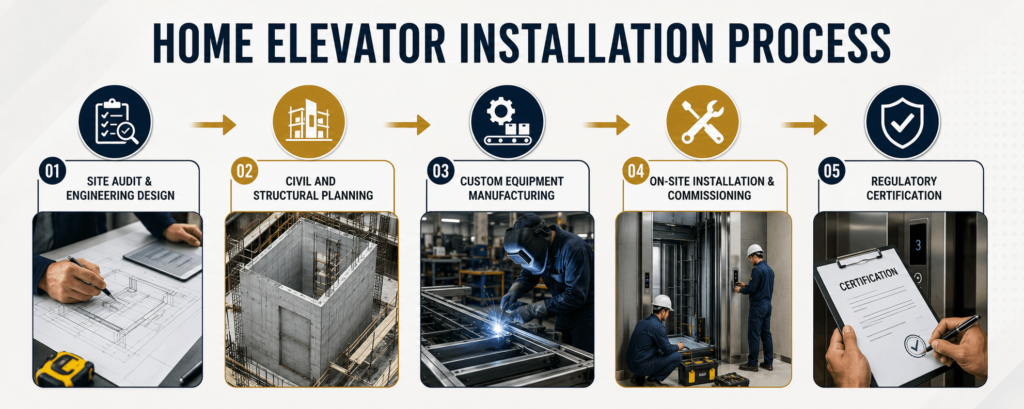
By consolidating these phases under a single expert engineering team, you ensure seamless architectural integration, accelerated project timelines, strict adherence to quality benchmarks, and a significantly lower total cost of ownership.
Maximizing ROI Through Preventative Maintenance
Investing in an elite vertical transport system is a significant capital expenditure. Protecting that investment requires transitioning from a reactive “fix-it-when-it-breaks” mindset to a proactive, data-driven preventative maintenance framework.
The Impact of Neglecting Maintenance
Allowing an industrial material lifter to run without routine inspections leads to accelerated component wear, unexpected mechanical breakdowns, and catastrophic operational downtime. In a high-throughput distribution center, a broken lift can halt production entirely, costing thousands of dollars per hour in lost productivity and missed shipping windows.
Best Practices for Long-Term Reliability
- Scheduled Lubrication and Fluid Analysis: Regularly checking hydraulic fluid quality, replacing filters, and lubricating guide rails to reduce mechanical friction and heat buildup.
- Routine Component Wear Audits: Conducting periodic non-destructive testing on suspension ropes, structural welds, traveling cables, and brake linings to identify and replace worn parts before they fail.
- Staff Operational Training: Educating your warehouse team on correct load distribution practices, emphasizing the dangers of uneven loading, and enforcing strict compliance with rated weight capacities.
Why Partner with Horizon Elevators?
Selecting the right lifting equipment is only half the equation; partnering with the right engineering and manufacturing specialist is what guarantees long-term operational success. For years, Horizon Elevators has been a trusted leader in designing, manufacturing, and servicing high-performance industrial vertical transport systems across India.
We understand that every factory floor and logistics hub presents a unique set of challenges. Our elite engineering team works closely with your project managers to design customized, high-capacity material lifting systems that integrate seamlessly into your existing workflows. From advanced warehouse elevators to heavy-duty hydraulic material lifters, Horizon Elevators leverages cutting-edge technology, premium-grade materials, and rigorous quality control protocols to deliver systems built for maximum uptime, exceptional durability, and uncompromised workplace safety.
Don’t let vertical logistics bottlenecks slow down your business growth. Contact the industrial engineering experts at Horizon Elevators today to schedule a comprehensive on-site facility evaluation, or request a tailored technical quote designed to elevate your warehouse operational efficiency to the next level.
Frequently Asked Questions (FAQs)
1. What is the main difference between a goods lift and a passenger lift?
A goods lift is engineered explicitly for rugged industrial environments, featuring heavy-duty structural steel components, reinforced flooring to handle heavy concentrated loads (like forklifts), and wider openings. Passenger lifts focus primarily on aesthetic appeal, high travel speeds, and passenger comfort mechanics, and they lack the structural reinforcement required to handle heavy freight loading impacts.
2. Can a hydraulic lift for material handling be installed without an existing concrete shaft?
Yes, absolutely. If your facility lacks a traditional concrete or masonry hoistway, specialized engineering providers can supply a self-supporting structural steel framework. This modular steel tower houses the guide rails, hydraulic cylinders, and lift cabin, allowing for versatile installations either indoors through floor cutouts or externally along the building’s exterior wall. For more detailed industrial regulations on elevator engineering, you can consult the official safety standards outlines available via the Bureau of Indian Standards (BIS).
3. How long does it typically take to install industrial turnkey lifts?
The comprehensive timeline for industrial turnkey lifts varies based on the overall complexity, load capacity, travel height, and the amount of civil preparation required. Generally, the entire lifecycle—encompassing custom engineering design, factory manufacturing, site delivery, mechanical installation, and final safety testing—takes between 6 to 12 weeks. Working with a single-source turnkey partner significantly compresses this timeline.
4. What are the space requirements for installing a warehouse goods lift?
The spatial footprint depends on your required internal cabin dimensions and load capacity. Beyond the clear platform size, you must allocate space for guide rails, structural counterweights (for traction systems) or hydraulic cylinders, and appropriate clearances. Additionally, standard installations require a small pit depth (typically ranging from 500mm to 1500mm) at the ground floor and adequate overhead clearance above the highest served landing.
5. How often should a heavy-duty industrial material lift undergo professional servicing?
For optimal performance, safety compliance, and maximum component lifespan, an industrial material lifting system operating in a standard warehouse environment should undergo professional preventative maintenance inspections at least once a month. High-frequency or harsh chemical environments may require more frequent bi-weekly checkups. For broader insights into global industrial lift engineering trends and safety frameworks, you can review the technical publications hosted by the American Society of Mechanical Engineers (ASME).