
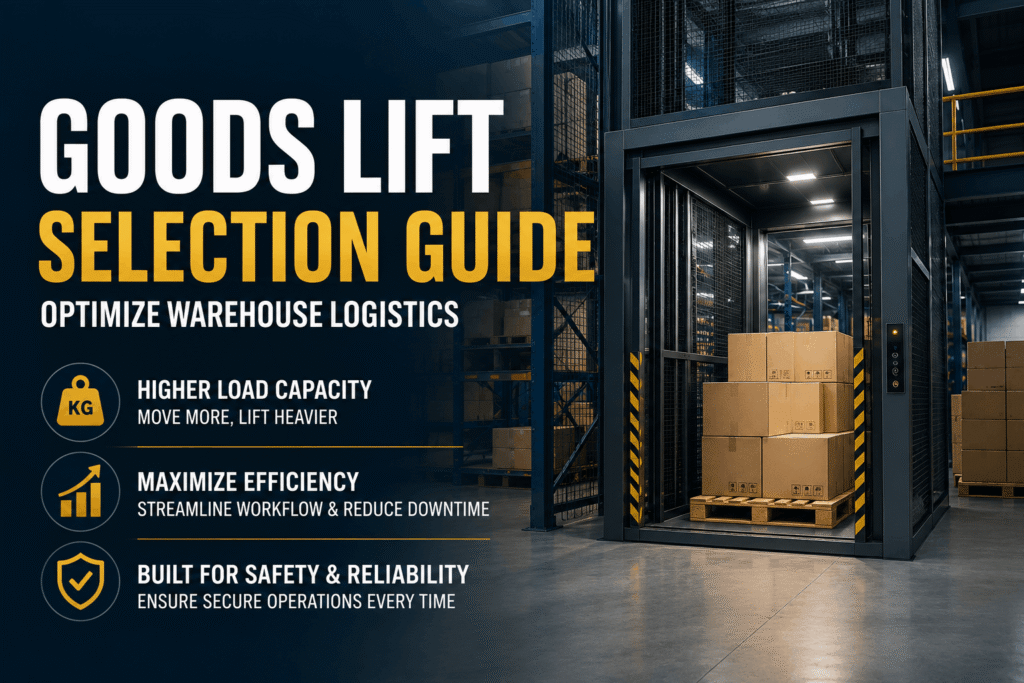
Optimizing Warehouses: How to Choose the Right Goods Lift or Industrial Material Lift
Last Updated on July 13, 2026 by Admin In the fast-paced world of modern logistics, supply chain efficiency is the ultimate competitive advantage. For factory owners, logistics managers, and industrial infrastructure contractors, maximizing vertical space and streamlining material handling are critical operational goals. At the heart of achieving these efficiencies is a single, pivotal piece of machinery: the goods lift. Moving heavy raw materials, palletized stock, or finished products across multiple floors requires a heavy-duty, reliable, and safe vertical transportation system. Integrating a robust goods lift into your facility does more than just transport materials; it eliminates bottlenecks, enhances worker safety, and directly reduces operational downtime. However, choosing the wrong system can lead to costly disruptions, frequent maintenance delays, and severe safety hazards. This comprehensive guide explores the strategic nuances of warehouse optimization, breaks down the technical differences between various lifting systems, and provides a clear roadmap to help you select the ideal vertical transport solution for your industrial application. The Strategic Importance of Vertical Logistics in Modern Warehouses As industrial land costs continue to climb, modern warehouse design has shifted from horizontal expansion to vertical utilization. Multi-tier mezzanine floors, high-bay storage racks, and multi-story factory layouts are now industry standards. While these configurations maximize square footage, they introduce a complex operational challenge: vertical logistics. Relying solely on traditional forklifts or manual labor to move heavy bulk loads between floors is inefficient, dangerous, and unsustainable. Industrial material handling demands specialized equipment engineered to sustain continuous vertical stress. Implementing an engineered material elevator ensures a seamless flow of goods from the receiving dock to high-level storage, and eventually to the shipping bay, creating a highly synchronized internal supply chain. Identifying Your Material Handling Needs Before exploring the technical specifications of different lifting mechanisms, it is essential to conduct a comprehensive audit of your facility’s specific operational demands. A one-size-fits-all approach does not apply to industrial vertical transport. Your selection process should begin with four primary criteria: 1. Load Capacity and Volume Determine the maximum weight your system will need to support in a single trip. Industrial operations generally classify lifting requirements into three tiers: Always factor in a safety margin beyond your daily average load weight to accommodate future business growth and peak operational demands. 2. Duty Cycle and Frequency of Operation How often will the lift operate during a shift? A system designed to run five times a day requires vastly different engineering, cooling, and wear-resistance than a system operating continuously across a 24-hour, three-shift production line. High-frequency environments demand heavy-duty components capable of rapid cycling without overheating or experiencing premature structural fatigue. 3. Spatial and Structural Constraints Examine the physical architecture of your building. Is there an existing masonry structural shaft, or will the system require a self-supporting steel structure? Check the available pit depth at the lowest level and the headroom clearance at the top floor. Certain lifting systems require extensive structural modifications, while others feature a low-profile design that minimizes civil work. 4. Environmental and Material Characteristics The operating environment significantly influences material selection and component ratings. For example, chemical processing plants or food manufacturing facilities may require stainless steel cabins and explosion-proof electrical components. Conversely, a standard dry-goods fulfillment center can utilize robust, powder-coated structural steel. Hydraulic Lift for Material Handling vs. Traction Systems Choosing the right drive mechanism is one of the most critical decisions in the procurement process. The two dominant technologies utilized in industrial material handling are hydraulic systems and traction (counterweighted) systems. The Power of a Hydraulic Lift for Material Handling A hydraulic lift for material handling utilizes a fluid-driven piston mechanism to elevate the lifting platform or cabin. This technology is widely favored for low-to-medium rise applications (typically up to 15 meters of travel) due to its exceptional structural advantages: Traction Systems for High-Rise Demands Traction systems utilize steel ropes or belts running over a sheave driven by an electric motor, balanced by a counterweight. These systems are best suited for high-rise industrial complexes, large-scale distribution centers, or multi-story commercial facilities. Traction lifts offer higher travel speeds and unlimited travel heights, making them highly efficient for deep vertical shafts where rapid cycle times are necessary. Exploring Specialized Industrial Material Lifts Depending on your facility’s layout and specific workflows, a traditional enclosed cabin elevator may not always be the most practical or cost-effective choice. Exploring alternative industrial material lift configurations can reveal highly efficient, tailored solutions. Warehouse Goods Lift Solutions A standard warehouse goods lift typically features an enclosed or semi-enclosed cage structure designed explicitly for transporting freight accompanied by trained operators. These systems are equipped with heavy-duty landing gates, reinforced flooring to withstand forklift loading impacts, and precise leveling controls to ensure smooth transitions when rolling heavy pallets into the cabin. Commercial Lift Integrations For businesses operating integrated facilities—such as a ground-floor retail showroom backed by a first-floor inventory warehouse—a versatile commercial lift offers an ideal balance. These systems combine the rugged structural durability of a freight lifter with the refined aesthetics, smooth ride quality, and stringent safety features required for mixed-use commercial and industrial environments. The Versatility of a Scissor Lift When vertical travel heights are relatively short (e.g., bridging a dock-to-truck level or moving goods to a single low-profile mezzanine), a heavy-duty scissor lift provides an excellent alternative. Scissor mechanisms operate via crossing structural supports that extend vertically. Because they do not require a built-in hoistway or a formal elevator shaft, they can be installed directly onto a concrete slab or within a shallow pit. This makes them highly adaptable for open-air loading bays, assembly line integration, and rapid-deployment material handling setups. Crucial Structural and Safety Considerations Industrial lifting environments are inherently demanding, making safety and compliance non-negotiable. To protect your workforce, safeguard your inventory, and ensure compliance with national safety codes like IS 14665, your equipment must incorporate robust structural and electronic safety layers. Structural Reinforcement for Forklift Loading One of the most common causes of structural damage to freight elevators is the immense impact force generated