
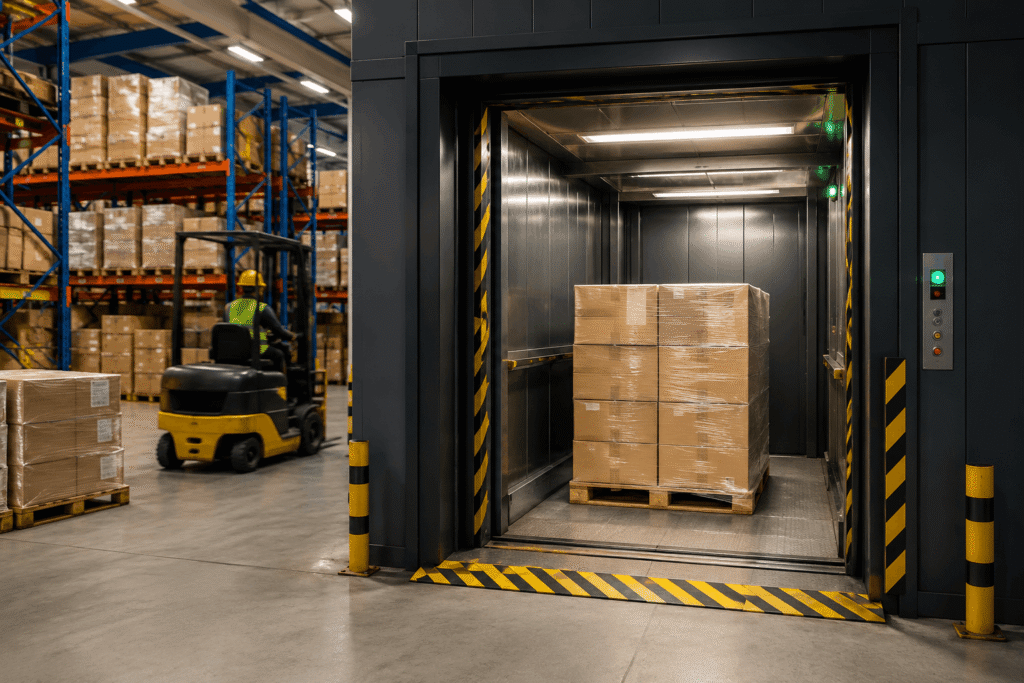
How Goods Lifts Improve Warehouse Productivity and Material Handling
Last Updated on June 8, 2026 by Admin In the fast-paced world of modern logistics, supply chain management, and industrial manufacturing, operational efficiency is the thin line between profitability and loss. As commercial properties expand vertically to combat rising real estate costs, multi-level storage facilities have become the industry standard. However, moving high-volume, heavy-duty cargo across multiple floors presents a massive operational bottleneck if managed poorly. Manual material handling and outdated vertical transit systems stall workflows, spike labor expenses, and expose workers to severe occupational hazards. To thrive in this competitive landscape, smart enterprise owners are transitioning to specialized industrial automation. Integrating a robust warehouse goods lift into your facility structure is one of the most transformative updates you can implement to achieve continuous, high-speed logistical throughput. By replacing manual intervention with modern vertical mobility, an industrial elevator fundamentally revamps how raw goods, heavy components, and completed packages stream through your workplace. This detailed guide explores how specialized freight elevators unlock unprecedented organizational output, improve safety compliance, and provide a massive return on investment for your storage or production site. The Core Challenges in Traditional Vertical Material Handling Traditional multi-tiered storage facilities frequently experience massive bottlenecks because their architectural layout relies on outdated handling practices. When stock needs to move between different floor plates, relying on a forklift network or manual labor introduces major systemic vulnerabilities. 1. Excessive Labor Dependency and Fatigue Relying heavily on manual teams to transition freight up or down building levels leads to rapid employee fatigue, lowering overall processing speeds. Human constraints naturally limit the weight and volume that can be transported in a single shift, creating persistent operational backlogs. 2. Escalated Risk of Accidents and Stock Damage Navigating stairs, steep internal ramps, or pushing forklift trucks past their recommended vertical extension limits dramatically increases workplace safety hazards. According to standard industrial safety reports compiled by organizations like the Occupational Safety and Health Administration (OSHA), material handling issues remain a top cause of workplace injuries. Dropped inventory, structural collisions, and structural asset deterioration degrade your bottom line. 3. Vertical Space Underutilization Without an automated, dependable method to transfer thousands of kilograms straight up, facility operators tend to overcrowd the ground floor while upper mezzanine levels stay underutilized. This structural limitation cuts down your total storage volume and drives up overhead rental costs. 8 Critical Ways a Warehouse Goods Lift Amplifies Operational Productivity Implementing a tailor-made vertical freight platform transforms these structural vulnerabilities into distinct operational advantages. Let’s break down exactly how these heavy-duty installations optimize warehouse logistics. 1. Accelerating Cycle Times and Throughput Time is the foundational currency of modern logistics. A specialized industrial elevator slashes the time required to move inventory between storage levels. Instead of relying on ground crews to load, navigate ramps, and unload items sequentially, material handling teams can position full pallet volumes into a high-capacity lift enclosure. With rapid ascent speeds ranging from 0.3 to 0.5 meters per second, multiple floors are traversed within seconds, ensuring downstream packing and dispatch tracks stay completely full. 2. Maximizing Vertical Storage Efficiency Implementing heavy-duty vertical transit allows engineering teams to embrace high-density, multi-tiered shelving and deep mezzanine architecture. A warehouse goods lift allows you to leverage high vertical clear heights easily, meaning you can double or triple your usable square footage without moving to a larger facility. Material handling items can be systematically distributed across your facility based on product rotation speed rather than being restricted by weight limitations. 3. Minimizing Human Errors and Workforce Strain Automated lifting systems remove complex manual handling workflows where errors frequently occur. Misplaced pallets, drops, and transit-related sorting delays drop significantly when items follow direct vertical pathways. Workers are saved from exhausting lifting and moving tasks, keeping your team energetic, focused, and precise throughout their daily shifts. 4. Enhancing Workplace Safety Compliance Heavy-duty lifting platforms are manufactured with specialized industrial safety frameworks designed to protect both the operator and the cargo. Standard modern freight elevators incorporate: 5. Effortless Integration with Heavy Material Handling Equipment Industrial goods lifts are built to work seamlessly with your existing material handling equipment. Whether your operation relies on manual hand pallet trucks, heavy-duty electric stackers, or automated guided vehicles (AGVs), the lift cabin floor can be engineered to sit completely flush with your building floor. This seamless transition allows forklifts and operators to roll directly into the cabin, drop off cargo, and exit without encountering frustrating elevation shifts or bumps. 6. Robust Adaptation to Heavy Industrial Loads Unlike consumer-facing passenger elevators, specialized industrial goods elevators are built using heavy-duty steel cabins and structural reinforcements. This sturdy construction easily handles heavy industrial loads ranging from 500 kg up to 5,000 kg (5 Tons). Whether your facility handles bulky automotive assemblies, heavy paper rolls, raw chemical barrels, or high-density electronics, these systems handle heavy lifting profiles without structural stress or mechanical failure. 7. Drastic Reduction in Product Damages Fragile or sensitive stock can easily be damaged by the jerky starts, stops, and bumpy turns of traditional forklift transport. Modern goods lifts leverage specialized hydraulic setups or stable counterweighted traction systems to ensure smooth vertical transit. This controlled motion protects fragile materials, delicate components, and retail packages from shifting or sustaining internal damage during transit. 8. Long-Term Reduction in Operational Overheads While installing a high-capacity industrial lift requires an upfront capital investment, the long-term operational savings are substantial. You will drastically lower your reliance on specialized high-reach forklift fleets—which require frequent battery swaps, expensive tire replacements, and routine mechanical maintenance. Furthermore, lower product damage claims and fewer worker compensation issues directly improve your company’s bottom line. Technical Breakdown: Traction vs. Hydraulic Goods Lifts Choosing the right drive setup for your commercial facility depends on your specific building layout, total weight targets, and expected usage rates. Technical Parameter Hydraulic Drive Goods Lift Traction Drive Goods Lift Optimal Load Capacity Up to 5,000 kg (Highly efficient for massive weights) Up to 3,000 kg (Best for medium to heavy loads) Speed Range 0.3 to 0.4 m/s (Deliberate, highly