
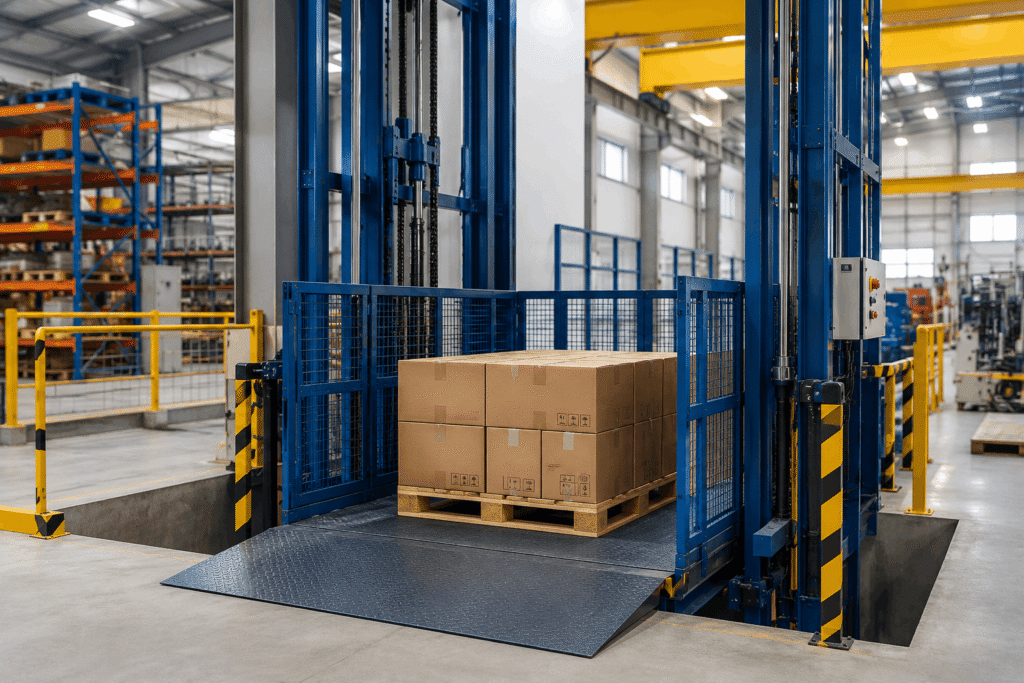
How to Choose the Right Industrial Hydraulic Lift for Your Business
Last Updated on June 15, 2026 by Admin In today’s fast-paced commercial and industrial landscape, operational efficiency is everything. Whether you run a massive distribution center, a multi-story manufacturing facility, or an automotive workshop, moving heavy materials vertically can quickly become a bottleneck. This is where an industrial hydraulic lift system becomes indispensable. However, investing in vertical material handling equipment is a major capital expenditure. You cannot simply pick a model out of a catalog and hope it fits your facility’s needs. Making the wrong choice can lead to workflow inefficiencies, high maintenance costs, and severe safety hazards. To help you make an informed decision, this comprehensive guide covers everything you need to know. We will break down the core components, explore the different types of equipment, and explain exactly what to look for when partnering with an experienced industrial hydraulic lift manufacturer. The Critical Role of Material Handling Equipment in Modern Industry Before diving into the selection criteria, let us first examine why vertical mobility matters. Warehouses, distribution centers, and manufacturing plants operate on strict timelines. Every minute wasted moving inventory, raw materials, or finished goods between floors reduces overall throughput. Furthermore, manual material handling—such as using stairways, ramps, or inefficient manual hoists—poses significant risks to worker safety. Musculoskeletal injuries, dropped loads, and collisions are common in facilities lacking proper lifting equipment. By implementing a robust heavy-duty industrial lift, businesses can: Understanding the Different Types of Hydraulic Lifts When you begin researching vertical transport solutions, you will encounter a wide variety of terminology. Not all lifts are designed for the same application. Knowing the differences between various models will steer you toward the right hydraulic lift platform for your specific operations. 1. Vertical Reciprocating Conveyors (VRCs) A Vertical Reciprocating Conveyor (VRC) is an automated system designed specifically to move materials between two or more levels. Unlike passenger elevators, VRCs are strictly for freight—no riders allowed. 2. Hydraulic Scissor Lift Tables Hydraulic scissor lift tables feature a crisscross mechanism that extends upwards when hydraulic fluid is pumped into the cylinder. They provide a stable, flat platform for raising and lowering heavy loads. 3. Custom Hydraulic Freight Elevators For facilities requiring heavy loads (often exceeding several tons) to travel across multiple stories with high frequency, a hydraulic freight elevator is often the ideal choice. These systems are enclosed in a shaft and are engineered for rigorous, continuous daily use. Key Factors to Consider When Selecting an Industrial Lift Choosing the right system requires a meticulous assessment of your facility, your inventory, and your daily workflow. Let us break down the primary variables you must evaluate. 1. Weight Capacity and Load Characteristics First and foremost, you must determine the maximum weight the lift will carry at any given time. It is always wise to add a safety buffer of 20-30% to your maximum expected load to prevent motor strain and extend the lifespan of the industrial material lift. Understanding the nature of your load dictates whether you need a standard hydraulic scissor lift table or a heavily reinforced freight platform. 2. Lift Height and Travel Distance Measure the exact vertical distance between the lower level (or pit) and the upper landing(s). Travel distance impacts the length of the hydraulic cylinders, pump specifications, and installation time. If you are serving a multi-tier mezzanine, the lift will require intermediate stopping capabilities, which must be factored into the control system. 3. Platform Size and Customizations The physical dimensions of the platform must comfortably accommodate your largest loads with room to spare. If the lift is too small, you risk unstable loads; if it is too large, it may consume valuable floor space. Additionally, consider custom accessories such as: Safety Features and Compliance Standards Industrial lifting involves massive amounts of weight and force. Therefore, safety should never be compromised to cut costs. Before purchasing from any industrial lift system provider, verify that their equipment integrates advanced safety mechanisms. Essential Safety Mechanisms Industry Compliance Always ensure the machinery complies with relevant safety regulations. In the United States, organizations like OSHA provide strict guidelines for material handling and powered industrial trucks. Similarly, design standards from ANSI ensure that vertical reciprocating conveyors and lift tables are manufactured to rigorous structural integrity levels. A reputable custom vertical lift provider will explicitly state their compliance with these standards. Power, Speed, and Duty Cycle Considerations The mechanical efficiency of your lift is heavily determined by its power unit and how frequently it will be used. Understanding Duty Cycles The duty cycle refers to how often the lift operates within a given hour. High-duty-cycle operations require more robust hydraulic pumps, advanced cooling systems to prevent hydraulic fluid overheating, and premium-grade cylinders. Power Supply and Motor Specifications Most industrial lifts run on standard three-phase industrial power (e.g., 415V or 480V depending on your region). Ensure your facility’s electrical infrastructure can support the power requirements of the motor. You should also consider the descent speed; hydraulic lifts rely on gravity for descent (powered down or gravity down), which can be adjusted via flow control valves for smooth, controlled operations. Why Partnering with a Specialized Industrial Hydraulic Lift Manufacturer Matters When sourcing this crucial piece of infrastructure, bypassing third-party middlemen and buying directly from a dedicated industrial hydraulic lift manufacturer offers immense advantages. 1. Tailored Engineering Capabilities Every factory or warehouse has unique spatial constraints. A direct manufacturer can inspect your site, take precise measurements, and design a hydraulic lift platform or industrial lift system that fits perfectly into your existing architecture without requiring expensive structural renovations. 2. Comprehensive After-Sales Support and Maintenance Industrial equipment requires periodic inspection, fluid changes, and part replacements. Manufacturers offer superior after-sales care, ensuring that genuine spare parts are always available. Furthermore, their certified technicians understand the intricacies of your specific build, minimizing troubleshooting time. 3. Long-Term Return on Investment (ROI) While cheaper, off-the-shelf imports might save money upfront, they often break down under rigorous industrial use. Investing in a premium-built heavy-duty industrial lift minimizes downtime, reduces workplace accidents, and