
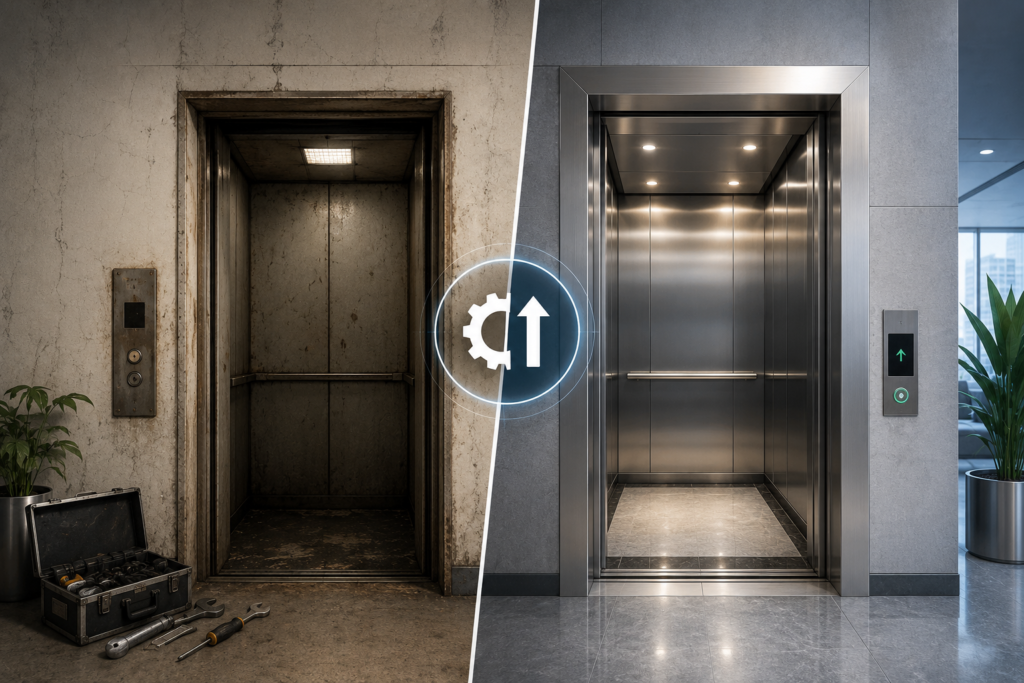
Elevator Modernization vs. Repair: When is it Time to Upgrade Your Building’s Lift?
Last Updated on June 30, 2026 by Admin Imagine stepping into your building’s elevator, pressing the button for the top floor, and hearing an unsettling grinding noise followed by a sudden, jarring shudder. For property managers, building owners, and facility directors, this scenario is a regular source of anxiety. Managing vertical transportation comes with a critical, ongoing dilemma: Elevator Modernization vs. Repair. When your building’s lift starts acting up, how do you know if a quick fix is enough, or if it is time to invest in comprehensive elevator upgrade services? Every mechanical system has a finite lifespan. While routine maintenance keeps a system running day-to-day, there comes a point where simple repairs merely mask deeper, systemic issues. Opting for strategic elevator modernization rather than continuous, costly patches is essential to protecting your property value, ensuring tenant safety, and cutting long-term operational costs. Choosing between a localized fix and a system-wide upgrade requires analyzing equipment age, breakdown frequency, compliance standards, and passenger expectations. This comprehensive guide breaks down the core differences between repair and modernization. It highlights the signs that indicate your system is failing, details the financial benefits of an upgrade, and explains how partnering with a trusted partner like Horizon Elevators can transform your building’s infrastructure. Understanding the Basics: Elevator Repair vs. Replacement Before diving into performance metrics and financial ROI, it is important to establish exactly what differentiates a repair from a modernization project. Property owners often confuse these terms, leading to misaligned budgets and unexpected operational downtime. What is Elevator Repair? An elevator repair is a reactive or routine maintenance action designed to fix a specific, isolated issue. Think of it as replacing a worn brake pad on a car or swapping out a faulty door sensor. Repairs are ideal for relatively new systems experiencing minor, occasional glitches. They are quick, targeted, and keep immediate upfront costs low. However, repairs do not alter the core technology, efficiency, or overall capabilities of the lift. What is Elevator Modernization? In contrast, lift modernization services are a comprehensive, proactive overhaul of the elevator’s vital internal organs. Instead of tearing out the entire structural hoistway and guide rails—which is a full old elevator replacement—modernization replaces obsolete components with state-of-the-art technology. This process typically targets the brains, muscles, and safety systems of the lift, including: When evaluating elevator repair vs replacement, modernization sits perfectly in the middle. It delivers the performance, safety, and efficiency of a brand-new system at a fraction of the cost and structural disruption of a total replacement. 5 Warning Signs Your Building Needs Elevator Modernization How do you know when you have crossed the line from a simple repair into modernization territory? If your facility exhibits any of the following five warning signs, it is time to stop patching the problem and explore professional lift upgrade solutions. 1. Frequent Breakdowns and Trapped Passengers If your maintenance log shows the elevator mechanic visits your building more than twice a month, you are dealing with systemic unreliability. Frequent shut-downs frustrate tenants, damage your building’s reputation, and create serious liabilities if passengers are repeatedly trapped. 2. Excessive Noise, Shaking, and Poor Leveling An elevator ride should be smooth, quiet, and predictable. If the cab jerks when starting or stopping, emits grinding noises, or fails to level flush with the building floor, the mechanical components are heavily worn. Misleveling is a significant tripping hazard and a direct violation of accessibility codes like the Americans with Disabilities Act (ADA) Accessibility Guidelines. 3. Rising Energy Bills and High Operational Costs Older, geared traction or hydraulic elevators draw an immense amount of electricity. If your building’s energy consumption is spiking, an outdated power system is likely the culprit. Modern systems use advanced technology to drastically cut power consumption. 4. Difficulty Finding Replacement Parts Is your service technician taking weeks to fix a simple issue because they have to hunt down a refurbished part on eBay? If your elevator is over twenty years old, the original manufacturer likely no longer produces its components. Relying on obsolete hardware keeps your system vulnerable to prolonged downtime. 5. Growing Tenant Complaints and Long Wait Times In commercial offices and residential high-rises, time is money. Outdated dispatching systems struggle to handle peak morning and evening traffic efficiently. If tenants are constantly complaining about long hallway wait times, your building’s vertical transportation is holding your property back. The Core Components of an Elevator Upgrade When you invest in building lift modernization, you are not just getting a cosmetic makeover. You are completely updating the core infrastructure. A standard modernization project targets several critical areas to bring the lift into the modern era. Elevator Control System Upgrade The controller is the brain of the elevator. Older systems rely on mechanical relays and heavy wiring infrastructure that slow down response times. A modern elevator control system upgrade introduces solid-state microprocessors. These computers collect real-time traffic data, calculate the fastest routes, and organize car dispatching to reduce wait times across the building. Lift Controller Replacement As part of the control overhaul, a complete lift controller replacement ensures that the electrical signals sent to the motor, doors, and floor indicators travel securely and instantaneously. This eliminates the random glitches and programming bugs common in aging hardware. Elevator Motor Upgrade The muscles of your lift live in the machine room. Older, inefficient motors draw massive current surges every time the cab moves. Transitioning to an elevator motor upgrade—often utilizing permanent magnet synchronous motors and Variable Voltage Variable Frequency (VVVF) drives—delivers exceptionally smooth acceleration and deceleration while consuming far less power. The Tangible Benefits of Building Lift Modernization Modernizing your elevator infrastructure requires an initial capital investment, but the long-term returns consistently outweigh the upfront expenditure. Upgrading your system delivers clear, measurable advantages across your entire property footprint. Drastic Energy Savings Older elevators waste significant energy by dissipating excess power as raw heat into the machine room. Transitioning to energy efficient elevators lowers your building’s carbon footprint and slashes monthly utility expenses. Modern regenerative drives