
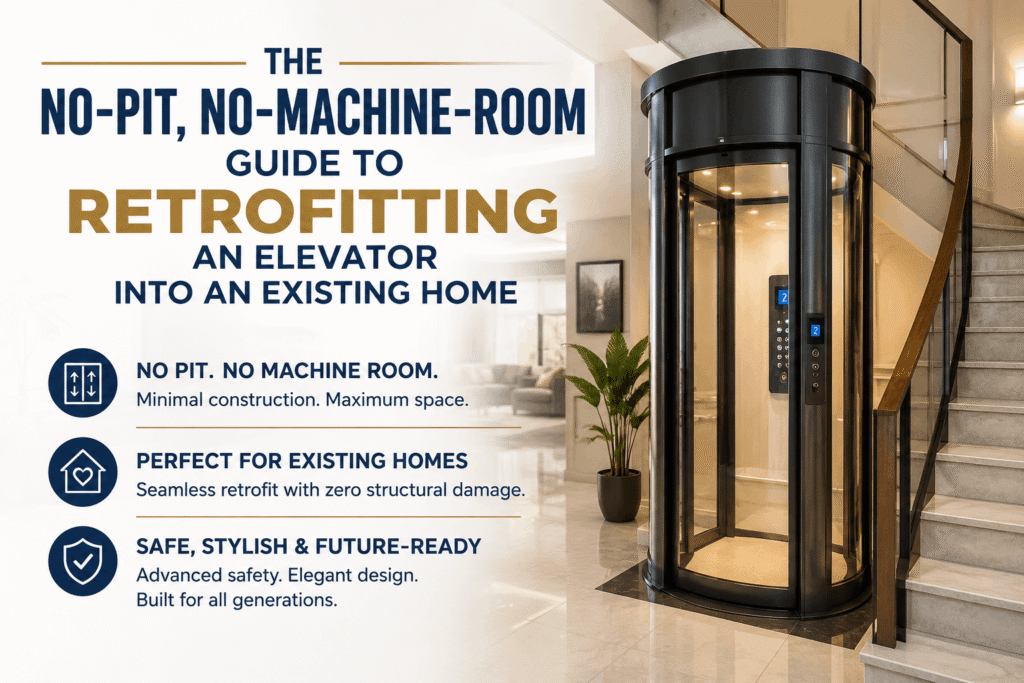
The No-Pit, No-Machine-Room Guide to Retrofitting an Elevator into an Existing Home
Last Updated on August 14, 2026 by Admin Multi-floor living in a custom bungalow, villa, or modern duplex offers luxury and privacy. However, climbing multiple flights of stairs daily can quickly become a physical challenge. Families often realize that traditional lifts require massive civil modifications—such as deep pit excavations, structural concrete shafts, and heavy roof machine rooms. The good news is that modern engineering has revolutionized residential vertical mobility. This ultimate No-Pit, No-Machine-Room Guide to Retrofitting an Elevator into an Existing Home reveals how homeowners can install a sleek, ultra-compact lift without disrupting their home’s structural foundation. Historically, retrofitting an elevator meant breaking down concrete slabs, digging through underground water lines, and dedicating precious square footage to mechanical plant rooms. Today, advanced machine-room-less (MRL) elevators and vacuum home lifts eliminate those traditional construction nightmares. Whether you are planning for long-term aging-in-place, looking to assist family members with mobility challenges, or simply seeking to add architectural luxury to your residence, retrofitting an elevator into an existing home is now faster, cleaner, and more efficient than ever. What is a No-Pit, No-Machine-Room Home Elevator? A traditional commercial or high-rise elevator typically requires two massive structural components: In an existing residence, digging a pit risks hitting underground utilities, causing foundation issues, or introducing water seepage problems. Similarly, building an overhead machine room often violates roof height restrictions or requires expensive structural framing. A pitless home elevator bypasses excavation entirely by resting directly on your finished ground level or requiring a minimal ramp of just a few centimeters. Coupled with machine-room-less technology, the drive system is housed neatly inside the hoistway shaft itself or within a compact external cabinet. This drastically reduces civil construction, protects your home’s architectural integrity, and accelerates total installation time. Why Retrofit an Elevator into an Existing Home? Retrofitting an elevator is no longer just an expensive luxury; it is a strategic investment in accessibility, security, and property value. Understanding why homeowners choose pitless, MRL lifts highlights how these solutions fit into modern living: 1. Aging-in-Place and Mobility Independence As homeowners age, navigating multi-level homes becomes increasingly difficult. Installing a personal lift allows seniors to move freely across all floors without relying on caregivers or facing stair-related fall risks. 2. Zero Damage to Existing Foundations Excavating a pit in an established house can weaken structural beams or penetrate waterproofing membranes. A pitless installation sits directly on existing marble, tile, or concrete flooring, keeping your foundation 100% intact. 3. Maximum Space Utilization Traditional shafts consume vast amounts of horizontal floor area. Ultra-compact residential lifts feature self-supporting shafts with slim footprints—sometimes taking up less space than a standard wardrobe. 4. Significant Increase in Property Value A well-integrated glass or panoramic villa lift instantly upgrades your home’s aesthetic appeal and market liquidity. Buyers actively seek out multi-story homes that are already future-proofed for all generations. Core Technologies Behind Pitless and Machine-Room-Less Elevators How does an elevator operate safely without a deep pit or a machine room? The answer lies in three main mechanical and pneumatic engineering designs: 1. Vacuum / Pneumatic Lifts Pneumatic vacuum elevators use air pressure differentials to raise and lower the cab. 2. Gearless Traction Lifts (MRL) Gearless traction systems use a Permanent Magnet Synchronous Motor (PMSM) mounted directly inside the upper shaft overhead. 3. Modern Hydraulic Home Lifts Modern residential hydraulic lifts utilize compact power packs instead of large oil tanks. Where Can You Place a Retrofit Elevator in an Existing Home? Finding space for a new elevator shaft in a completed house is easier than most homeowners expect. Here are the four most common location choices: Step-by-Step Guide to Retrofitting an Elevator into an Existing Home Retrofitting an elevator requires careful planning, technical precision, and experienced engineering. Here is the process professional lift installers follow: Step 1: Professional Site Assessment & Structural Survey Before choosing a model, an engineering team inspects your home’s architectural drawings, wall structural integrity, slab strength, and ceiling heights. They verify electrical supply panels and ensure no plumbing or electrical conduits block the proposed vertical path. Step 2: Choosing Drive Technology & Custom Finishes Select the drive mechanism (Pneumatic, Gearless MRL Traction, or Hydraulic) that matches your usage needs, budget, and design aesthetic. Customize cabin interiors withoptions like transparent glass panels, brushed stainless steel, warm wood veneers, or integrated LED mood lighting. Step 3: Minor Civil and Electrical Site Preparation Unlike heavy commercial installations that take months of civil construction, retrofitting a pitless elevator requires minimal prep work: Step 4: Shaft Modular Assembly and Cabin Installation The self-supporting elevator structure arrives in pre-engineered, modular components. Technicians assemble the frame, mount the guide rails, align the drive motor, and position the cabin inside the shaft with mechanical accuracy. Step 5: Safety Checks, Commissioning, and Testing Once assembled, certified technicians execute rigorous multi-point testing protocols. They test automatic emergency rescue devices (ARD), door safety light curtains, overload sensors, emergency lowering systems, and mechanical speed governors to guarantee 100% passenger safety. Critical Safety Features You Must Look For Safety is non-negotiable when installing a vertical lift inside a private residence. Modern home lifts incorporate advanced safety systems to protect family members of all ages: Cost Factors When Retrofitting a Residential Lift The cost of retrofitting an elevator into an existing home depends on several technical and customization variables: Pro-Tip: While a traditional lift may seem cheaper upfront, hidden costs like digging a pit, waterproofing, constructing concrete shaft walls, and building a roof machine room often make pitless MRL elevators far more economical overall. Maintenance and Energy Efficiency Considerations Modern machine-room-less residential lifts operate on standard single-phase power supply (220V/230V), consuming roughly the same energy as a standard home refrigerator or washing machine. To ensure long-term performance, choose a vendor that offers dedicated Annual Maintenance Contracts (AMC). Routine preventive maintenance checks mechanical lubrication, door alignments, battery health, and safety switches—ensuring smooth, silent rides year after year. Why Horizon Elevators is Your Premier Home Retrofit Partner Retrofitting a personal lift into an existing property requires precision engineering, deep